Introduction
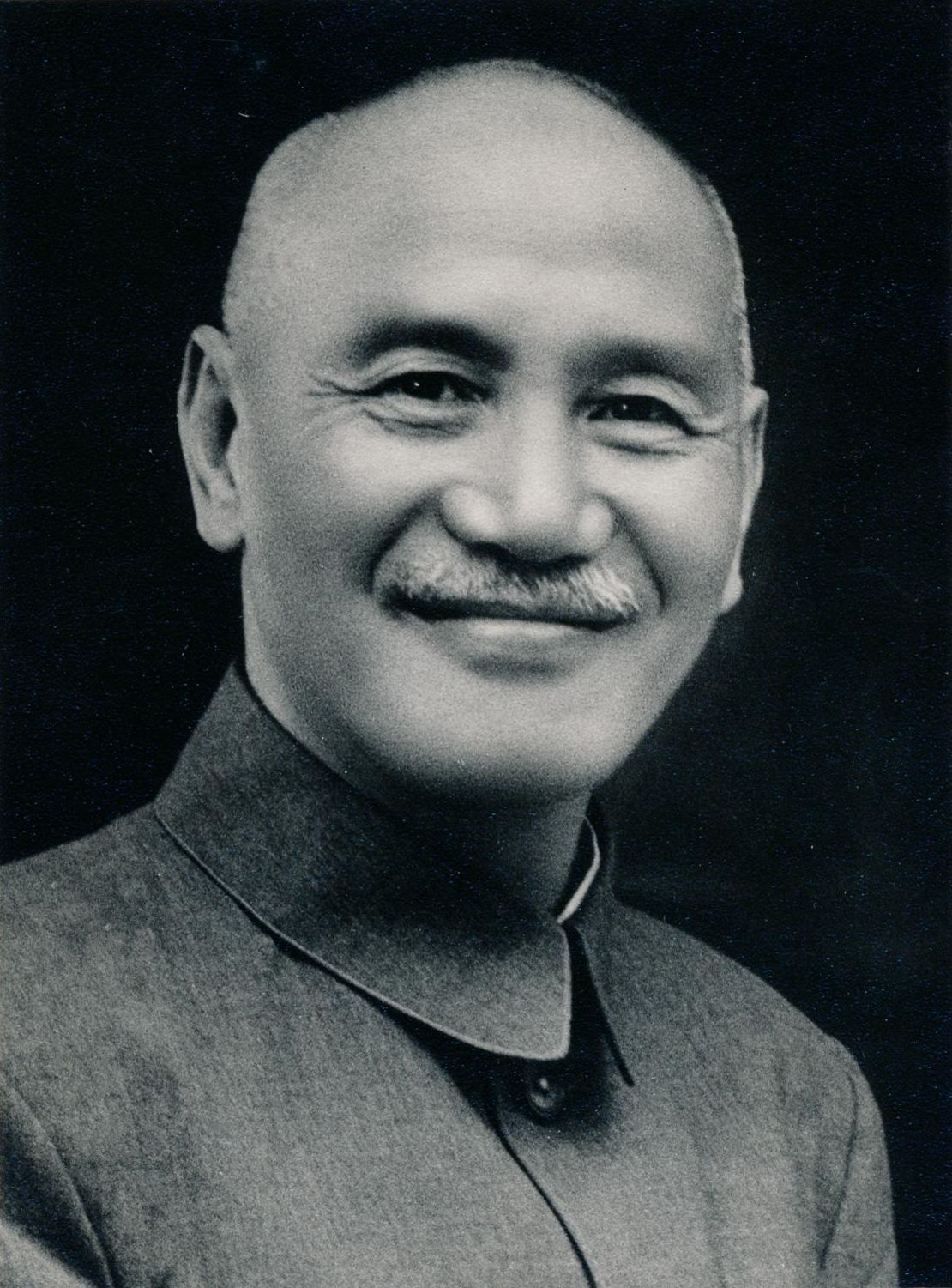
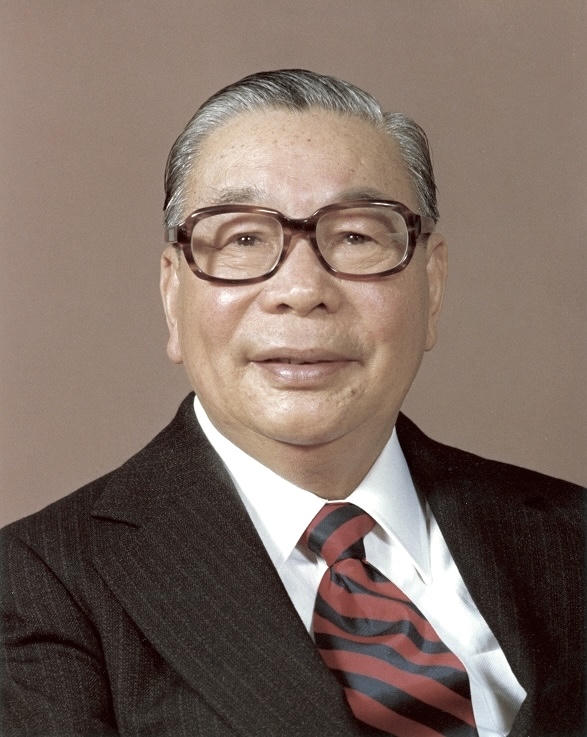
The Republic of China on Taiwan was built across two generations by Chiang Kai-shek and his son Chiang Ching-kuo. Chiang the elder retreated to Taiwan in 1949 after losing the Chinese Civil War to Mao Zedong's CCP, and governed the island under martial law until his death in 1975. Chiang the younger succeeded him as ROC president in 1978 and, before his death in 1988, lifted martial law and opened the political space that produced contemporary Taiwanese democracy under Lee Teng-hui, Chen Shui-bian, Tsai Ing-wen, and now Lai Ching-te.
This is one of the most consequential father-son comparisons in 20th-century Asian politics. JudgeMarket prices both continuously, and the spread between them is one of the cleanest indicators of how the world reads the long ROC arc — from authoritarian preservation to democratic transition.
Similarities
Chiang Kai-shek and Chiang Ching-kuo were both committed to the survival of the Republic of China and to its claim of sovereignty over China as a whole. Both ruled within an authoritarian framework — Chiang the elder for his entire tenure on Taiwan, Chiang the younger for most of his. Both came up through the KMT and through wartime experience, although the younger Chiang's biography was unusually international (long years in the Soviet Union in the 1920s and 1930s before returning to China).
Both presided over significant economic development. The elder Chiang's era laid the groundwork — land reform, US aid, the relocation of mainland industrial and intellectual capital — and the younger Chiang's era saw the consolidation of the "Asian tiger" economy, the rise of export manufacturing, and the launch of the Hsinchu Science Park in 1980 that became the cradle of Taiwan's semiconductor industry.
Both also relied on the same US security framework, though they navigated very different international contexts. The elder Chiang governed during the high Cold War with formal US diplomatic recognition of the ROC. The younger Chiang governed during and after the 1979 US shift in recognition to the PRC and the passage of the Taiwan Relations Act.
Key Differences
The defining difference is the political opening. Chiang Kai-shek governed Taiwan under martial law for 26 years until his death; the framework was authoritarian and dissent was suppressed through the security apparatus. The 228 Incident of 1947 and the subsequent White Terror — political killings, imprisonments, and the long shadow of fear in Taiwanese society — are core to his historical record.
Chiang Ching-kuo operated within the same authoritarian framework for much of his career — including as head of Taiwan's secret police in the 1950s, a role for which he is also held accountable in contemporary Taiwanese historiography. But in the final years of his presidency, he made decisions that set Taiwan on the path to becoming one of the most consolidated democracies in Asia. He lifted martial law in July 1987, legalized opposition political parties (the DPP had formed the previous year), allowed mainland visits for veterans separated from their families since 1949, and selected Lee Teng-hui — a Taiwanese-born technocrat rather than a mainlander — as his vice president and ultimately his successor.
Their relationships with Taiwanese society also differed. The elder Chiang remained, by background and by political base, oriented toward the mainlander community that had retreated with the KMT in 1949. The younger Chiang increasingly cultivated relationships with Taiwanese-born politicians, technocrats, and business leaders — a deliberate broadening that was both pragmatic and ultimately transformative.
Economically, the older Chiang's era was about stabilization and the early stages of industrialization. The younger Chiang's era was about the build-out — Ten Major Construction Projects (including highways, ports, the nuclear power program, and steel), the launch of Hsinchu, and the deliberate move up the value chain that produced contemporary TSMC and the broader semiconductor cluster.
The Reputation Trade
On JudgeMarket, both figures trade as historical legacies, but their trajectories within Taiwanese public memory have moved in opposite directions in recent decades. Chiang Kai-shek's reputation in Taiwan has been re-evaluated downward as democratization opened the historical record on 228 and the White Terror — statues have been removed, place names changed, and the official commemoration has become more critical. Outside Taiwan, in Western historiography, the assessment varies widely depending on the weight assigned to his wartime leadership against Japan, his anti-communism, and the human cost of his rule.
Chiang Ching-kuo's reputation, by contrast, has held up unusually well even as Taiwan's politics have moved further from the KMT. He is widely credited — including by many DPP-aligned commentators — as the man who voluntarily started the political opening that produced contemporary Taiwanese democracy. The secret-police chapter of his earlier career is acknowledged but is generally weighted less heavily than the late-period reforms.
Who buys the elder Chiang? Those who weight the preservation of the ROC after 1949, the wartime resistance to Japan, and the foundational state-building above the documented human cost. Who sells him? Those for whom 228 and the White Terror weigh more heavily, and those who think Taiwan's democratic success belongs primarily to his son and successors.
Who buys the younger Chiang? Those who weight the late-period reforms — lifting martial law, legalizing opposition, choosing Lee Teng-hui as successor — and the economic build-out very heavily. Who sells him? Those who think his earlier role in the security apparatus deserves more weight, and those who think Taiwan's democratization was driven primarily by societal pressure rather than by elite choice.
Verdict
JudgeMarket does not pick a winner between father and son — they completed different parts of the same long project. The interesting question is which one has more upside relative to where they currently trade.
The case for upside on Chiang Kai-shek: if Taiwan continues to grow in geopolitical importance, the founding act of preserving the ROC there carries more weight, not less. Founders of consequential states tend to be re-evaluated upward over centuries even when their tenure included documented atrocities.
The case for upside on Chiang Ching-kuo: voluntary democratization by an authoritarian leader is historically rare. As more political science is written about how authoritarian regimes do and do not transition, the younger Chiang's decisions look more, not less, distinctive. If Taiwan's democracy continues to be a model in the region, his role at its origin will continue to be re-evaluated upward.
Take your position on both at JudgeMarket.