Introduction
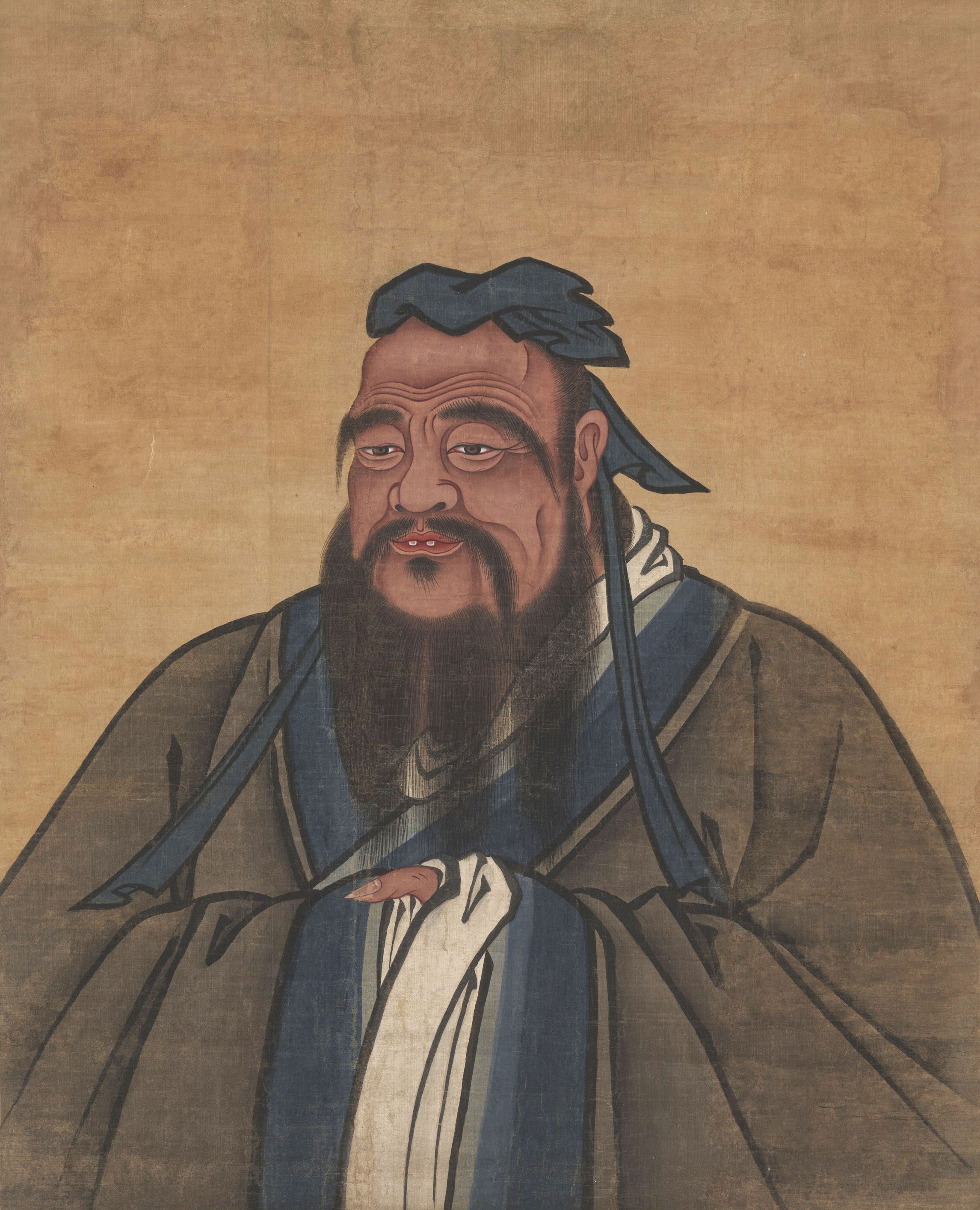
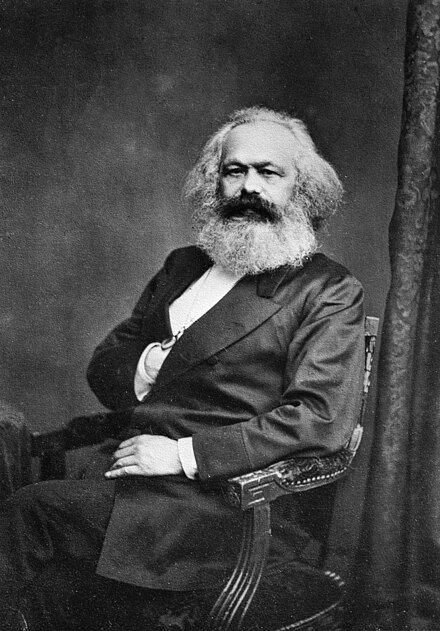
Confucius and Karl Marx are the two thinkers whose names are most often invoked to describe the dominant intellectual frameworks of Eastern and Western political tradition over the past two centuries — and, in a strange historical irony, both are foundational reference points for the People's Republic of China today. Confucius has been re-elevated as a marker of Chinese civilizational continuity. Marx remains the official ideological foundation of the ruling party. The two thinkers, separated by 2,400 years and by entirely different intellectual projects, are uniquely paired in the contemporary world.
JudgeMarket prices both continuously, and the spread between them is one of the most interesting cross-era signals on the platform: a market reading of how the world is currently weighing the longest-running tradition of social order against the most influential modern critique of social order.
Similarities
Both Confucius and Karl Marx were thinkers who wrote and taught in periods of profound social dislocation. Confucius lived during the late Spring and Autumn period, when the Zhou political order was disintegrating and competing states fought continuously. Marx wrote during the most rapid social transformation in modern European history — industrial capitalism, urbanization, the displacement of peasant populations, the revolutions of 1848.
Both were responding to systems they considered fundamentally broken. Confucius diagnosed the dissolution of ritual order and proposed a recovery through the cultivation of the ethical person, the family, and the just ruler. Marx diagnosed the contradictions of capitalist accumulation and proposed a revolutionary supersession through the working class. Both were, in their different ways, prescriptive — offering not just an analysis but a program.
Both have also had outsized practical influence relative to the formal circulation of their original texts. Confucius probably wrote little of what is attributed to him; the Analects is a collection of sayings compiled by students and later editors. Marx's collected works are vast, but a small set of texts — the Manifesto, the early sections of Capital — have done most of the political work historically. In both cases, the actual long-run influence has been mediated by enormous interpretive traditions, many of which would have surprised the founders.
Both have been canonized, deconsanonized, and re-canonized at different points in different countries. Confucianism was state ideology in Han China, fiercely attacked during the May Fourth movement and the Cultural Revolution, and is now actively re-promoted by the contemporary PRC as a marker of Chinese civilizational identity. Marxism was the official ideology of dozens of states in the 20th century, was largely abandoned by most of them after 1991, and remains official ideology in a smaller set including the PRC, Vietnam, Cuba, North Korea, and Laos.
Key Differences
The intellectual projects are different in kind. Confucius was not principally a political economist; he did not write systematically about modes of production, class relations, or the structural dynamics of markets. His core texts are about ethics, education, family, ritual, and the cultivation of the person who can in turn cultivate the society and the state. His political theory is a theory of governance through moral example.
Karl Marx, by contrast, is one of the most systematic political economists in modern intellectual history. Capital is a sustained analysis of how capitalist accumulation works, why it produces crises, and why it tends toward concentration. His political theory is a theory of structural transformation through class conflict.
Their relationships with revolution are also opposite. Confucius's framework is fundamentally conservative — not in the contemporary partisan sense, but in the literal sense of seeking to preserve and recover an older, more stable order. Marx's framework is fundamentally revolutionary — seeking to overthrow the existing order in favor of one that has yet to exist.
Their twentieth-century legacies diverge sharply. Confucianism was largely absent from formal Chinese state ideology between 1949 and the 1990s. It has been actively re-elevated since, including under Xi Jinping, as part of a broader "national rejuvenation" narrative that emphasizes Chinese civilizational continuity. Marxism in the twentieth century produced both the most rapid industrializations in history (Mao's China, the Soviet Union under various leaders, Deng-era reform within a formally Marxist framework) and some of the worst atrocities (the Great Leap famine, the Soviet purges, the Khmer Rouge). The question of how much intellectual responsibility Marx bears for outcomes produced in his name decades after his death remains genuinely contested.
The Reputation Trade
On JudgeMarket, Confucius trades as one of the most enduring civilizational figures in human history. His price reflects two-and-a-half millennia of influence on East Asian governance, education, family structure, and personal ethics — qualified by genuine contemporary debate about hierarchical and patriarchal implications, and by the historical episodes (most recently the Cultural Revolution) in which his tradition was directly attacked.
Karl Marx trades as one of the most influential thinkers of the modern era. His price is more polarized than Confucius's, because the twentieth-century political legacy of self-described Marxist states is itself polarized. Buyers weight the analytical power of his critique of capitalism, the durability of his influence on academic political economy and sociology, and the ongoing relevance of his framework to discussions of inequality, automation, and the platform economy. Sellers weight the human cost of regimes that claimed his name.
Who buys Confucius? Those who think civilizational frameworks measured in millennia are the most durable assets on the platform, and who think the contemporary re-elevation of Confucian themes in China and across East Asia gives him renewed live relevance. Who sells Confucius? Those who think the patriarchal and hierarchical critiques will eventually outweigh the heritage value.
Who buys Marx? Those who think his analytical framework is the most influential critique of capitalism ever produced and that questions about inequality, automation, and platform monopoly keep his framework live. Who sells Marx? Those who think the twentieth-century political legacy is unrecoverable and that intellectual influence cannot be cleanly separated from the regimes that invoked his name.
Verdict
JudgeMarket does not pick a winner between an ancient ethical philosopher and a modern political economist. They are not running for the same office in any meaningful sense.
The case for upside on Confucius: two and a half millennia of influence is the longest track record of any active figure on the platform. The renewed PRC sponsorship and the broader East Asian civilizational confidence give him live relevance, not just historical weight.
The case for upside on Marx: mean-reversion. After the post-1991 trough in his reputation, the last decade of inequality, financial crisis, and platform monopoly debate has restored serious academic and political interest in his analytical framework. His price has substantial room to move if those debates intensify.
Take your position on both at JudgeMarket.