Introduction
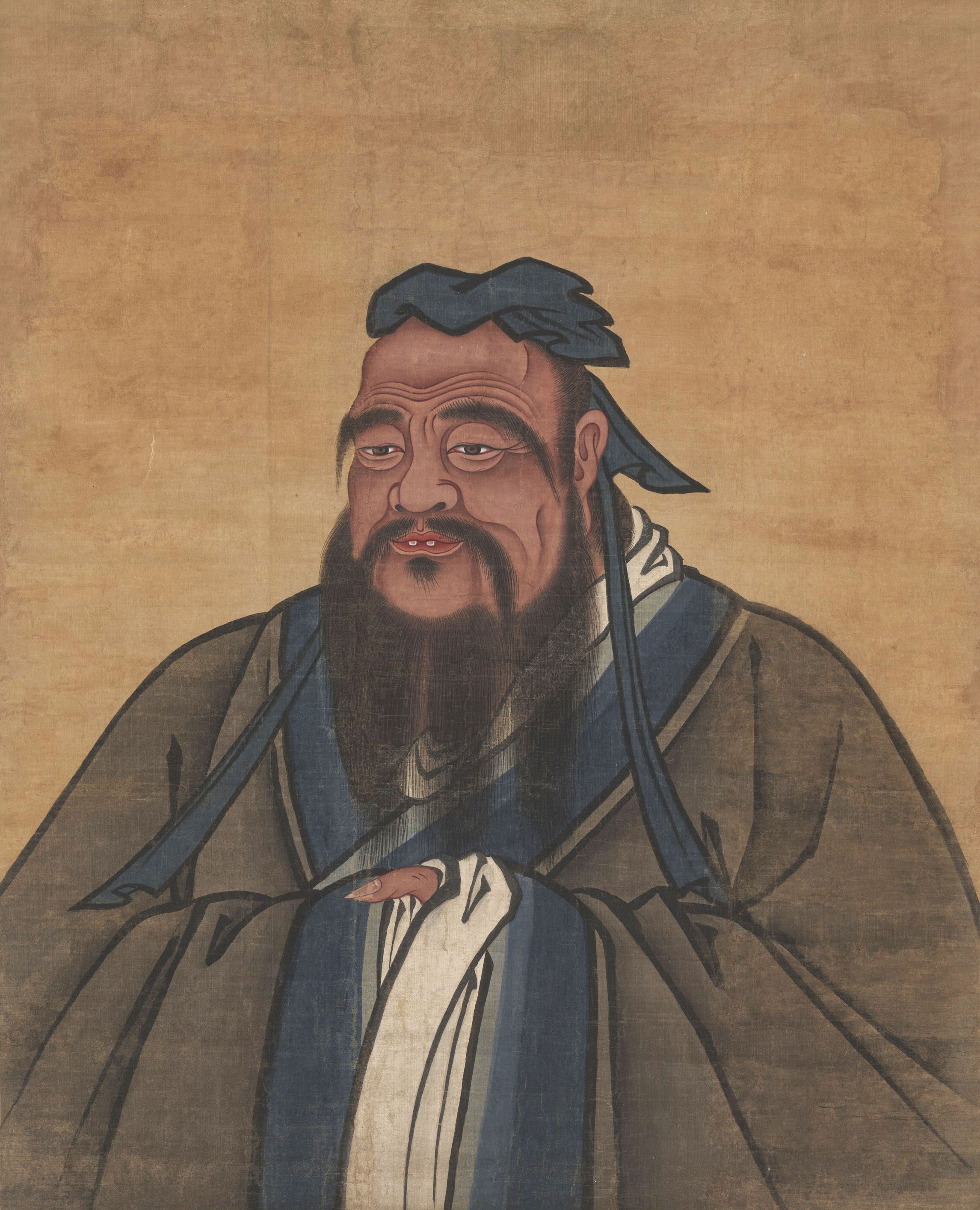
Confucius and Julius Caesar lived roughly four centuries apart on opposite ends of Eurasia, and the comparison is useful precisely because it forces a question about what "foundational" means in different civilizations. Confucius was a teacher and minor official in late Spring and Autumn China who failed to find a ruler willing to put his political ideas into practice. After his death, his disciples preserved his sayings; centuries later, the Han dynasty made Confucianism the state ideology, and it dominated Chinese (and much of Korean, Vietnamese, and Japanese) civil life for roughly two millennia.
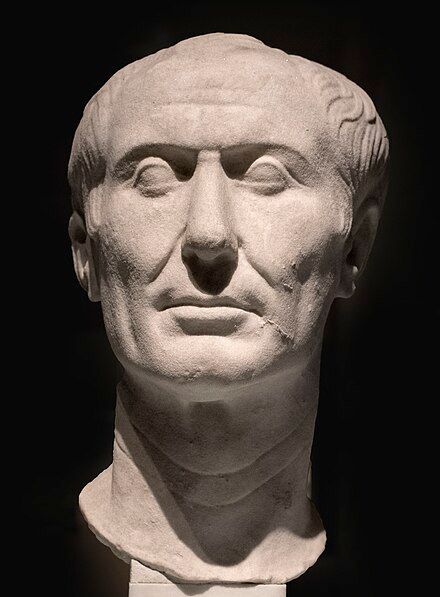
Caesar was a Roman patrician general who conquered Gaul, won a civil war, was made dictator, and was assassinated by a conspiracy of senators. The political system he helped destroy — the Roman Republic — gave way to the imperial system associated with his adopted heir Augustus.
On JudgeMarket, both trade as reputation assets, and the comparison highlights how two completely different theories of how civilizations should be organized continue to compete for attention.
Similarities
Both were political failures by the standards of their own lifetimes. Confucius spent years traveling between feudal states, advising rulers, and being politely ignored or actively rejected; he died believing his teaching had failed. Caesar, despite enormous battlefield success and political concentration of power, was murdered by a conspiracy of his own peers within roughly a year of becoming dictator for life. Both men's "victories" came posthumously, through followers, reformers, and historians.
Both produced texts that became civilizational reference points. The Analects, compiled by Confucius's disciples after his death, became required reading for Chinese civil servants for centuries. Caesar's Commentaries on the Gallic War are still used in introductory Latin and are studied at military academies as examples of clear operational writing. Both texts are short, accessible, and used to teach far more than their nominal subjects.
Both were institutionalized after death in ways they could not have controlled. Confucius was eventually elevated to near-sage status, with temples in his honor across East Asia and an imperial examination system organized around mastery of texts associated with him. Caesar's name became the title for emperors across multiple European languages (Kaiser, Tsar) and his calendar reform put his name on July. Both names became categories rather than mere individuals.
Key Differences
The most basic difference is the kind of authority each represents. Confucius's authority is ethical and pedagogical — he taught that political order rested on personal cultivation, ritual propriety, family relationships, and the example of virtuous leaders. He did not command armies or take power. Caesar's authority was military and political — he won battles, governed provinces, took office, and seized dictatorial power. One man's tool was the lecture; the other's was the legion.
Their relationships with violence diverge sharply. Confucius's program was explicitly about cultivating restraint, ritual, and humaneness (ren) as alternatives to coercion. He believed governments that ruled by force would always be less stable than governments that ruled by moral example. Caesar's career was built on the application of overwhelming force — Gaul, the Rubicon, Pharsalus, the suppression of opposition during his dictatorship.
The longevity of their institutional legacies also differs in interesting ways. Confucianism remained the official state ideology of China across multiple dynasties until the early 20th century — roughly two millennia of continuous institutional presence. Caesar's name persisted across European political systems, but the Republican Rome he destroyed gave way to imperial systems that themselves transformed many times. Confucianism evolved within a relatively continuous civilizational frame; the "Caesarian" tradition fragmented and reconstituted across many.
The Reputation Trade
Confucius is a long-duration global asset whose value depends partly on East Asia's continued cultural confidence. Bulls argue that as East Asian economies and cultural production rise in global prominence, the figure most foundational to that civilizational tradition will be re-engaged with by global audiences. They also note that Confucian ethics has been quietly influential outside Asia (contemporary virtue ethics often draws parallel comparisons). Bears point out that the May Fourth Movement, the Cultural Revolution, and various modernization movements have all attacked Confucianism, that his views on family hierarchy and gender are uncomfortable for many contemporary readers, and that name recognition in some Western markets is shallow.
Caesar is a perpetual Western blue chip. Bulls argue that his name is shorthand for political ambition itself, that his prose remains readable two thousand years later, and that the structure of his story (rise, conquest, dictatorship, assassination) is among the most-told in Western culture. Bears note that the moral weather around conquerors is hostile, and that his already-large fame may have limited further upside.
Price-moving events for Confucius include major academic revivals, political moments in China where Confucian language is invoked (the contemporary CCP has revived selected Confucian framing), translation events, and global K-12 curriculum debates about world philosophy. For Caesar, events include adaptations, political invocations ("crossing the Rubicon" is endlessly reused), archaeological discoveries, and academic debates about the late Republic.
Verdict
A reputation market does not declare an East-versus-West winner. The question is which figure offers more asymmetric upside.
Confucius's upside case: he is the foundational figure for a cultural tradition whose share of global attention is structurally rising. As K-12 curricula globally diversify away from a pure Western canon, and as East Asian states emphasize their own intellectual heritage, Confucius gets new readers. His downside case: in his home tradition he has been periodically attacked by reformers, and some of his positions on hierarchy and gender are uncomfortable for contemporary readers.
Caesar's upside case: he is fully institutionalized in Western political vocabulary and culture, and his story is permanently cinematic. His downside case: he is heavily priced and faces a hostile contemporary mood around militarism and strongman politics.
Someone might reasonably argue that Confucius is structurally underpriced in Western markets and fully priced in East Asia, while Caesar is fully priced in Western markets and underpriced in much of the non-Western world. See also Aristotle vs Confucius and Confucius vs Karl Marx. The market is live — take your position.