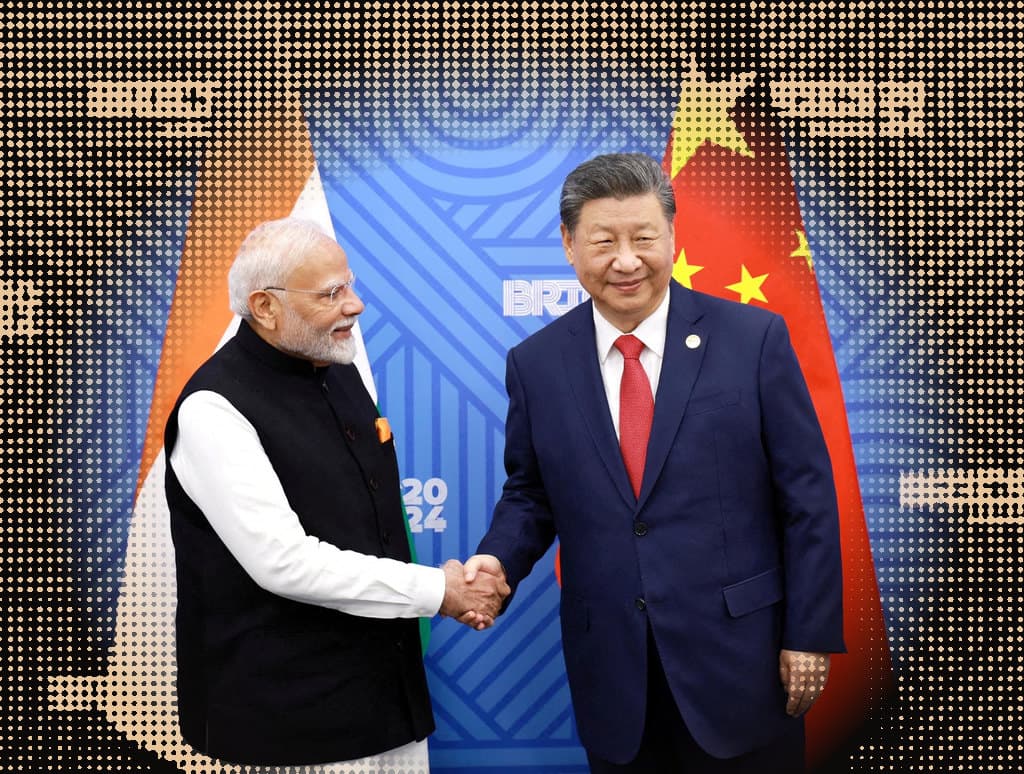
 Xi Jinping will travel to India for the BRICS summit in New Delhi on Sept. 12-13, his first visit to the country in seven years. China's foreign ministry announced the trip on the evening of Sept. 10, saying Xi would attend the 18th BRICS leaders' meeting at the invitation of Indian Prime Minister Narendra Modi, CNA reported.
Will Xi meet Modi? Neither government had said officially that the two leaders would hold a bilateral meeting, though CNA reported that any talks were expected to cover the border, regional security, trade and investment, and preventing renewed escalation along the Line of Actual Control. Ahead of the visit, Indian national security adviser Ajit Doval travelled to China in August, and the two countries' special representatives on the boundary question met. Xi and Modi appeared together at the just-concluded Shanghai Cooperation Organisation summit but held no formal bilateral meeting there.
How have relations changed since 2020? The relationship was transformed by the June 2020 clash in Ladakh that killed 20 Indian and four Chinese soldiers, the Korea Times reported. Patrolling arrangements agreed in October 2024 paved the way for renewed political contacts. Modi visited China in August 2025, and he and Xi last held formal bilateral talks at the SCO summit in Tianjin that month. Direct flights, suspended for more than five years, resumed in October 2025. China is now India's largest trading partner, with goods trade of $151 billion in the 2025-26 financial year, but India's $131 billion of imports from China against $19 billion of exports left a record $112 billion deficit.
What do analysts expect? Lin Minwang, a deputy director of Fudan University's South Asia research centre and a former diplomat at China's embassy in India, said a major breakthrough in relations was unlikely, CNA reported. Harsh Pant of India's Observer Research Foundation said a serious "trust deficit" remained. Indian sources cited in a Reuters report said Chinese authorities had told companies not to sell key technology and infrastructure to India, including port equipment, solar panels and phone-manufacturing equipment. Ajay Srivastava, founder of the Global Trade Research Initiative, said visa and equipment hold-ups in China showed Beijing intended to use India's dependence on it in trade and technology as a bargaining chip. Pant said the relationship was "now being put back on track" but that "it is more stabilisation, rather than any dramatic change," in comments carried by the Korea Times.
Figures referenced: Xi Jinping. — JudgeMarket.

