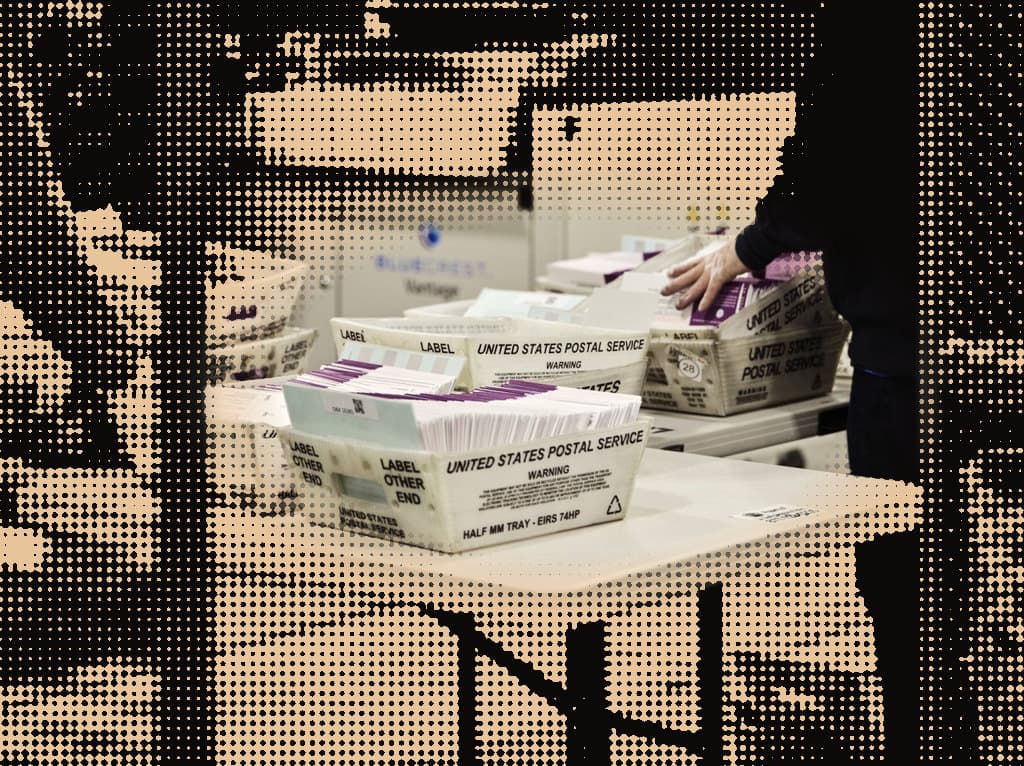
The  Donald Trump administration asked the Supreme Court on Thursday, and again on Sunday, to let the U.S. Postal Service enforce new restrictions on mail ballots, as a federal judge extended her block on the plan. U.S. District Court Judge Indira Talwani on Friday replaced her temporary restraining order with a preliminary injunction, the same day North Carolina began sending out its first mail ballots.
What would the rule require? Under Trump's executive order, the Postal Service could refuse to deliver ballots from states that do not follow a uniform envelope style and submit lists of eligible voters to an online portal, PBS NewsHour reported. The portal was apparently still inactive during Thursday's hearing in Boston. A whistleblower report made public the same week warned that a bar-code error on a single ballot could get a whole batch thrown out.
What did the judge find? "We are 70 days from the election and I have nothing from the USPS about how this will happen," Talwani said at the hearing. In her Friday ruling, she said plaintiff states "are unable to pivot this late in the election cycle, nearly guaranteeing significant disenfranchisement for eligible voters." David Becker of the Center for Election Innovation and Research told PBS NewsHour she found the order violates the Constitution's Elections Clause and several statutes regulating how the Postal Service operates.
What are the two sides arguing? Solicitor General John Sauer said in Thursday's appeal that states "cannot choose to use the federal mails to carry out their elections but then insist that their election-related mail is somehow exempt" from Postal Service rulemaking. He followed on Sunday with a renewed filing asking the justices for an immediate administrative stay, PBS NewsHour reported. It was the third time the administration has asked the high court to intervene, and Sauer said each day the injunction stays in place "risks sowing confusion and chaos." Sophia Lin Lakin, director of the ACLU's Voting Rights Project, said "there is not a shred of evidence that states could comply with it without disenfranchising voters who rely on mail ballots."
What happens next? Justice Ketanji Brown Jackson had set a Sept. 8 deadline for the plaintiffs to answer Thursday's appeal, and the administration told Talwani it would take her injunction to the 1st Circuit Court of Appeals. Sauer said Alabama begins mailing ballots on Sept. 9, with at least five more states the week of Sept. 13.
Figures referenced: Donald Trump. — JudgeMarket.

