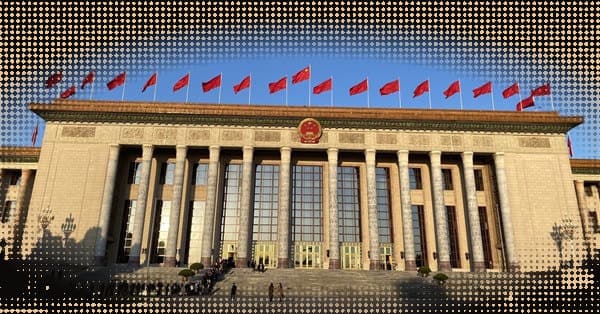
China's revised National Defense Mobilization Law takes effect Oct. 1, and a Taiwanese national security official says the revision reflects the Chinese Communist Party's anxiety about its own security. Under the new version, the official said, the state can forcibly acquire private property whenever necessary.
What changes in the law? China's National People's Congress added guarantees of a "rapid transition between peacetime and wartime," for the first time defined mobilization in terms of sovereignty, unification and territorial integrity, and brought the economic and technology fields within its scope, CNA reported. Where the old law let the state requisition civilian resources, the new one adds expropriation; the difference, the security official said, is that ownership is no longer protected. Among the official's five key points, mobilization work upholds Communist Party leadership and carries out  Xi Jinping's thinking on strengthening the military.
How could Taiwanese be affected? Beyond military mobilization against Taiwan, the security official said, the revision adds political and economic risk for Taiwanese businesses in China, which could at any time face expropriation or see resources deemed related to "development," leaving investments unrecoverable. Officials who work on cross-strait affairs, in a separate CNA report, said Taiwanese traveling to China will face more risks as several new Chinese laws take effect.
Which other laws are involved? Besides the mobilization law, an ethnic-unity law took effect July 1, State Council exit-entry rules follow Sept. 15 and police cyberspace inspection measures Oct. 1, while internet information services rules have yet to be passed, CNA reported. In the cross-strait officials' view, the laws' wording on "national security" or "national interests" is quite vague, which Taiwan's Mainland Affairs Council has called a "blank authorization," letting Communist Party bodies define it freely. "The law is just packaging," the officials said: many arrests and searches have already occurred, and legislation now directly authorizes local government bodies and has a declaratory effect, showing more people that certain actions or remarks could bring arrest or harassment, leading to self-censorship and a chilling effect.
What do officials see behind it? In the security official's view, the revision places technology, industry and infrastructure under state control and, projecting the regime's insecurity, turns every issue into a security issue. The cross-strait officials said the party needs a relatively stable social atmosphere given its Fifth Plenum this year and 21st congress next year. The laws all explicitly mention Xi and socialism and mainly pave the way for the legitimacy of a fourth term for Xi at the 21st congress, they said.
Figures referenced: Xi Jinping. — JudgeMarket.

