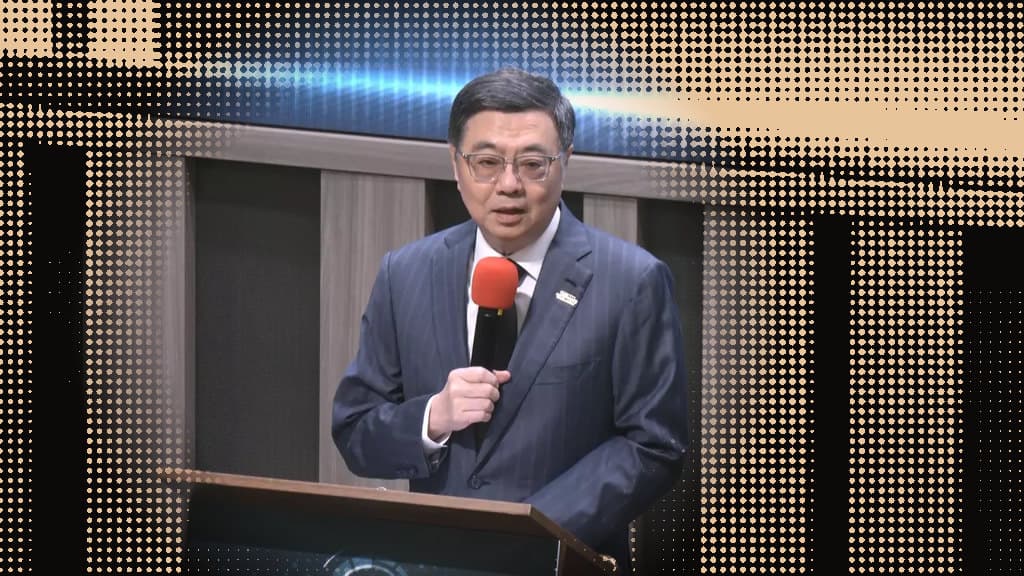
Taiwan Premier Cho Jung-tai said on Sept. 9 that the Executive Yuan can no longer countersign eight legislature-passed bills, a step opposition lawmakers have made a condition for unfreezing his salary, because the deadlines have passed. Asked by host Huang Wei-han on a web programme whether he could countersign even with a knife at his neck, Cho replied "no way," PTS reported.
Why does Cho say it is too late? Article 72 of the constitution requires the president to promulgate a law within 10 days of receiving it, so countersignature is no longer possible, Cho said in remarks reported by the Central News Agency (CNA). Tying it to the salary freeze, he said, set a condition that can never be fulfilled and should be treated as no condition at all. Bowing to the legislature over his pay could leave government chiefs nationwide facing the same treatment, he added. The eight include amendments to the fiscal allocation law, the party assets act and the Legislative Yuan's organic law.
How does he see the power? Cho rejected a University of Warwick law professor's view that countersignature should check the president, saying a premier who refused would be replaced the next day. Because the president has no veto and cannot dissolve the legislature on his own initiative, the premier must withhold countersignature to assist him against bills that are unconstitutional, break fiscal discipline, endanger national sovereignty or infringe on military command, he said.
How did others respond? The Kuomintang said on Sept. 10 that Cho was publicly rewriting the constitution by inventing a veto it does not grant and discarding its reconsideration procedure, CNA reported. The Executive Yuan said freezing his salary violated Interpretation No. 601 and the separation of powers, while Democratic Progressive Party caucus whip Chuang Jui-hsiung said the opposition was using the budget as bait. A Hoover Institution researcher called the refusal unconstitutional but a clever political strategy, the Liberty Times reported.
What else did the interview cover? Cho urged lawmakers to swiftly review next year's general budget, which includes a universal NT$10,000 cash handout he called an "AI dividend," warning that delay would hold up payment. He was also asked about President  Lai Ching-te's remark that Kaohsiung Mayor Chen Chi-mai would have "a bigger microphone" waiting after leaving office, read as hinting at the premiership, the Liberty Times reported. Cho said he meets Lai several times a week and thanked him for his trust.
Figures referenced: Lai Ching-te. — JudgeMarket.

