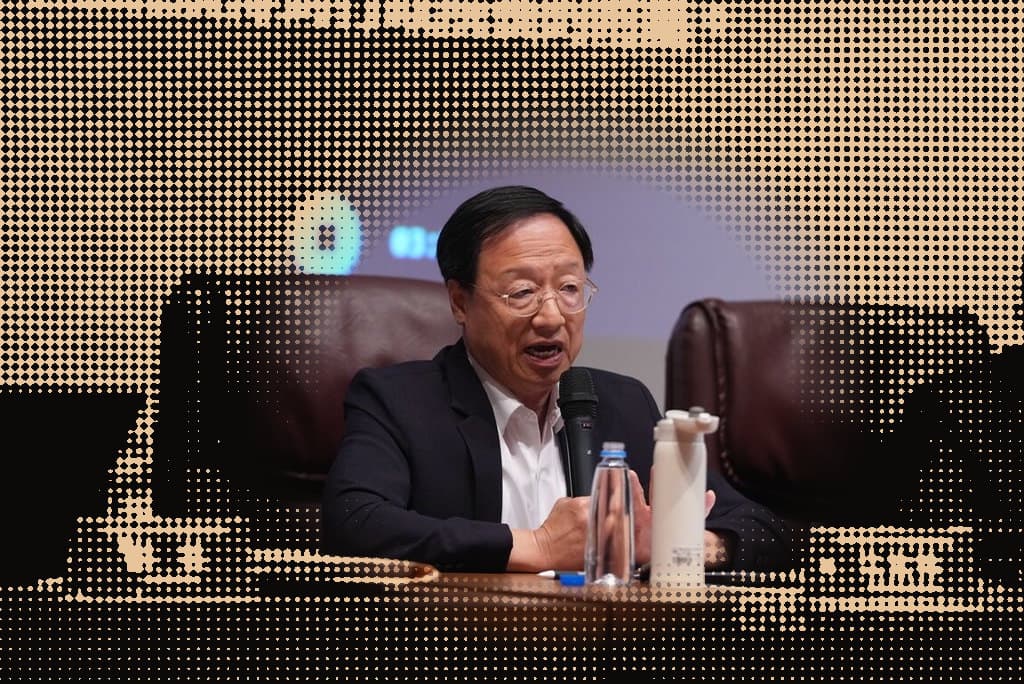
Former Taiwan premier Jiang Yi-huah called the Executive Yuan's refusal to countersign legislature-passed bills unconstitutional on Sept. 12, as opposition parties urged Premier Cho Jung-tai to sign the rest after he countersigned a drone act. Jiang spoke at a seminar marking 30 years of direct presidential elections, where former Democratic Progressive Party chairman Hsu Hsin-liang said the opposition had violated constitutional norms first. The result was a standoff of "unconstitutionality against unconstitutionality," Hsu said, in remarks reported by CNA.
What did Jiang argue? Once the legislature upholds a bill after a failed reconsideration request, the constitution says the Executive Yuan "shall immediately accept" the resolution, Jiang said. He said the countersignature power, set out in the constitution's chapter on the president, was meant to let the premier check the president, and called its use against the legislature "a very strange misplacement."
How did Hsu respond? Hsu said he agreed with Jiang that the countersignature power is aimed at the president rather than at vetoing parliament, and that using it against the legislature's resolutions "does not accord with constitutional principles," CNA reported. But he said some opposition-backed bills, including ones raising government spending, cutting revenue or concerning how constitutional bodies operate, had violated the spirit of the constitutional system first. Taiwan needed "not a Machiavellian moment" but "an era of grand reconciliation," Hsu said, urging the parties to stop their constitutional confrontation and build consensus through negotiation.
What prompted the calls to sign the remaining bills? Cho said on Sept. 11 that he had countersigned the drone-industry act, and that his only standard was that a bill not violate the constitution or law, nor undermine the separation of powers or fiscal discipline, CNA reported. Kuomintang caucus secretary-general Hsu Yu-chen said countersigning was a procedure the premier should follow in the first place and urged prompt handling of the rest. The Taiwan People's Party caucus asked whether eight other uncountersigned bills should also be promulgated, saying the Executive Yuan could not apply two standards.
What did the Democratic Progressive Party caucus say? Caucus secretary-general Fan Yun said it respected the decision and that urgent defence needs could not wait, urging the Kuomintang and the Taiwan People's Party to review the annual budget on time.
