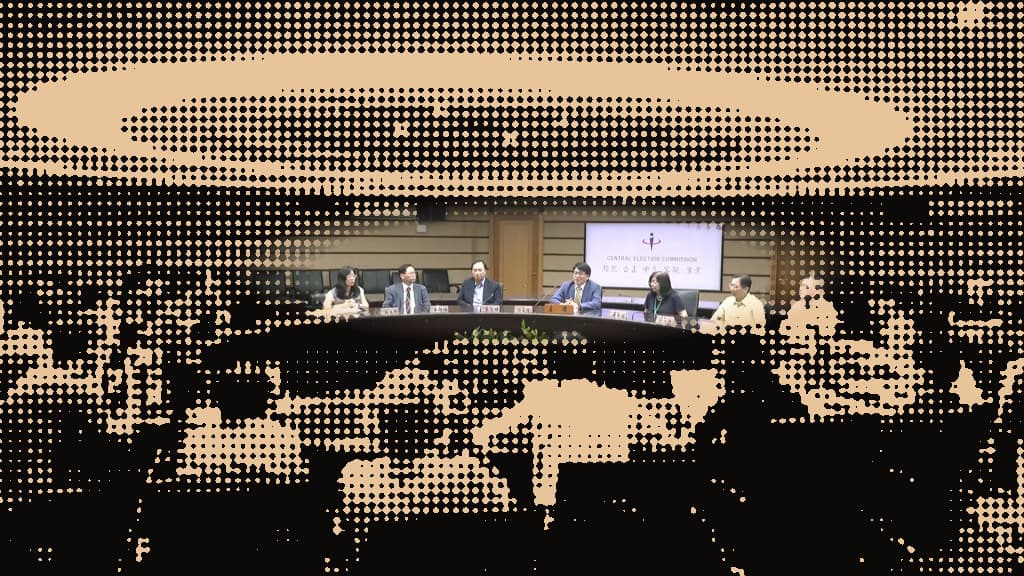
Taiwan's Central Election Commission on Aug. 28 rejected opposition-backed referendums on caning and on earmarking traffic fines, approving only a proposal to abolish the "nuclear-free homeland" policy for the Nov. 28 local elections. The Legislative Yuan had passed all three proposals on Aug. 14, and commission chairman You Ying-lung said the added referendum would cost NT$810 million.
Why was the caning proposal rejected? All seven voting commissioners found it did not meet the Referendum Act's test of a major policy initiative or referendum, because current law has no caning or similar punishment and the proposal amounted to initiating a legislative principle, CNA reported. The proposal targeted sexual assault, child abuse and large-scale fraud. You also cited the International Covenant on Civil and Political Rights' ban on cruel, inhuman or degrading punishment, saying caning risked violating the implementing act Taiwan passed in 2009.
How were the other two proposals decided? Commissioners split 4-3 against the traffic-fine proposal in three consecutive rounds of voting. Major matters normally need five of the commission's eight members, but a third round is settled by simple majority, You said. Li Li-chung, Su Chia-hung and Su Tzu-chiao, commissioners recommended by the opposition parties, voted that the proposal qualified, PTS reported. The nuclear proposal cleared with six votes in favour and one abstention.
How did the parties respond? The Kuomintang (KMT) legislative caucus lodged its "strongest protest," with caucus secretary-general Lin Pei-hsiang asking whether people now need the commission's permission to vote yes or no. Hung Meng-kai, the KMT legislator who led the caning proposal, called the decision "the most concrete proof of Taiwan's democratic regression," CNA reported. Taiwan People's Party (TPP) chair Huang Kuo-chang, whose caucus had proposed the traffic-fine measure, cited nearly 3,000 traffic deaths a year, called the ruling infuriating and vowed to pursue every available remedy. For the Democratic Progressive Party, caucus secretary-general Chuang Jui-hsiung said that if the commission had to accept whatever the legislative majority sent, "that is not review, just a rubber stamp."
What happens next? The nuclear question becomes national referendum No. 22, with polling from 8 a.m. to 4 p.m. on Nov. 28, CNA reported. The KMT plans 100 local referendum outreach talks plus short social-media videos to win yes votes. Chuang said on Aug. 30 that the KMT, which holds a legislative majority, could instead propose amending the Criminal Code to add caning as a principal punishment.
