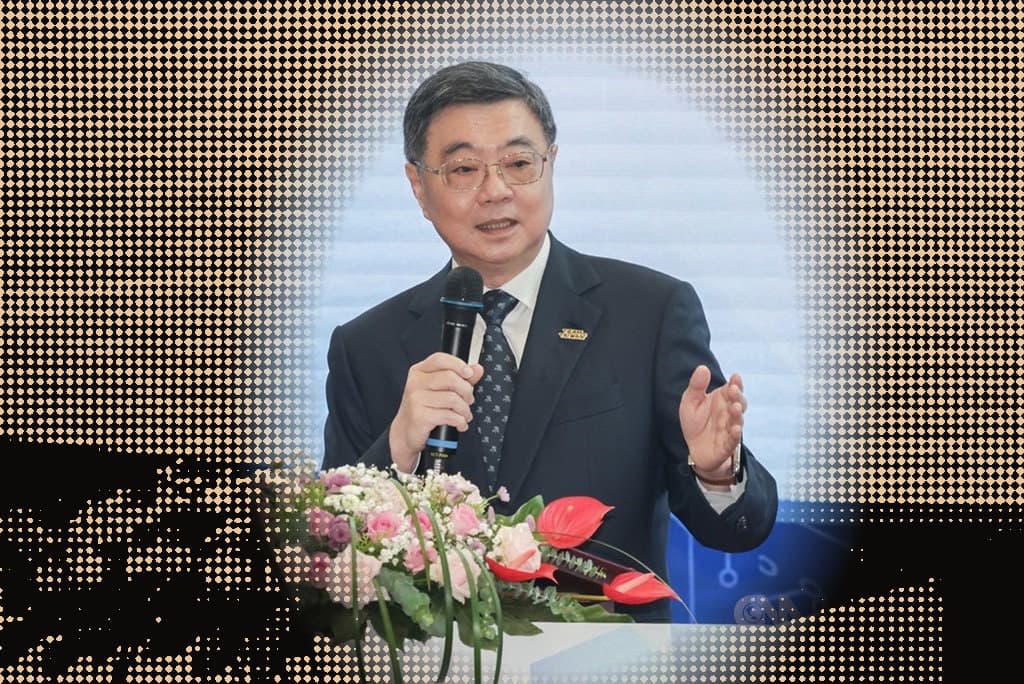
Taiwan's Premier Cho Jung-tai said on September 7 he did not countersign three broadcasting law amendments passed by the legislature this year because they would let party, government and military forces back into the media. The Executive Yuan has declined to countersign eight bills in all, CNA reported. Cho was speaking at the award ceremony for the 23rd Golden Archives Award and Gold Quality Award for agency archives management.
Why did he withhold his signature? The amendments changed the Satellite Broadcasting Act, the Cable Radio and Television Act and the Radio and Television Act. Cho, whose speech recalled Taiwan's move out of more than 38 years of martial law and the gradual breaking of the bans on political parties and newspapers, said in remarks reported by CNA that interference in the media by the party, government and military had been blatant and unabashed in the party-state era. Only after those forces withdrew through democratic procedures was a free and autonomous media environment built, he said, and the legislature's changes would let them intervene again: "I'm sorry, I did not countersign."
How did he describe the fallout? Cho, who has been criticized over the eight refusals, said the Executive Yuan had not wanted the three bills to become amendments interfering with media autonomy, yet they had turned into a key sticking point between it and the legislature. Every refusal had been passive, he said, since the Executive Yuan would have had no reason to withhold its signature from an amendment that did not restore party, government and military power. Refusing had offended many people, "but this is to ensure media autonomy, and I feel I should play the role of goalkeeper," he said. Once he became the goalkeeper, he added, his situation would be like that of the goalkeeper in the film Shaolin Soccer, with row after row of balls coming at him.
What else did he block? Cho said he also declined to countersign a bill on decriminalizing assistant fees, because if that amendment were allowed to take effect, assistant fees would be decriminalized, CNA reported. Turning to the National Archives, he said its founding was a precious and important step in the development of democratic politics, and that future national archives would show the government refusing to let a single amendment restore party, government and military power in the media ecosystem. That, he said, was the Executive Yuan's responsibility to history and his own responsibility to the Executive Yuan.
