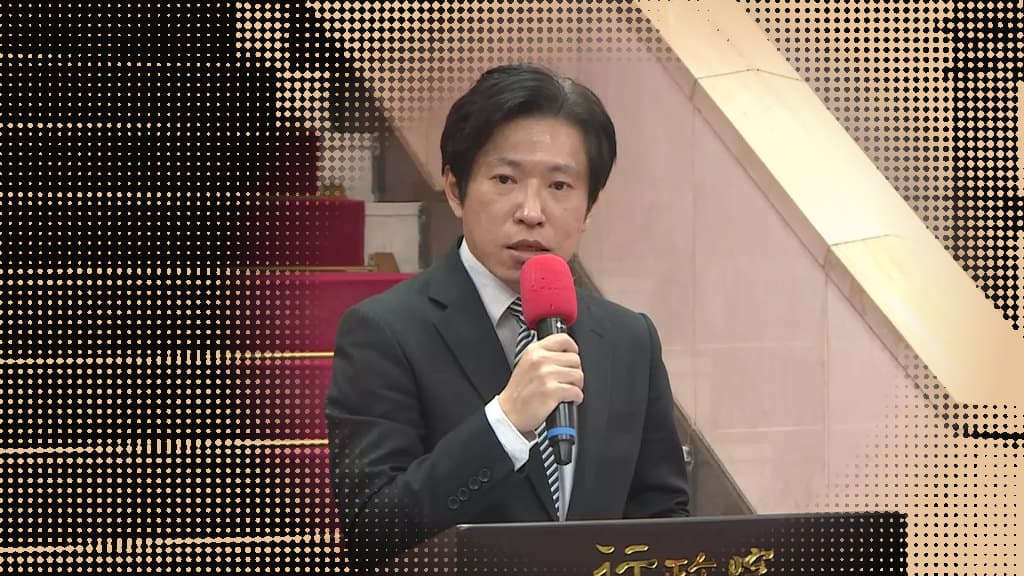
Premier Cho Jung-tai countersigned the opposition-drafted act to strengthen defense autonomy and develop Taiwan's uncrewed vehicle industry on Sept. 11, and President  Lai Ching-te promulgated it by presidential order the same day. The Cabinet signed on the last day of its deadline, and the Presidential Office issued the order swiftly afterwards, PTS reported. The legislature passed the opposition version on Aug. 27 instead of the Cabinet's own special procurement act.
What does the act require? The central government must budget NT$240 billion over six consecutive years through the annual budget process, in principle NT$40 billion a year, with the total and yearly sums open to increase if they fall short, CNA reported. The Ministry of Economic Affairs is the competent authority, except for military procurement, which falls to the Ministry of National Defense.
What did the government say? Executive Yuan Secretary-General Chang Tun-han said defense security and industrial upgrading "cannot wait," and that each day earlier the armed forces' capability takes shape adds a day of deterrence. Chang said the Cabinet would budget to actual needs, since Article 4 sets no ceiling, and would guard state secrets strictly. Cho, speaking in Chiayi, said his only test was whether a bill was unconstitutional or unlawful or undermined the separation of powers and fiscal discipline, and that the act raised no such concern, though it was "very regrettable" that the Cabinet asked for A and got B. The Cabinet sent lawmakers a supplementary budget last week with NT$55.9 billion for uncrewed vehicles. Lai, visiting the army's Unmanned Systems Training Command in Tainan that morning, said the government's determination to develop uncrewed vehicles "is very clear," in remarks carried by PTS.
How did the parties react? KMT chair  Cheng Li-wun, in a statement reported by CNA, said the countersignature was neither a concession nor goodwill but a constitutional duty, merely "stopping a mistake and returning to the right track." Cheng also said the NT$55.9 billion in the supplementary budget bore out the KMT's position, and urged action on eight other bills the Cabinet had declined to countersign. KMT official Chen I-hsin said Cho had invented a "super executive veto" by signing the drone act while refusing to countersign a children's future accounts act. Democratic Progressive Party caucus secretary-general Fan Yun said the caucus regretted the Cabinet's version had failed but respected the decision, and Taiwan People's Party caucus convener Chen Ching-lung said the government was treating a constitutional norm as a favor.
Figures referenced: Lai Ching-te, Cheng Li-wun. — JudgeMarket.


