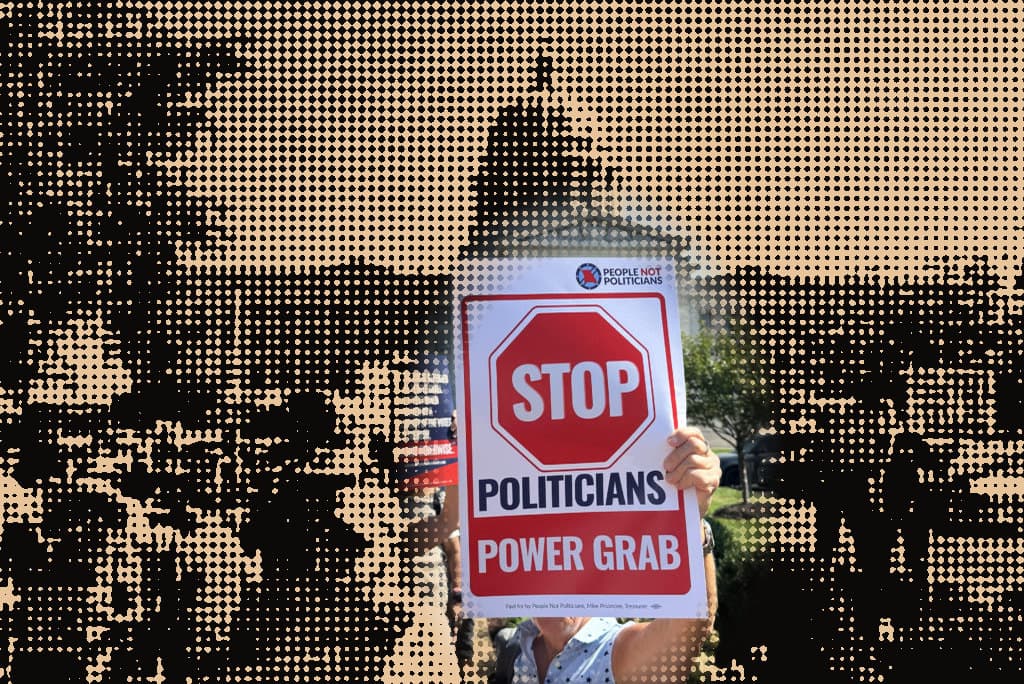
The Missouri Supreme Court unanimously blocked a Republican-drawn congressional map backed by  Donald Trump from use in the November election on Thursday, ruling it cannot take effect unless voters approve it. Under the ruling, quoted by PBS NewsHour, the map adopted after the 2020 census "remains in full force and effect for the November 2026 general election." The decision is a setback for Republicans, who had sought the new lines to gain an additional House seat.
Why did the court rule against the map? The justices held that the new districts were effectively placed on hold in December, when opponents submitted more than 300,000 petition signatures seeking a referendum, PBS NewsHour reported. Republican Secretary of State Denny Hoskins waited until primary day in August to reject the petition, saying the referendum process cannot be used for congressional redistricting; a lower court agreed, but the Supreme Court overturned his decision. The court found that a constitutional provision allowing a referendum on "any act" of the Legislature covers redistricting. "The referendum petition was legal, sufficient, and timely, and the secretary incorrectly concluded otherwise," the court said.
How did the two sides respond? Trump said on Truth Social that the justices had "ridiculously ruled in favor of changing the maps back to what they were a long time ago." Attorney General Catherine Hanaway, a Republican whose office represented Hoskins, said she would immediately appeal to the U.S. Supreme Court and that the decision "has thrust our state into a full‑fledged constitutional crisis." She and Gov. Mike Kehoe, who proposed the map, called the ruling an unprecedented violation of federal law, PBS NewsHour reported. "This is what democracy looks like," said Richard von Glahn, executive director of People Not Politicians Missouri, which sponsored the petition.
Who is affected? After Trump urged Republicans to redraw districts to their advantage, Kehoe called a special session last year to reconfigure the Kansas City-based 5th Congressional District, held by Democrat Emanuel Cleaver. Republican state Sen. Rick Brattin won an August primary in the reshaped district, where about 59% of voters were new under the revised map, by an Associated Press estimate. Brattin said the decision disenfranchises thousands of primary voters, while Cleaver said "the people fought back and won." Missouri currently has six Republicans and two Democrats in the U.S. House.
Figures referenced: Donald Trump. — JudgeMarket.

