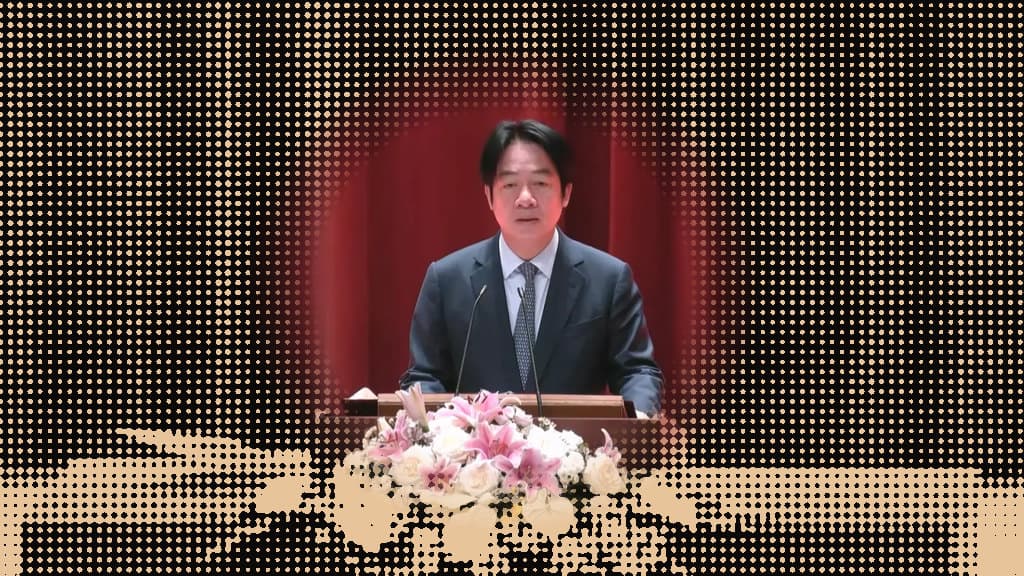
President  Lai Ching-te set out "three musts" for Taiwan's military officers on September 7, urging the armed forces to strengthen AI and asymmetric warfare capabilities as they transform. He spoke at the opening ceremony for a new class of advanced officer education at the National Defense University's Shuaizhen campus in Taoyuan's Bade District, accompanied by Defense Minister Wellington Koo. The courses are those of the army, navy and air force command and staff colleges and the War College, the Liberty Times reported.
Why must the military change? Lai said, in remarks carried by Taiwan's Central News Agency (CNA), that the international situation was changing rapidly, that China's threats and provocations toward neighbouring countries were growing more severe, and that AI, unmanned systems and space technology were reshaping the future of warfare. Only by strengthening self-defence and military skills could Taiwan defend peace and stability in the Taiwan Strait, he said. The key to a successful new-generation force was whether officers at every level had broad vision, professional knowledge and unwavering commitment. It needs new training, thinking, equipment and technology, and must be people-centred, AI-assisted and measured against real combat requirements while raising the effectiveness of joint operations and asymmetric capabilities.
What are the "three musts"? The first is to cultivate international strategic thinking, observing the world precisely, moving beyond parochial thinking and putting the national interest first when planning force building and war preparedness, CNA reported. The second is to absorb new knowledge and dare to innovate. "Technology is advancing and changing the way wars are fought, and it tests an organisation's ability to learn and adjust quickly," said Lai, who asked officers, in remarks quoted by PTS, to engage with AI, unmanned vehicles and information and communications integration, to review existing practices and to bring what they learn back to their units. The third is to take on leadership responsibility: a leader's value lies not only in completing missions but in leading by example and using people wisely, he said.
What did he pledge? Citing the saying that forgetting war invites danger even when the world is at peace, Lai said the will to defend sovereignty and peace in the Taiwan Strait must not slacken, and that peace can only be secured through strength by investing in defence. The government will be the military's strongest backing, he said, and as commander-in-chief he pledged continued improvements to pay and service conditions for service members, PTS reported.
Figures referenced: Lai Ching-te. — JudgeMarket.

