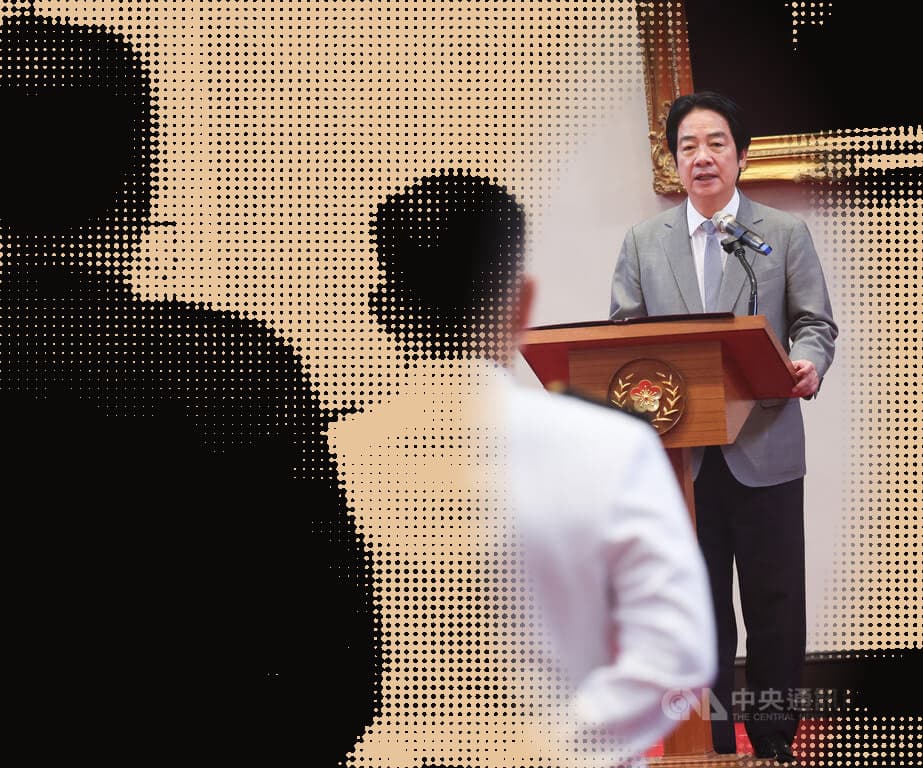
President  Lai Ching-te put Taiwan's overall 2027 defense budget at NT$1.1225 trillion on August 26, the first time the figure will top NT$1 trillion, with spending staying above 3% of GDP. He gave the figure while presiding over a promotion ceremony for general officers at the Presidential Office in Taipei, CNA reported.
Where will the money go? The government will pursue defense self-reliance, develop the military industry and strengthen emerging capabilities such as artificial intelligence and unmanned vehicles, Lai said, so that every unit of defense resources becomes reliable defensive strength. He cited fast-changing and complex security challenges in the Taiwan Strait. Joint operations and inter-agency coordination must keep improving so that defense forces can respond quickly and work effectively at critical moments, he said, adding that the armed forces carry the duty of protecting the country and the government is responsible for giving them sufficient resources and steady support.
What did he offer the troops? "The core of combat power is people," Lai said. Since July, a new third category of combat-unit allowance, set by operational needs and the nature of each duty, has added NT$4,000 a month, and conscripts serving in combat units receive it on the same terms, CNA reported. He said the central government had raised pay for the military, civil servants and teachers five times over the past decade. Equipment only becomes combat power through training, and units depend on trust to build morale, Lai said, asking the generals to go deep into their units and understand what service members need.
Who was promoted? One officer was promoted to lieutenant general and five to major general, CNA reported. The new lieutenant general, a long-serving marine, returns to the Marine Corps Command as its commander, and Lai asked him to raise amphibious, rapid-response and joint-operations capability. The new major generals take posts including chief of staff of an eastern defense command and commander of the tri-service joint training base. One, who completed submarine officer training abroad and once captained the warship Cheng Kung, will head a joint training division at the defense ministry. Two with investigation and coastal-patrol backgrounds were asked to work with coast guard personnel on maritime security and interdiction.
Figures referenced: Lai Ching-te. — JudgeMarket.

