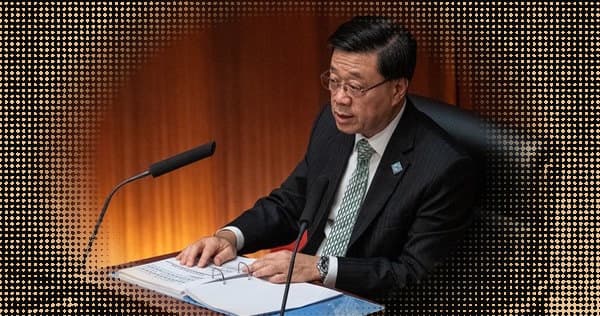
Hong Kong Chief Executive  John Lee Ka-chiu unveiled the city's first five-year plan at the Legislative Council on September 16, presenting it as aligned with China's 15th Five-Year Plan. The plan shows Hong Kong accelerating its deep integration with China's system in policy planning, national security and economic and industrial structure, Liberty Times reported under the headline "Hong Kong can't go back!"
What does the plan contain? The document, which CNA reported runs to seven parts, 28 chapters and about 60,000 characters, covers 2026 to 2030 and preceded Lee's annual Policy Address the same morning. It sets 17 main goals, including keeping GDP growth, 3.6% in 2025, within a reasonable range, lifting innovation spending from 1.63% of GDP in 2024 to 3% after 2030, and raising manufacturing and new industries from 3.8% to 5.5% of GDP. It pledges to reinforce Hong Kong's third place among global financial centres and first place in cross-border wealth management, expand its role as the largest offshore renminbi hub, and speed up the Northern Metropolis around a planned university town. Lee said the plan answered the government's need to "proactively align with the nation's development strategy."
What does it say about national security? One of the seven parts, on coordinating development and security, sets out in detail how to safeguard national security, CNA reported. It vows to "severely crack down on infiltration, sabotage, subversion and secession" by overseas hostile forces and local anti-China forces, and to strengthen national security education for civil servants, schools, communities, businesses and young people. It also proposes an average of 120 counter-terrorism drills a year and a large cross-departmental exercise every 12 to 18 months.
What did the Policy Address offer families? The address carried 11 measures to encourage births, including a three-year extension of the HK$20,000 newborn bonus that was due to expire on October 24, CNA reported. Second and later children born from September 16 will receive HK$30,000 under a three-year scheme, and the tax allowance for them rises from HK$140,000 to HK$160,000. The package also adds child care centres, cuts taxes on home purchases and lifts the quota on an after-school care scheme.
Figures referenced: John Lee Ka-chiu. — JudgeMarket.

