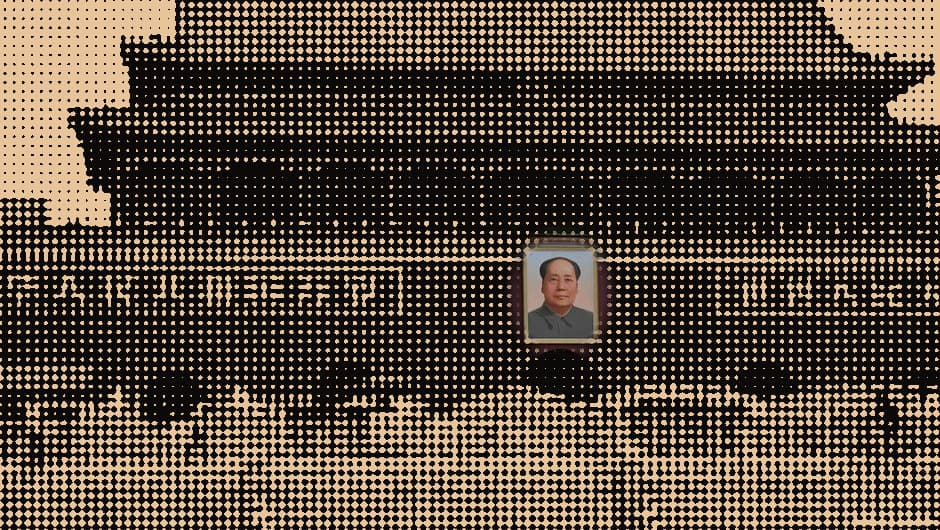
The 50th anniversary of  Mao Zedong's death on September 9 drew crowds of supporters to his hometown of Shaoshan, as analysts weighed how much of his legacy endures under
 Xi Jinping. Mao, who died in 1976 after nearly 27 years ruling China, still casts a shadow over the country's future, CNA reported, citing Reuters.
How was the anniversary marked? Crowds of Mao's admirers poured into Shaoshan on September 8. They marched with red banners bearing slogans from his era and sang revolutionary songs, CNA reported, citing Chinese online posts. In Beijing, the memorial hall for Mao on Tiananmen Square, which had extended its hours into the afternoon as usual, drew long queues on the anniversary morning.
How has the leadership treated his legacy? Xi, who was persecuted during the Cultural Revolution, has abolished term limits and written his political thought into the party and state constitutions, moves that have invited comparisons with Mao. Since taking power in 2012 he has maintained that the reform era should not be used to negate the era before it, and has increasingly revived some of its practices, CNA reported, citing a Reuters analysis. He has never publicly blamed Mao for what he and his family suffered. Joseph Torigian of American University, a biographer of Xi's father, said the Cultural Revolution was deeply disillusioning for Xi, though he still sees some redemptive meaning in it because it toughened him.
How do analysts compare the two? Felix Wemheuer of the University of Cologne said Xi possesses neither Mao's historical authority nor his charisma and places greater emphasis on control and top-down governance, DW reported. Jean Christopher Mittelstaedt of the University of Zurich, who told the broadcaster that "Xi Jinping remains a product of the system Mao created," likewise cautioned against equating the two.
What lies behind the nostalgia? China has seen recurring waves of Mao nostalgia, including a new one among young Chinese, DW reported. Some Chinese invoke Mao online, longing for an era they describe as free of inequality, but Mittelstaedt said it was in many respects more unequal than China today, making the longing an indictment of widening inequality, soaring housing prices and limited social mobility. Chang Ping, a veteran journalist and commentator quoted by DW, linked it to shrinking space for public criticism, saying Mao remains a symbol official ideology cannot entirely exclude.
Figures referenced: Mao Zedong, Xi Jinping. — JudgeMarket.


