Judge Market 标志JudgeMarketUS
奖励 邀请好友 资讯 博客 开发者 客服支持
© 2026 JudgeMarket
AboutPrivacyTermsWhat is OPSNewsBlog
首页钱包
Home>Lai Ching-te>FAQ

Lai Ching-te: 15 Frequently Asked Questions

Explore 15 FAQs about Lai Ching-te (William Lai) — President of the Republic of China since 2024, former Premier and DPP chairman, and a defining figure of Taiwan's current political era. Trade his reputation on JudgeMarket.
May 27, 2026
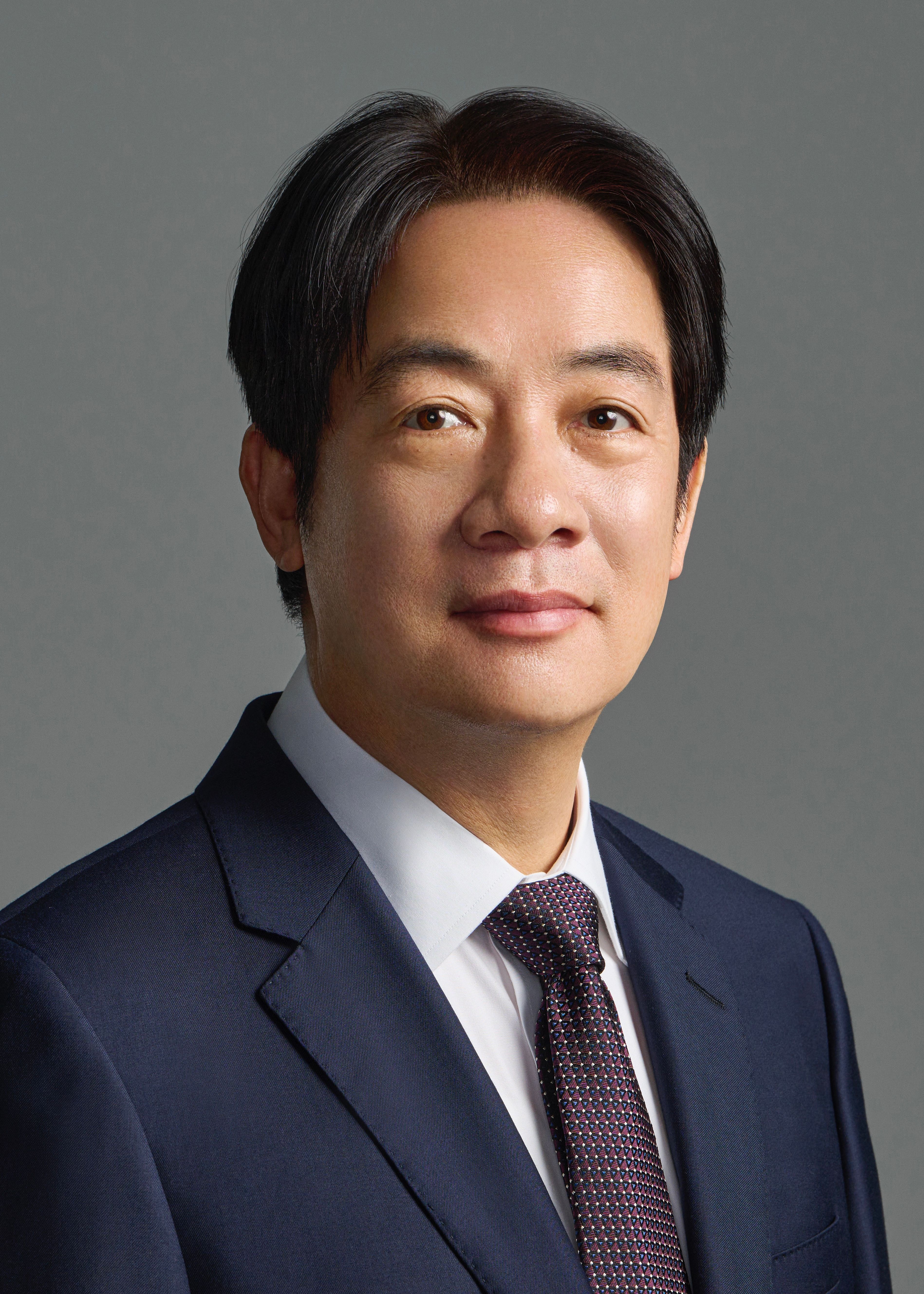
Lai Ching-te
Lai Ching-te50.00 OPS -2.44%
Trade Now →
Who is Lai Ching-te and why is he famous?
Lai Ching-te (born 1959), known internationally as William Lai, has served as President of the Republic of China (Taiwan) since May 2024. A physician by training with degrees from National Taiwan University and Harvard School of Public Health, he entered politics with the Democratic Progressive Party in the 1990s. He served as Mayor of Tainan from 2010 to 2017, Premier under President Tsai Ing-wen from 2017 to 2019, and Vice President from 2020 to 2024. His 2024 presidential victory delivered the DPP an unprecedented third consecutive term, though without a legislative majority — creating a divided government in which Han Kuo-yu serves as KMT Legislative Yuan Speaker. He is one of the most closely watched leaders in contemporary East Asian geopolitics.
What is Lai Ching-te's main political legacy?
Lai's legacy is still being written. His early presidency has emphasized continuity with Tsai Ing-wen's strategic positioning — defending Taiwan's de facto sovereignty without formal independence declarations, deepening US-Taiwan defense and economic ties, expanding the semiconductor and advanced manufacturing base, and modernizing the military through asymmetric capabilities. His "Four Pillars" framework for peace and stability across the Taiwan Strait articulates a doctrine of deterrence, economic resilience, democratic alliance partnership, and steady cross-strait dialogue principles. He faces an unusually difficult inheritance: a more assertive Xi Jinping-led China, a US in political flux, and a divided legislature at home.
Why is Lai Ching-te controversial?
Lai is controversial primarily for past statements describing himself as a "pragmatic worker for Taiwanese independence" — language that mainland Chinese authorities have seized upon to portray him as a more confrontational figure than Tsai Ing-wen. His administration has faced PLA military exercises and rhetorical pressure exceeding those under his predecessor. Domestically, the divided legislature has produced intense partisan conflict over budget allocations, judicial appointments, and parliamentary reforms, with Han Kuo-yu and the KMT majority forcing confrontation. Critics also point to housing affordability, energy supply constraints, declining birth rates, and a series of internal DPP disputes. Supporters argue that he has handled exceptional pressure with discipline and that the divided government reflects Taiwan's democratic vitality.
What was Lai Ching-te's background before politics?
Lai was born in 1959 in Wanli District (now part of New Taipei), the son of a coal miner who died in an accident when Lai was young. He studied rehabilitation medicine at National Taiwan University, became a physician, and later earned a Master of Public Health from Harvard. He entered politics through the DPP in the mid-1990s, serving as a Legislative Yuan member before being elected Mayor of Tainan in 2010. His tenure as Tainan mayor was widely praised for administrative competence and post-earthquake disaster response, building his profile as a deliverable, hands-on executive. He was selected as Premier in 2017, served as Vice President under Tsai Ing-wen starting in 2020, and won the DPP presidential nomination in 2023.
How did Lai Ching-te win the 2024 election?
The January 2024 election was a three-way race between Lai, KMT candidate Hou Yu-ih, and TPP candidate Ko Wen-je. The opposition's failed attempt to form a unified ticket — which collapsed publicly in November 2023 — split the anti-DPP vote, allowing Lai to win with approximately 40 percent. The DPP simultaneously lost its legislative majority for the first time since 2016, with the KMT becoming the largest party and the TPP holding the balance of power. This produced the divided government that has defined his presidency to date. His running mate, former Taiwan envoy to the United States Hsiao Bi-khim, was widely seen as a strategic choice to reassure Washington of continuity from the Tsai Ing-wen era.
How has Lai handled relations with China?
Lai's cross-strait approach maintains the Tsai Ing-wen framework — no formal independence declaration, no acceptance of the "1992 Consensus," and emphasis on Taiwan's existing constitutional status as the Republic of China. His inauguration speech included passages on Taiwan's sovereignty that Beijing characterized as provocative, prompting PLA exercises shortly afterward. Despite the rhetoric, his administration has continued substantive trade with the mainland and avoided major escalatory moves. The PRC under Xi Jinping has signaled it views Lai with greater hostility than Tsai Ing-wen, but has also avoided actions that would risk full conflict. The cross-strait situation under his presidency is characterized by continuous low-grade pressure rather than sharp crisis.
How is Lai Ching-te viewed differently across regions?
Within Taiwan, Lai's approval reflects the polarized partisan landscape — strong support among DPP voters and many independents, opposition from KMT and TPP partisans, with cross-strait policy and domestic economic issues both factoring heavily. In the United States and democratic Asia, he is generally viewed as a reliable continuation of Taiwan's strategic positioning, though some observers worry about his independence-coded past statements. In mainland China, he is treated with substantially more hostility than Tsai Ing-wen, characterized in official media as a separatist. In Japan, sentiment is broadly favorable given shared strategic interests vis-a-vis the PRC, and under Sanae Takaichi Japan-Taiwan relations have continued to deepen.
How does Lai relate to his predecessors?
Lai represents continuity with Tsai Ing-wen's strategic posture but with a more direct rhetorical lineage from the DPP's pro-independence founding generation. Compared to Chen Shui-bian, Lai is far more disciplined and has avoided personal scandals. Compared to Lee Teng-hui, Lai inherits but did not create the institutional framework of Taiwanese democracy. He has positioned himself as a defender of Taiwan's democratic consolidation while accommodating constraints — including the divided legislature with Han Kuo-yu as Speaker — that limit his unilateral action. His political style is generally seen as more direct and less lawyerly than Tsai Ing-wen's.
What economic and domestic policy issues face Lai?
Domestic challenges include some of Asia's lowest birth rates, housing affordability in major cities, energy supply concerns following nuclear phase-out commitments, wage stagnation, and tensions over pension reform implementation. The semiconductor sector remains a powerhouse with TSMC at the center of global supply chains, but concentrating economic dependence on a single industry creates vulnerabilities. The divided legislature has constrained budget execution and prompted constitutional disputes over executive-legislative powers. The KMT-TPP majority has pursued legislative reforms that the DPP and Constitutional Court have challenged. Economic relations with mainland China have shifted toward greater integration with the United States, Japan, and Southeast Asia under New Southbound Policy continuation.
What is the bull case for Lai Ching-te's reputation?
Bulls argue Lai inherits the strongest international position any Taiwan president has held and is executing it with discipline. They cite continued semiconductor industry leadership, deepening US and Japan alliances, maintained cross-strait stability despite pressure, the orderly continuation of DPP governance, and the test-passing nature of his early presidency. They contend his physician's temperament — methodical and detail-oriented — suits a moment requiring careful calibration. If Taiwan continues to thrive economically and avoids conflict on his watch, his reputation builds on the Tsai Ing-wen foundation toward potential foundational status. They point to his deep grassroots connection through his Tainan years.
What is the bear case for Lai Ching-te's reputation?
Bears point to escalated cross-strait military pressure under his presidency, his past independence statements that may invite further PRC response, the divided government that limits effective governance, ongoing domestic economic challenges he has not yet addressed, and the inherent strategic vulnerability of Taiwan's geopolitical position. Critics argue that the gap between his rhetoric and policy creates inconsistency that benefits neither moderates nor independence advocates. They worry about over-dependence on the United States in a moment of US political turbulence. From the Beijing perspective, of course, he is a fundamentally destabilizing figure.
How does Lai Ching-te's OPS price on JudgeMarket reflect public consensus?
Lai Ching-te is among the more actively traded contemporary Taiwan assets on JudgeMarket. His price reflects the cross-pressure between strong international democratic sentiment, polarized Taiwan domestic opinion, and active mainland Chinese antagonism. Sudden cross-strait events — PLA exercises, diplomatic developments, US-Taiwan announcements — can produce visible price moves. Unlike completed presidencies like Tsai Ing-wen, his price is genuinely uncertain because his legacy is being written in real time. The order book typically shows wide spreads reflecting the disagreement between his bull and bear cases.
What events typically move Lai Ching-te's price?
Lai's price moves on cross-strait events (PLA exercises, PRC official statements, diplomatic moves), US-Taiwan developments (arms sales, official visits, statements from the US administration), domestic political battles (legislative confrontations with Han Kuo-yu and the KMT-TPP majority), economic data (semiconductor exports, GDP releases), regional security developments involving Sanae Takaichi's Japan and South Korea, his own public statements particularly on cross-strait identity questions, and major elections (local elections, by-elections). Xi Jinping-related news cycles also influence his price by affecting cross-strait risk perception.
How does Lai Ching-te compare to other Taiwan leaders?
Compared to Tsai Ing-wen, Lai is more direct in his political style and carries a stronger pro-independence reputation, though policy continuity is high. Compared to Lee Teng-hui, Lai operates within institutional democracy Lee helped create. Compared to Chen Shui-bian, Lai is vastly more disciplined and lacks the personal scandals that wrecked Chen. Compared to Chiang Ching-kuo, Lai represents the opposite political lineage. Compared to opposition figures Han Kuo-yu and Ko Wen-je, Lai represents the establishment DPP versus their opposition factional positioning. On JudgeMarket, Lai's price often moves inversely to Han Kuo-yu reflecting their direct partisan confrontation.
What is the long-term reputation outlook for Lai Ching-te?
Lai's long-term reputation is genuinely undetermined. He could be remembered as a steady steward who maintained Taiwan's autonomy and prosperity through unprecedented pressure — joining Tsai Ing-wen and Lee Teng-hui in a pantheon of Taiwan democratic-era leaders. He could also be remembered as the leader on whose watch cross-strait stability collapsed, with debate about whether his positioning contributed to the crisis. Domestic outcomes — economic performance, demographic trajectory, social reforms — will add additional dimensions. His ultimate reputation depends heavily on events that have not yet happened.
Is Lai Ching-te a good long-term position on JudgeMarket?
Lai Ching-te is a higher-volatility position with substantial uncertainty in both directions. The bull case rests on continued Taiwan economic and democratic success without conflict, vindicating his strategic continuity. The bear case rests on cross-strait escalation, divided government dysfunction, or unfavorable economic outcomes. Position sizing should reflect his active-presidency volatility and the open-ended nature of his eventual legacy. Pair trades against Tsai Ing-wen can express views on whether he matches, exceeds, or falls short of his predecessor's standard, and pairs against Han Kuo-yu can express directional partisan views on Taiwan's political competition.
Lai Ching-te
Lai Ching-te50.00 OPS -2.44%
Trade Now →

Related Content

Tsai Ing-wen vs Lai Ching-te: DPP Succession and Taiwan's Path ForwardTsai Ing-wen and Lai Ching-te — two consecutive DPP presidents shaping Taiwan's relationship with Beijing. Compare their styles, records, and how JudgeMarket prices each.Trade Lai Ching-teView live market price and trade OPS

History Will Be the Judge

Start trading with 1,000 free OPS. No wallet needed.

Start Trading →