Judge Market 标志JudgeMarketUS
奖励 邀请好友 资讯 博客 开发者 客服支持
© 2026 JudgeMarket
AboutPrivacyTermsWhat is OPSNewsBlog
首页钱包
Home>Ko Wen-je>FAQ

Ko Wen-je: 15 Frequently Asked Questions

Explore 15 FAQs about Ko Wen-je — founder of the Taiwan People's Party, former Taipei mayor, surgeon-turned-politician, and one of Taiwan's most polarizing contemporary figures. Trade his reputation on JudgeMarket.
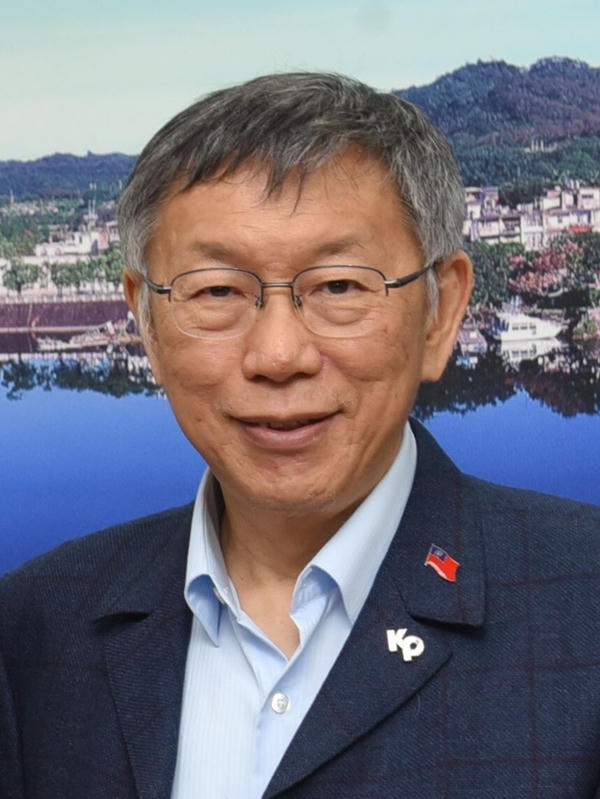
May 27, 2026
Ko Wen-je
Ko Wen-je14.00 OPS
Trade Now →
Who is Ko Wen-je and why is he famous?
Ko Wen-je (born 1959) is a Taiwanese politician and physician who founded the Taiwan People's Party (TPP) in 2019 and served as Mayor of Taipei from 2014 to 2022. Trained as a trauma surgeon at National Taiwan University Hospital, he became one of Taiwan's leading authorities on extracorporeal membrane oxygenation (ECMO) before entering politics as an independent in 2014. His blunt, unfiltered communication style and self-identified position outside the traditional DPP-KMT binary made him a political phenomenon, particularly among younger voters. He ran for president in 2024, finishing third behind Lai Ching-te and the KMT's Hou Yu-ih, but with sufficient votes to make the TPP a kingmaker in the divided Legislative Yuan. His political trajectory has since been complicated by serious legal proceedings.
What is Ko Wen-je's main political legacy?
Ko's legacy is the creation of a viable third-party alternative in Taiwan's largely binary political system. Before the TPP, post-democratization Taiwanese politics was effectively a DPP-versus-KMT contest. Ko's brand of pragmatic, technocratic, anti-establishment politics attracted disaffected voters from both camps, particularly the urban young. The TPP holds eight Legislative Yuan seats following the 2024 election, giving it the balance of power between DPP and KMT majorities. Ko also reshaped Taipei municipal governance during his eight years as mayor, pursuing transparency initiatives, urban development projects, and a generally non-ideological administrative posture. Whether his legacy is durable depends substantially on how his ongoing legal issues resolve and whether the TPP survives without him.
Why is Ko Wen-je controversial?
Ko has generated controversy throughout his political career. His unfiltered remarks — often characterized as blunt or chauvinistic, particularly regarding women, foreigners, and political rivals — have drawn repeated criticism. His cross-strait positioning, which neither fully aligns with the DPP's defensive posture nor the KMT's accommodation, has been variously praised as pragmatic and criticized as opportunistic. Most seriously, he was detained in 2024 and faces ongoing legal proceedings over alleged corruption tied to the Core Pacific City urban development project and TPP political donation accounting, with charges including bribery and breach of trust. He has denied wrongdoing and characterized the prosecution as politically motivated. Supporters view him as a victim of establishment retaliation; critics see overdue accountability.
What was Ko Wen-je's background before politics?
Ko was born in Hsinchu, Taiwan, in 1959. He graduated from National Taiwan University medical school and trained as a surgeon, specializing in trauma and organ transplantation. He led the NTU Hospital ECMO team and was internationally recognized for advancing extracorporeal life support technology, becoming one of Asia's leading experts. He had no prior political experience before running for Taipei mayor in 2014, when he was recruited by the DPP as an independent candidate against the KMT's Sean Lien. He won decisively, beginning a transformation from medical celebrity to political phenomenon. His outsider profile and blunt communication style differentiated him sharply from traditional politicians.
How did Ko Wen-je found the Taiwan People's Party?
Ko founded the TPP in August 2019, after his relationship with the DPP — which had initially backed his Taipei mayoral campaigns — deteriorated. He named the party after Chiang Wei-shui's pre-war Taiwan People's Party, framing it as continuing a tradition of pragmatic Taiwanese self-determination outside the colonial and partisan binaries. The TPP positioned itself as the alternative for voters tired of the DPP-KMT polarization. The party won 5 seats in the 2020 Legislative Yuan election and 8 seats in 2024, becoming Taiwan's third force. Ko served as party chair until 2024 and shaped its policy positions, ideological orientation, and political style — making the TPP heavily dependent on his personal brand.
How is Ko Wen-je viewed differently across regions?
Within Taiwan, Ko is intensely polarizing. Younger urban voters, the politically disaffected, and those frustrated with DPP-KMT polarization initially embraced him in significant numbers. Older voters, women's rights advocates, and partisan loyalists on both sides tend to view him negatively. The corruption proceedings have eroded support even among some original sympathizers. In mainland China, his more pragmatic cross-strait positioning was viewed more favorably than Tsai Ing-wen or Lai Ching-te, though without the explicit pro-Beijing orientation of some KMT figures. In the international media, his profile is lower than the major-party leaders but recognized as a representative of Taiwan's political diversification.
What was Ko Wen-je's relationship to other politicians?
Ko's relationships have been famously transactional and frequently broken. He was elected Taipei mayor with DPP backing in 2014 but became a DPP critic. He briefly considered an alliance with the KMT for the 2024 presidential election, with weeks of public negotiation with KMT candidate Hou Yu-ih that collapsed dramatically on live television. He has been politically opposed to both Tsai Ing-wen and Lai Ching-te, though tactically aligned at moments. He has had complicated relations with Han Kuo-yu and the broader KMT establishment. Among Taiwan's politicians, he is uniquely positioned as having significant overlap and conflict with both major camps without belonging to either.
What was the 2024 presidential election outcome?
In January 2024, Ko ran as the TPP presidential candidate and finished third with approximately 26 percent of the vote, behind Lai Ching-te (40 percent) and the KMT's Hou Yu-ih (33 percent). The opposition's failed unity ticket negotiation in November 2023, in which Ko and the KMT publicly disputed polling methodology and seat allocation, contributed to splitting the anti-DPP vote and allowing Lai's victory. The TPP simultaneously won 8 Legislative Yuan seats — a substantial increase that gave it the balance of power between the KMT (the largest party) and DPP. The election cemented the TPP as a significant force but also exposed the limits of Ko's appeal beyond his core base.
What is the bull case for Ko Wen-je's reputation?
Bulls argue Ko has done something genuinely difficult in Taiwan's political ecology — building a sustainable third party with substantive parliamentary representation. They credit him with bringing fresh perspectives, technocratic competence, and willingness to engage cross-strait issues pragmatically rather than ideologically. They view his medical background, transparency initiatives in Taipei, and blunt communication as a needed corrective to political performance. They argue the corruption proceedings are politically motivated and that he will be vindicated. Supporters point to his significant share of young urban voters as evidence of generational support that may compound. They see him as the most original political figure of his generation.
What is the bear case for Ko Wen-je's reputation?
Bears point to the substantial corruption allegations and ongoing legal proceedings as fundamental threats to his reputation. They cite his pattern of broken alliances and shifting positions as evidence of opportunism rather than principle. They argue his blunt style frequently crosses into offensiveness particularly toward women and minorities. Critics question whether the TPP can survive his political and legal troubles, noting heavy organizational dependence on his personal brand. Bears also argue that his cross-strait pragmatism amounts to political flexibility unbacked by coherent strategy. The 2024 unity ticket collapse damaged his reputation for political competence.
How does Ko Wen-je's OPS price on JudgeMarket reflect public consensus?
Ko Wen-je is among the most polarized Taiwan political assets on JudgeMarket. His price reflects deep disagreement between supporters who see him as a wrongly persecuted reformer and critics who see overdue accountability. The legal proceedings have introduced substantial downside risk that has periodically depressed his price, while supporter conviction maintains floor support. His order book typically shows wide spreads and significant trading volume reflecting the active dispute over his reputation. Unlike completed historical figures, his price is genuinely uncertain pending court outcomes and TPP electoral viability.
What events typically move Ko Wen-je's price?
Ko's price is highly sensitive to legal proceedings — indictment progress, court hearings, evidence disclosures, and ruling announcements all move his price significantly. TPP electoral developments, particularly Legislative Yuan voting outcomes and local election performance, also drive price moves. His own public statements and any media appearances generate substantial volatility. Cross-strait events that bring his pragmatic positioning into focus can move his price, as can broader Taiwan political polarization that either highlights or marginalizes the third-party alternative. Developments involving DPP-KMT cooperation that would marginalize the TPP balance of power tend to pressure his price.
How does Ko Wen-je compare to other Taiwan politicians?
Compared to Tsai Ing-wen, Ko represents almost the opposite style — direct rather than restrained, ideologically flexible rather than disciplined, outsider rather than institutional. Compared to Han Kuo-yu, both have been characterized as charismatic populists, though their constituencies and ideological positions differ. Compared to Lai Ching-te, Ko is the anti-establishment counterweight against Lai's establishment continuity. Compared to historical figures like Chen Shui-bian, the corruption allegations create unfortunate parallels though the cases differ in substance and political context. On JudgeMarket, Ko's price often moves inversely to the dominant party performance — when DPP-KMT polarization intensifies, his third-way premium can rise.
What is the long-term reputation outlook for Ko Wen-je?
Ko's long-term reputation depends critically on legal outcomes. If acquitted or substantially vindicated, he retains the possibility of political comeback and reputational rehabilitation. If convicted on serious charges, his legacy collapses substantially and the TPP's survival comes into question. Beyond legal outcomes, the long-term test is whether the TPP becomes a durable institution capable of operating without him — which would secure his founding-figure status — or whether it dissolves with his political departure. Either outcome would substantially fix his historical evaluation.
Is Ko Wen-je a good long-term position on JudgeMarket?
Ko Wen-je is a high-volatility, high-uncertainty position with binary downside risk from the legal proceedings. The bull case rests on legal vindication, TPP institutional durability, and the maturing of Taiwan's third-party politics. The bear case rests on legal conviction, TPP collapse, and reputational consolidation of negative narratives. Position sizing should account for the legal risk specifically, which is unusual among contemporary Taiwan political figures. Pair trades against Lai Ching-te or Han Kuo-yu can express directional views on the three-cornered Taiwan political landscape. Traders should treat Ko more like an event-driven asset than a standard political reputation position.
Ko Wen-je
Ko Wen-je14.00 OPS
Trade Now →

Related Content

Trade Ko Wen-jeView live market price and trade OPS

History Will Be the Judge

Start trading with 1,000 free OPS. No wallet needed.

Start Trading →