Judge Market 标志JudgeMarketUS
奖励 邀请好友 资讯 博客 开发者 客服支持
© 2026 JudgeMarket
AboutPrivacyTermsWhat is OPSNewsBlog
首页钱包
Home>Jack Ma>FAQ

Jack Ma: 15 Frequently Asked Questions

Explore 15 FAQs about Jack Ma (Ma Yun) — Alibaba founder, Chinese tech icon whose Ant Group IPO was halted in 2020, and a defining figure of China's internet era. Trade his reputation on JudgeMarket.
May 27, 2026
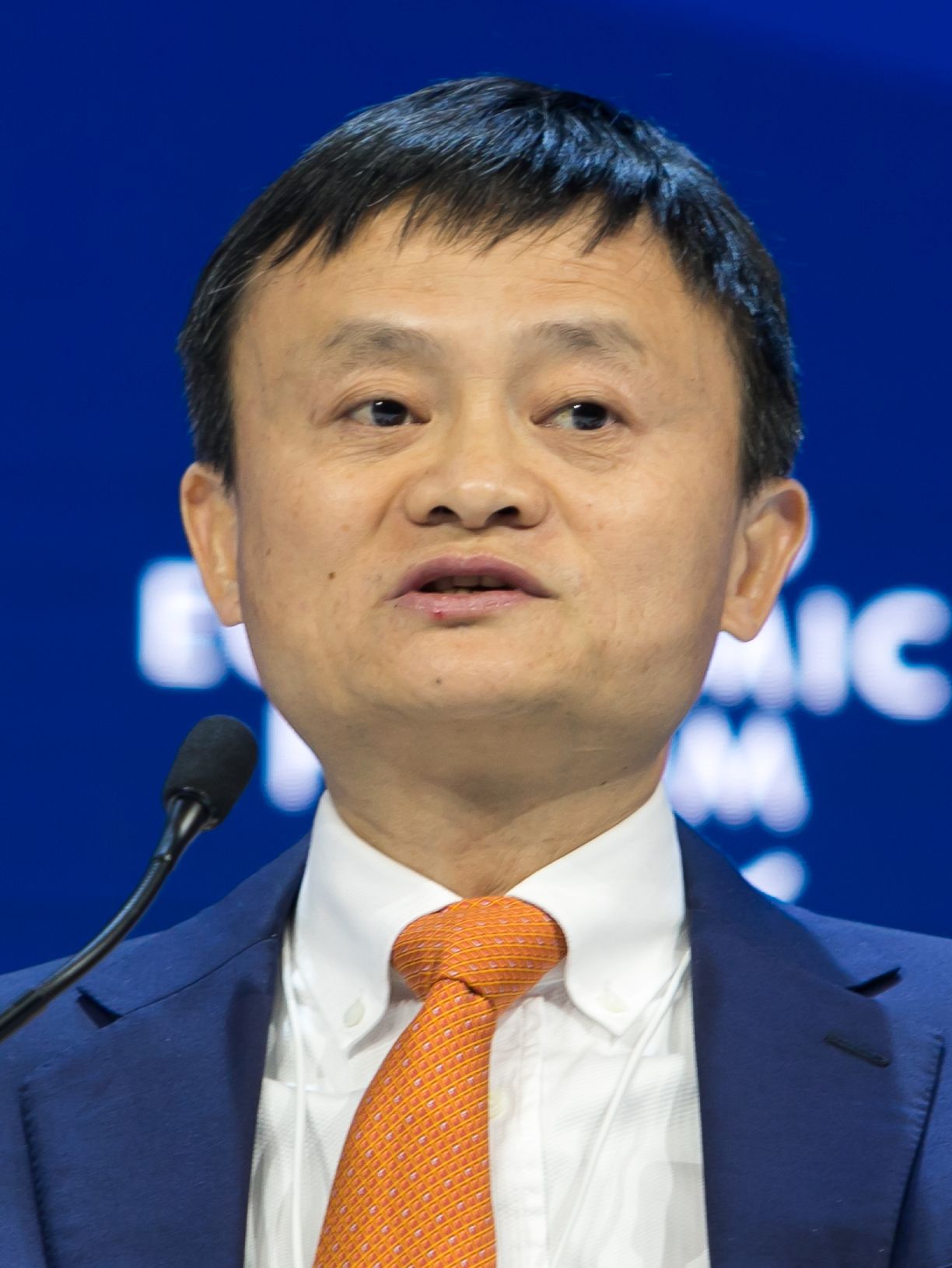
Jack Ma
Jack Ma62.02 OPS
Trade Now →
Who is Jack Ma and why is he famous?
Ma Yun (born 1964), known internationally as Jack Ma, is a Chinese entrepreneur who founded Alibaba Group in 1999 and grew it into one of the world's largest e-commerce and technology companies. A former English teacher from Hangzhou, he became China's wealthiest person at various points and one of the most internationally recognized Chinese business figures of his generation. Alibaba's 2014 New York Stock Exchange listing was the largest initial public offering in history at the time, raising $25 billion. Beyond Alibaba's e-commerce platforms (Taobao, Tmall), Ma also founded or co-founded Ant Group (the financial technology giant that operates Alipay), Cainiao logistics, and Alibaba Cloud. He retired as Alibaba chairman in September 2019 and largely retreated from public life after late 2020.
What is Jack Ma's core legacy?
Ma's core legacy is making digital commerce accessible to hundreds of millions of small Chinese merchants and consumers, and demonstrating that a Chinese internet company could achieve global scale. Alibaba's platforms enabled rural manufacturers to reach urban consumers, created the world's largest single-day shopping event (Singles Day / Double 11), and built financial infrastructure through Alipay that brought mobile payments and microcredit to vast underbanked populations. Ma popularized concepts like "996" work culture and articulated a vision of "new retail" merging online and offline commerce. His advocacy for entrepreneurship, English-language education, and global engagement made him an aspirational figure for a generation of Chinese strivers. The economic and social transformation Alibaba helped catalyze in China is among the largest commercial achievements of the early 21st century.
Why is Jack Ma controversial?
Ma is controversial across multiple dimensions. Within China, his public criticism of financial regulators at the October 2020 Bund Summit in Shanghai is widely seen as the proximate trigger for the cancellation of Ant Group's planned $34 billion IPO and the subsequent regulatory crackdown on Chinese internet companies. Critics argue this episode demonstrated dangerous hubris and prompted necessary regulation; supporters argue it demonstrated dangerous state interference in private enterprise. Internationally, his public defenses of long working hours (the "996" schedule of 9am to 9pm, six days a week) drew criticism as exploitation. Allegations of antitrust violations, monopolistic platform practices, and predatory lending in Ant Group's microcredit business also drew sustained regulatory and public criticism. His relative public silence since 2020 has itself become controversial.
What is the key biographical fact about Jack Ma?
Ma's defining biographical fact is his improbable trajectory from rejected job applicant to one of the world's most prominent entrepreneurs. Born in Hangzhou in 1964 during the early Cultural Revolution, he taught himself English by approaching foreign tourists outside the Hangzhou Hotel as a teenager. He failed the national university entrance exam twice before being admitted to Hangzhou Teachers Institute. He was famously rejected for numerous jobs after graduation, including by KFC and the local police force. After teaching English for several years, his exposure to the internet during a 1995 trip to the United States inspired him to found a company that eventually became Alibaba in 1999. The rejection-to-success narrative made him a folk hero among Chinese entrepreneurs and a fixture of entrepreneurship folklore globally.
What was the defining business event of Jack Ma's career?
The defining business event is the November 2020 suspension of Ant Group's planned dual listing in Shanghai and Hong Kong, which would have been the largest IPO in history at approximately $34 billion. Days before the scheduled listing, Chinese regulators halted the offering and Ma was summoned to Beijing for questioning. The suspension followed Ma's October 24 speech at the Bund Summit in which he characterized Chinese banks as operating with a "pawnshop mentality" and criticized the Basel Accords as constraining innovation. The event triggered a comprehensive regulatory restructuring of Ant Group, which was forced to become a financial holding company subject to bank-like capital requirements. The episode reshaped China's relationship with its private internet sector and Ma's public profile contracted dramatically thereafter.
How does Ma's relationship with Xi Jinping shape his reputation?
The relationship between Ma and Xi Jinping's administration is the defining political-economic factor in Ma's recent trajectory. The post-2020 regulatory crackdown on Chinese internet platforms — which affected Alibaba, Tencent, Meituan, Didi, and others — is widely interpreted as expressing the Xi-era priority of "common prosperity" and state primacy over private capital, with the Ant Group episode as the inflection point. Ma's subsequent extended periods abroad (notably in Japan and elsewhere in Asia and Europe) and rare public appearances signal the constraints of his current status. The April 2023 reappearance in Hangzhou and February 2025 attendance at a Xi-hosted symposium with leading private entrepreneurs were carefully read for signals about the relationship between state and private sector in contemporary China. The Ma-Xi dynamic is the central context for any JudgeMarket repricing.
How is Jack Ma viewed differently across countries?
International perception of Ma varies sharply by audience and time period. In Western business circles before 2020, he was viewed as the most accessible and internationally fluent Chinese tech entrepreneur, celebrated at Davos, fluent in English, and a frequent commentator on global business. In Southeast Asia and emerging markets, he is viewed as a symbol of Asian entrepreneurial success and a champion of small-business e-commerce. In Japan, where he has spent extended time, he retains significant respect. Within China, perception splits between those who view him as a hero of the entrepreneurial era and those who view him as a cautionary tale of overreach. Among Chinese diaspora communities, he remains an aspirational figure. In Western governments, his post-2020 status is often cited as evidence of authoritarian constraints on Chinese private enterprise.
What was Ma's broader economic and political impact?
Ma's broader impact spans economic transformation, financial inclusion, and the political economy of state-business relations in China. Alibaba's platforms and Ant Group's financial services brought hundreds of millions of small merchants and consumers into the formal digital economy, dramatically accelerating financial inclusion. Singles Day created an entirely new global retail phenomenon. Alibaba's cloud computing business helped seed China's broader cloud infrastructure. Politically, the Ant Group episode marked a watershed in Chinese state-business relations, ending an era in which leading private internet entrepreneurs operated with significant latitude and inaugurating a new era of regulatory primacy. The "common prosperity" framework that subsequently shaped policy across the Chinese private sector is partly a response to the perceived excesses of the platform era Ma symbolized.
What is the bull case for Ma's reputation?
The bull case for Ma rests on the enduring scale of what he built and the historical pattern of regulatory cycles softening over time. Bulls argue Alibaba and Ant Group remain among the most consequential commercial institutions in modern Chinese history, and that the operating businesses continue to generate substantial value even under restructured conditions. They point to his February 2025 appearance at the Xi-hosted private enterprise symposium as evidence of rehabilitation and the beginning of a more constructive state-private sector relationship. They argue that historical reassessment over decades will emphasize his contribution to lifting hundreds of millions into the digital economy rather than the 2020 episode. They note that his global brand recognition and personal capital remain substantial, providing significant rehabilitation potential. Trading bulls accumulate on regulatory-news dips.
What is the bear case for Ma's reputation?
The bear case centers on the structural constraints on Chinese private entrepreneurs and the difficulty of full reputational rehabilitation after public regulatory censure. Bears argue that the regulatory framework reshaping Ant Group will persist, capping the upside of his core legacy assets. They point to the structural pattern in which Chinese business figures who fall out of political favor rarely regain full prior prominence. They argue that the international reputational ceiling for Chinese tech figures has been lowered by broader US-China decoupling trends, regardless of Ma's individual rehabilitation status. They note that his prolonged absence from public engagement may have permanently shifted public perception toward viewing him as a closed-legacy figure rather than an active business leader. Bears short into rehabilitation-narrative rallies.
How does Ma's OPS price reflect public consensus on JudgeMarket?
Jack Ma trades as a state-business-relations indicator asset, with his price serving as a real-time barometer of how the global trader base reads the trajectory of Chinese private enterprise. His JudgeMarket price tends to move on regulatory news affecting major Chinese platforms, signals from the Xi Jinping administration about private sector treatment, and his own public appearances. The bid-ask spread structure often shows polarization between traders who emphasize the enduring scale of Alibaba and Ant Group versus those who emphasize regulatory constraint and the difficulty of rehabilitation. The 50 mark for Ma may represent this polarized average between strong bull and bear convictions rather than lukewarm middle. His price is among the most sensitive to China policy news on JudgeMarket.
What events typically move Ma's price?
Ma's price moves on a clear set of catalysts. Regulatory events include any major Chinese government statement on the platform economy, antitrust enforcement, financial regulation affecting Ant Group, or "common prosperity" policy framing. Business events include Alibaba quarterly earnings, Ant Group financial disclosures, and any major strategic shifts at the operating companies. Personal events include his public appearances (each one is closely analyzed for political signals), interviews, and any speeches. Macro events include US-China relations developments, particularly any technology decoupling or financial sanctions news. Political events include leadership statements from Xi Jinping and senior Chinese officials about the role of private enterprise. His February 2025 appearance at the Beijing symposium was a major price catalyst.
How does Jack Ma compare to other Chinese business figures on JudgeMarket?
Compared to Lei Jun, Ma trades with greater historical scale but lower current operational momentum, since Lei Jun is actively executing the Xiaomi EV pivot while Ma has reduced public engagement. Compared to Ren Zhengfei, Ma represents a more consumer-internet path while Ren represents a more strategic-technology path, with different political dynamics — Ren is generally seen as more aligned with state strategic priorities. Compared to Dong Mingzhu, Ma is the more globally famous figure but with more constrained current trajectory. Compared to Luo Yonghao, Ma is the established titan while Luo represents the entrepreneurial-grit folk hero archetype. Pair trades among major Chinese business figures express specific theses about the trajectory of Chinese private enterprise.
What is the long-term reputation outlook for Ma?
Ma's long-term reputation outlook depends substantially on factors he does not directly control: the evolution of Chinese state-business relations, the long-term performance of Alibaba and Ant Group under their restructured frameworks, and historical reassessment over decades. The baseline scenario is a moderate-positive long-term legacy reflecting the genuine scale of what Alibaba built, with the 2020 episode increasingly understood as one chapter in a longer story. Upside scenarios involve continued rehabilitation, possible return to more active public engagement, and historical reassessment emphasizing his contribution to Chinese digital infrastructure. Downside scenarios involve continued regulatory pressure on the Alibaba ecosystem and structural lowering of the reputational ceiling for Chinese private entrepreneurs. The range is moderately wide.
Is Jack Ma a good long-term position on JudgeMarket?
Jack Ma is a moderate-conviction position particularly suited for traders with views on Chinese state-business relations and the trajectory of the Alibaba ecosystem. The bull case rests on the enduring scale of his core legacy, gradual rehabilitation, and historical reassessment. The bear case rests on structural regulatory constraints and the difficulty of full reputational rehabilitation. As a partially-closed-legacy asset, his price tends to move on policy and signal news rather than on continuous operational events, making him suitable for thesis-driven position traders. Pair trades against Xi Jinping (expressing views on the state-private balance) or against fellow Chinese entrepreneurs like Lei Jun (expressing relative business momentum views) can capture specific dynamics. Most long-term holders should size positions modestly given regulatory tail risk.
Jack Ma
Jack Ma62.02 OPS
Trade Now →

Related Content

Elon Musk vs Jack Ma: Tech Founder Power in the US vs in ChinaElon Musk and Jack Ma show what happens when a tech founder collides with the state — in two very different political systems. Compare on JudgeMarket.Jack Ma vs Lei Jun: E-commerce Pioneer vs Hardware OperatorJack Ma built Alibaba into China's e-commerce giant. Lei Jun built Xiaomi into a global hardware brand and is now reshaping Chinese EVs. Compare on JudgeMarket.Trade Jack MaView live market price and trade OPS

History Will Be the Judge

Start trading with 1,000 free OPS. No wallet needed.

Start Trading →