Introduction
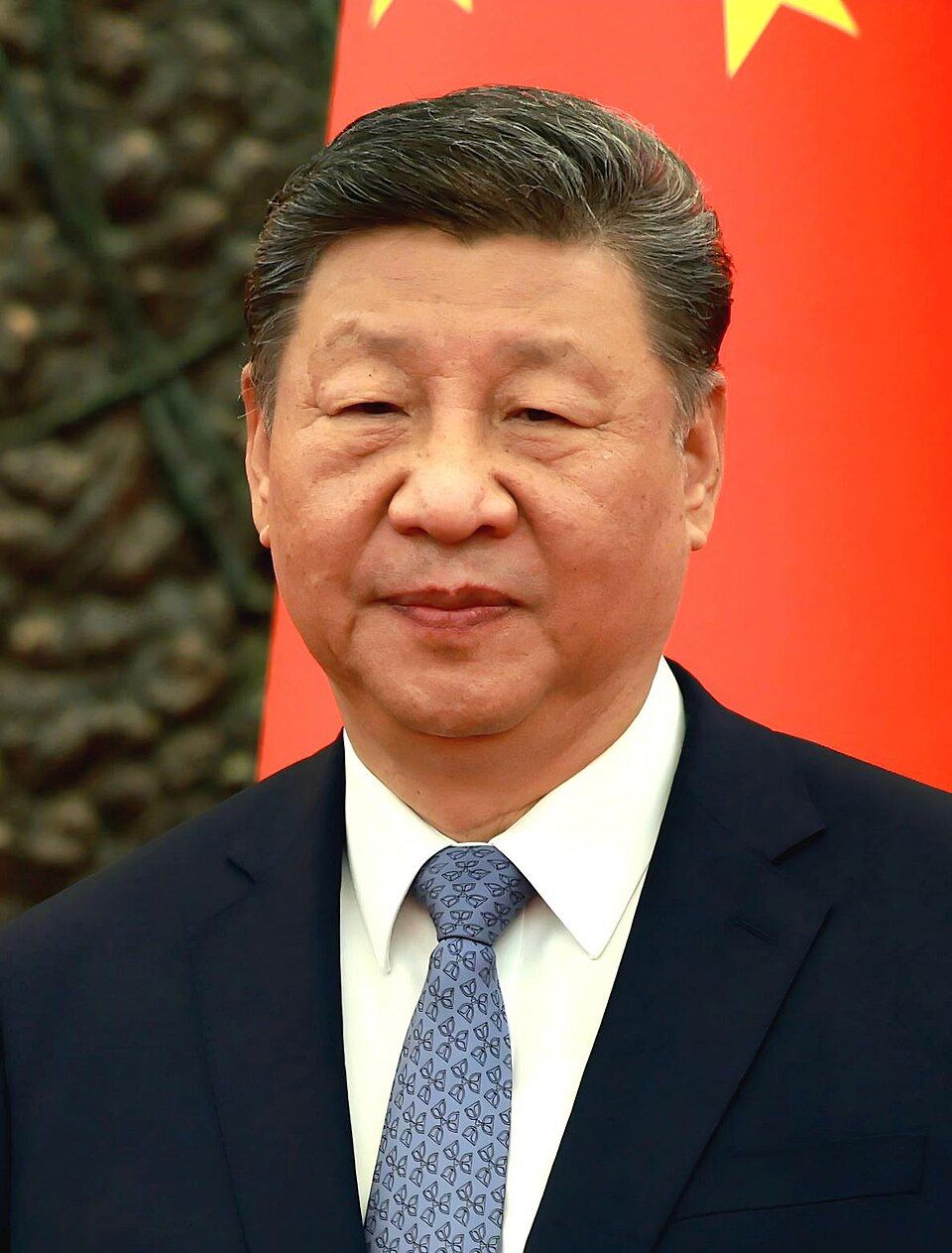
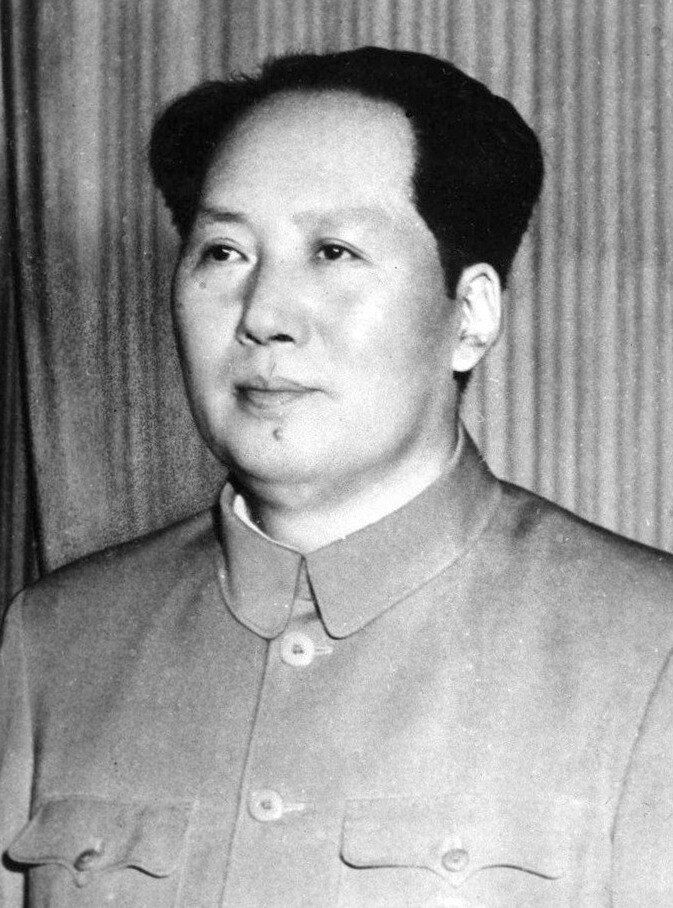
No comparison in Chinese politics carries more weight than Xi Jinping versus Mao Zedong. They are the two CCP leaders most often described as having concentrated personal power beyond anyone in between — a span that includes Deng Xiaoping, Jiang Zemin, and Hu Jintao. Mao founded the People's Republic; Xi is widely credited (or accused) of returning the party to a strongman model that the post-Mao reformers had explicitly tried to prevent.
The comparison is also unavoidable inside China itself. Xi has openly invoked Mao's symbols, language, and certain organizational practices. Critics inside and outside the country argue this is a deliberate restoration of one-man rule. Supporters argue it is a necessary correction after decades in which factional politics, corruption, and ideological drift weakened the party. JudgeMarket prices both figures continuously, and the spread between them is one of the most telling signals on the platform about how the world is currently reading China.
Similarities
Both Mao and Xi consolidated personal power in ways that broke with the conventions of their respective eras. Mao did so by leading a revolution and then, repeatedly, by purging rivals through mass movements. Xi did so within an institutional framework — the anti-corruption campaign beginning in 2012 removed hundreds of thousands of officials, including senior rivals, and the 2018 constitutional amendment removed the two-term limit on the presidency that Deng's generation had installed precisely to prevent another Mao.
Both leaders fused party authority and personal authority in ways their immediate predecessors avoided. Mao's "Little Red Book" and Xi's "Xi Jinping Thought" (enshrined in the constitution in 2017 and 2018) both elevate the leader's writings to a foundational role. Both have led explicit ideological campaigns to reorient Chinese society — Mao's were revolutionary upheavals; Xi's are more bureaucratic, focused on "common prosperity," anti-corruption, and the disciplining of private capital.
Both are also nationalists who positioned China in opposition to a dominant Western order. Mao's China stood against US "imperialism" and, later, Soviet "revisionism." Xi's China presents itself as offering a developmental and governance alternative to the US-led liberal order, framed through the Belt and Road Initiative, BRICS expansion, and the "community of common destiny" language.
Key Differences
The economic context could not be more different. Mao inherited a war-shattered, agrarian, desperately poor country and pursued a Soviet-style command economy that, in the Great Leap Forward (1958–1962), produced one of the worst famines in human history, with conservative estimates of tens of millions of deaths. The Cultural Revolution (1966–1976) then disrupted education, governance, and culture for a decade, with millions persecuted and an estimated 1.5 to 2 million killed.
Xi Jinping inherited the second-largest economy in the world, built by the reform-and-opening era that Deng launched in 1978. China under Xi has continued to grow — though more slowly — and has become a global leader in EVs, batteries, solar, drones, and increasingly in AI and semiconductors. The deprivations of the Mao era are absent. Xi's controversies are about governance choices in a wealthy, technologically capable state — Xinjiang internment camps, the Hong Kong national security law, the crackdown on tech firms after Jack Ma's 2020 speech, zero-COVID — not about mass famine.
Their relationships with the party institution differ too. Mao often weaponized the masses against the party itself, most dramatically in the Cultural Revolution when Red Guards attacked party officials. Xi works through the party, strengthening it as an institution while concentrating personal authority within it. Mao was a revolutionary who distrusted bureaucracy; Xi is a princeling — son of a senior revolutionary, Xi Zhongxun — who came up through the party apparatus and clearly sees it as the indispensable instrument of national rejuvenation.
Foreign policy is also markedly different in style. Mao's China was largely isolated, especially after the Sino-Soviet split. Xi's China is the world's largest trading partner for most countries on earth, the largest creditor to the developing world, and an active participant in essentially every multilateral forum.
The Reputation Trade
On JudgeMarket, both figures trade actively but for very different reasons. Mao Zedong is a historical figure whose price reflects long-run reassessment — the famine death toll, the Cultural Revolution, but also the unification of the country and the foundational state-building. Inside China, his official party verdict is "70% correct, 30% wrong"; outside China, especially in Western historiography, the famine and Cultural Revolution dominate.
Xi Jinping is a sitting leader whose price moves on live news flow — Taiwan tensions, US-China trade, the property crisis, semiconductor competition, his meetings with Trump or Biden, and the health of the Chinese economy. Like Trump in the US context, his price tends to be polarized: buyers see a leader navigating an existential strategic rivalry while delivering technological catch-up; sellers see a slowdown in growth, demographic decline, and the costs of a more confrontational posture abroad.
Who buys Mao? Those who weight state-building, sovereignty, and the historical achievement of unifying a fractured country above the documented human cost of his policies. Who sells Mao? Those for whom the Great Leap and Cultural Revolution are simply too overwhelming to be netted against anything else.
Who buys Xi? Those who think he will navigate the most important geopolitical relationship of the century without a war, who think the industrial-policy bet will pay off, and who think the centralization will look prescient when the next crisis hits. Who sells Xi? Those who think the closure of the political system has reduced the quality of decision-making, that the property crisis and demographic outlook are structural, and that Taiwan is the unsolved variable that could redefine the legacy in either direction.
Verdict
JudgeMarket explicitly does not pick a winner here, and you should not either. The market's job is to surface the collective verdict, and the verdict on both of these men will continue to move for decades. Mao's legacy will keep being re-litigated as China changes its relationship with its own past. Xi's legacy is still being written in real time — most of his most consequential decisions, especially around Taiwan, semiconductors, and demographics, have not yet played out.
The case for upside on Mao: the longer the People's Republic endures and the more powerful China becomes, the more weight the founding act carries relative to the documented disasters. The case against: the human cost is documented, large, and not going away.
The case for upside on Xi: if China successfully navigates the next decade — avoiding war over Taiwan, weathering demographic decline, achieving semiconductor self-sufficiency — his consolidation will be remembered as the necessary precondition. The case against: any one of those bets could go badly, and concentrated personal power historically magnifies the consequences of mistakes.
Trade your view on both at JudgeMarket.