Introduction
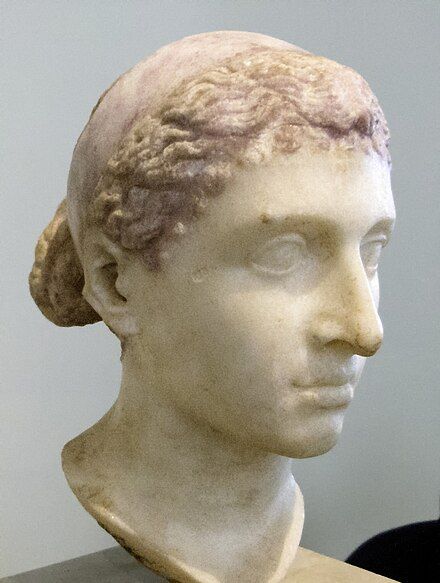
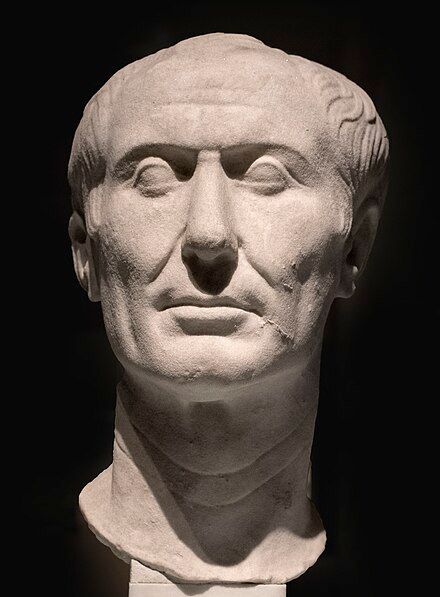
Cleopatra VII and Julius Caesar are bound together by one of history's most consequential personal-political relationships. Cleopatra was the last active ruler of Ptolemaic Egypt, a Macedonian-descended dynasty that had ruled since the death of Alexander the Great. Caesar was the Roman general and statesman whose career broke the Roman Republic and set the conditions for the imperial system that followed.
They met in Alexandria in 48 BCE, when Caesar pursued Pompey to Egypt. The alliance and relationship that followed produced a son (Caesarion), recalibrated the politics of the eastern Mediterranean, and helped tie Egypt's fate inextricably to Rome's. On JudgeMarket, both trade as reputation assets, and the comparison forces the question of how we evaluate two figures who shaped each other.
Similarities
Both were exceptionally well-educated members of political dynasties. Cleopatra was reportedly fluent in nine languages (including, famously, Egyptian — unusual for a Ptolemy), trained in rhetoric, mathematics, and Greek philosophy. Caesar received an elite Roman education and was a noted orator and stylist whose Latin prose is still studied today. Both were intellectual operators as well as political ones.
Both inherited dysfunctional political systems and tried to impose order on them, with very different tools. Cleopatra inherited a Ptolemaic court riven by sibling rivalries (she co-ruled and conflicted with multiple siblings, including the brother–husband Ptolemy XIII) and a kingdom under Roman pressure. Caesar inherited a Roman Republic whose institutions were buckling under the weight of imperial expansion, factional politics, and serial civil wars. Both used force, alliance, and ceremony to consolidate authority.
Both were skilled at managing public image. Cleopatra deployed religious iconography (presenting herself as a manifestation of Isis), staged elaborate ceremonies, and used the wealth of Egypt to project majesty. Caesar built monuments, organized lavish games, wrote his own war commentaries as political propaganda, and reformed the calendar in a move that put his name on it (July). Both understood that political power required theatrical infrastructure.
Both ended violently in close succession. Caesar was assassinated in 44 BCE on the Ides of March. Cleopatra died in 30 BCE after the defeat of her and Antony's forces at Actium, by suicide — the tradition of an asp bite is uncertain but is the famous version. The two deaths bracket roughly a decade and a half of upheaval that ended the Roman Republic and integrated Egypt into the Roman world.
Key Differences
The clearest difference is institutional outcome. Caesar's actions, intentional or not, set up the imperial framework that Augustus consolidated and that lasted in some form for centuries. The political vocabulary of "Caesar" (Kaiser, Tsar) extended his name across European languages for nearly two millennia. Cleopatra's death marked the end of Ptolemaic Egypt as an independent power and the absorption of Egypt as a Roman province. One legacy is a system; the other is the closing of a chapter.
Their reputational treatment by history also diverges sharply. Caesar has been remembered primarily as a military and political genius, with his personal life as a secondary note. Cleopatra has been remembered primarily through her relationships with Caesar and Antony, with her actual political competence often relegated to a footnote — a framing that modern scholarship has been actively correcting. The asymmetry says as much about the historians as the historical figures.
Both also operated on very different bases of power. Caesar's authority rested on his command of Roman legions and his ability to win battles; he was first and foremost a general. Cleopatra's authority rested on the wealth of Egypt (then one of the richest provinces of the Mediterranean world), the legitimacy of the Ptolemaic dynasty, and her ability to manage relationships with whichever Roman faction held the upper hand. She was a diplomat-monarch operating in the shadow of a vastly larger military power.
The Reputation Trade
Caesar is a perpetual blue chip. Bulls argue that his name is shorthand for political ambition itself, that his military commentaries are still required reading at military academies, and that his story (rise, conquest, dictatorship, assassination) is among the most-told in Western culture. Bears note that he can be flattened into a stock character — the ambitious tyrant — and that contemporary moods around militarism and conquest are not friendly to celebrating generals.
Cleopatra is in the middle of a reputational revaluation. Bulls argue that modern scholarship is finally treating her as a serious statesman rather than as a seductress, that her global name recognition is enormous, and that her story sits at the intersection of multiple high-interest themes (gender, race, empire, Africa, the ancient world). Bears note that the popular image of her is heavily shaped by Hollywood and earlier romantic literature, that some of the "feminist reclamation" framing is itself contested, and that the absence of contemporary writings by her means her own voice is mostly silent.
Price-moving events for Caesar tend to be cultural: a major adaptation, an archaeological discovery, a political moment where his name is invoked (the language of "crossing the Rubicon" is constantly reused). For Cleopatra, events include casting controversies in major productions, new biographies, archaeological discoveries in Alexandria, and broader debates about ancient Egypt's representation.
Verdict
A reputation market does not declare who mattered more. The question is which figure offers more asymmetric upside.
Caesar's upside case: he is the archetype of the political-military strongman who reshapes a system, and as long as politics and warfare are studied, he is studied. His downside case: he is heavily priced, and as moods turn away from celebrating conquerors, his already-large fame may have limited further upside.
Cleopatra's upside case: she is in active reputational reassessment, with substantial room to be reframed from "famous lover" to "consequential ruler." Hollywood, popular history, and academic scholarship are all currently pulling in her favor. Her downside case: contested historical claims and the ongoing politicization of ancient Mediterranean history can produce backlash.
Someone might reasonably argue that Caesar is fully priced while Cleopatra is structurally underpriced and in the early innings of a reassessment cycle. See also Julius Caesar vs Napoleon Bonaparte and Cleopatra VII vs Joan of Arc. The market is live — take your position.