Judge Market 标志JudgeMarketUS
奖励 邀请好友 资讯 博客 开发者 客服支持
© 2026 JudgeMarket
AboutPrivacyTermsWhat is OPSNewsBlog
首页钱包
Home>Brian Armstrong>FAQ

Brian Armstrong: 15 Frequently Asked Questions

Explore 15 FAQs about Brian Armstrong — co-founder and CEO of Coinbase, the largest US-regulated crypto exchange, and a leading voice for compliance-first crypto. Trade his reputation on JudgeMarket.
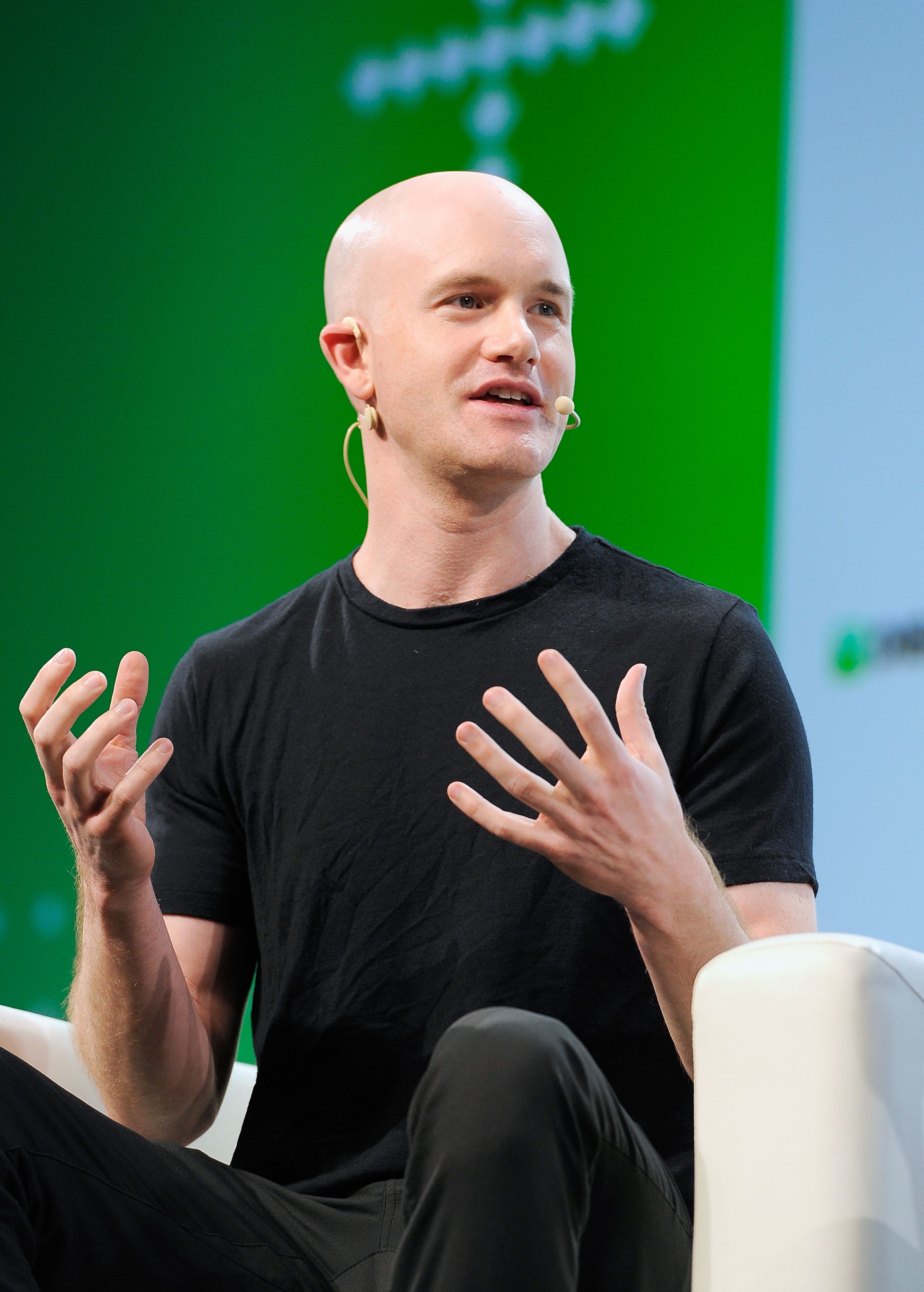
May 27, 2026
Brian Armstrong
Brian Armstrong55.96 OPS +2.94%
Trade Now →
Who is Brian Armstrong and why is he famous?
Brian Armstrong (born 1983 in San Jose, California) is the co-founder and CEO of Coinbase, the largest US-regulated cryptocurrency exchange and the first major crypto company to list its shares on a US public exchange (Nasdaq: COIN, April 2021). He earned undergraduate and graduate degrees in computer science and economics from Rice University, worked at IBM, Deloitte, and Airbnb, and co-founded Coinbase with Fred Ehrsam in 2012. Under his leadership Coinbase has grown from a Bitcoin-only consumer wallet into a vertically integrated crypto financial-services firm, with custody, prime brokerage for institutions, a Layer-2 network (Base), and a USDC stablecoin partnership with Circle. Armstrong is famous both for building the most regulator-engaged exchange in the United States and for taking unusually strong public positions on company culture, AI, longevity research, and political neutrality.
What was Brian Armstrong's core contribution to crypto?
Armstrong's central contribution was establishing that a fully US-compliant crypto exchange could exist at scale. Where Changpeng Zhao built Binance around jurisdictional flexibility, Armstrong made the opposite bet: invest heavily in licensing, compliance infrastructure, and dialogue with regulators, accepting slower product launches in exchange for institutional legitimacy. This bet enabled Coinbase to become the custodian of choice for spot Bitcoin ETFs, the partner of choice for banks and asset managers entering crypto, and the first crypto company to ring the bell at a major US exchange. He also championed onchain expansion through Base, an Ethereum Layer-2 launched in 2023 that has become one of the most active rollups, signaling that even a regulated exchange can contribute meaningfully to decentralized infrastructure originally pioneered by Vitalik Buterin.
Why is Brian Armstrong known and admired?
Armstrong is admired for institutional discipline and consistency. Coinbase under his leadership has consistently filed audited financials, engaged proactively with the SEC and CFTC even when relationships were adversarial, and maintained operational continuity through extreme crypto market cycles. His 2020 internal memo establishing Coinbase as a "mission-focused" company — discouraging political activism on company time — was controversial at the time but is widely viewed in tech and finance circles as a courageous management decision that was subsequently emulated. He has been a credible public advocate for crypto regulation, testifying before Congress and meeting with senior policymakers without sliding into either obsequiousness or theatrical antagonism. His public persona is calm, technical, and patient — qualities unusual among prominent crypto founders.
What was Brian Armstrong's origin moment?
The formative moment came in 2010-2011, when Armstrong, while working at Airbnb, read Satoshi Nakamoto's Bitcoin white paper on Christmas Day 2010. He was struck by both the technical elegance and the absence of accessible consumer tools, and he began building what became Coinbase as a side project in 2012. He was accepted into Y Combinator in summer 2012, raised a seed round, and launched a consumer-facing Bitcoin wallet and brokerage. The decision to focus on user-friendly buying-and-selling, with strong custody guarantees, rather than on advanced trading features, defined the company's trajectory and gave it a wide moat among US retail users. The 2014 Series C, which made Coinbase one of the first crypto unicorns, validated the compliance-first thesis at a time when most competitors operated in regulatory gray zones.
What is Coinbase's defining product or decision?
The defining strategic decision was the choice to pursue US regulatory compliance as a competitive moat. The defining product, however, may be Base — the Ethereum Layer-2 network Coinbase launched in 2023. Base showed that a regulated US public company could meaningfully participate in decentralized infrastructure development, hosting hundreds of millions of dollars in DeFi activity within months of launch. The earlier consumer-facing brokerage remains Coinbase's volume engine, but Base represents the more strategic bet: that the regulated/decentralized divide is not permanent, and that a credible operator can sit on both sides. The 2021 direct listing on Nasdaq was also a defining moment, making Coinbase the first major crypto company to trade as a US public stock and creating a benchmark security for the entire sector.
How does Brian Armstrong relate to other crypto figures?
Armstrong's relationship to Changpeng Zhao was professionally cordial but strategically opposed — Coinbase and Binance represented incompatible business models, and Coinbase publicly supported the regulatory environment that ultimately constrained Binance. With Sam Bankman-Fried, Armstrong maintained polite distance during SBF's rise and emerged validated when FTX collapsed, since Coinbase's compliance-first approach was the explicit counterpoint to FTX's risk-taking. With Vitalik Buterin, the relationship is constructive — Base is built on Ethereum infrastructure and Coinbase contributes meaningfully to Ethereum's developer ecosystem. With Michael Saylor, Armstrong has been a respectful peer in Bitcoin treasury discussions, though Coinbase's multi-asset focus differs from Saylor's Bitcoin-only stance. With Justin Sun, Coinbase has historically been cautious — Tron's TRX is notably absent from Coinbase's main listings.
How is Brian Armstrong viewed in crypto vs traditional finance?
Within crypto, Armstrong occupies an unusual position: respected by builders and institutional traders for operational reliability, but periodically criticized by crypto-native users who view Coinbase as too conservative, too expensive, or too willing to delist tokens under regulatory pressure. In traditional finance, his reputation is among the strongest of any crypto founder — Wall Street treats him as a credible counterparty, and Coinbase is the default custodian for institutional crypto allocations. Regulators, even when adversarial, generally treat Armstrong as a good-faith actor; the SEC's lawsuit against Coinbase (later largely resolved) was about classification of certain tokens rather than fraud or malfeasance. This dual credibility gives him an unusually wide reputational base, which is reflected in a stable JudgeMarket price.
What is Brian Armstrong's broader impact?
Armstrong's broader impact is in legitimizing crypto as an investable asset class within traditional financial institutions. Coinbase's IPO, its role as ETF custodian, and its institutional brokerage have all served as bridges between crypto markets and conventional capital. His advocacy for clear regulatory frameworks has contributed to legislative progress in the US and abroad, and his "mission-focused" management philosophy has influenced tech-company governance more broadly. He has also funded longevity research through NewLimit, an Altos Labs competitor focused on epigenetic reprogramming, extending his impact beyond crypto into biotech. Culturally, his calm, technical public persona has provided a counterweight to the volatile founder archetypes that dominated crypto's first decade.
What is the bull case for Brian Armstrong's reputation?
The bull case rests on the long-term compounding of institutional credibility. Each cycle in which Coinbase operates reliably, files audited statements on time, and maintains regulatory relationships adds to a moat that is structurally difficult for competitors to replicate. If crypto integrates more deeply into mainstream finance over the next decade, Coinbase is positioned to be the default plumbing, and Armstrong is positioned to be remembered as the founder who made that bridging possible. His personal conduct has been clean — no major scandals, no enforcement actions against him personally, and a track record of measured public statements. The relative youth (early 40s) gives him substantial runway. The Base Layer-2 also provides upside from onchain volume growth that does not depend on the centralized brokerage business.
What is the bear case against Brian Armstrong?
The bear case has several components. Coinbase's revenue is heavily dependent on retail trading fees, which compress sharply during crypto bear markets, producing cyclical earnings volatility that affects perception. Competition from larger institutions (BlackRock, Fidelity) entering crypto custody could erode Coinbase's institutional moat. The SEC and other regulators continue to scrutinize specific Coinbase business lines (staking, certain token listings, prime services), and an unexpected adverse ruling could damage the brand. Within crypto, the perception that Coinbase has become too conservative — particularly around token listings and product launches — could allow more aggressive competitors to capture next-generation user growth. Finally, Armstrong's personal political and public-policy involvement, while measured, could become a liability if positions he takes become controversial in either direction.
How does Brian Armstrong's price on JudgeMarket reflect public consensus?
Brian Armstrong trades on JudgeMarket with relatively low volatility compared to other crypto founders, reflecting the institutional credibility his career has built. His price correlates meaningfully with COIN stock performance and with broader crypto market sentiment, but with less amplitude than more polarizing figures. The collective verdict treats him as a high-quality operator with a clean record, producing prices that tend to drift upward in adoption-positive environments and hold steady during crypto-skeptical periods. The relative absence of personal scandal or regulatory action against him personally produces a stable price profile that is unusual among crypto exchange founders.
What events typically move Brian Armstrong's price?
COIN earnings releases and major Coinbase business announcements are dominant short-term drivers. Spot Bitcoin and Ethereum ETF flow data moves the price because Coinbase is the custodian for most major ETF issuers. SEC enforcement actions or settlements involving Coinbase produce sharp moves in both directions depending on outcome. Major Base Layer-2 milestones — total value locked records, fee revenue, ecosystem launches — provide upward catalysts. Macro crypto events (regulatory frameworks, exchange failures, major hacks) move his price along with the sector. Personal news (testimony, public statements, philanthropy) tends to produce modest moves. Comparative coverage that frames Coinbase favorably against weaker competitors (post-FTX, post-Binance-settlement coverage) tends to produce supportive moves.
How does Brian Armstrong compare to other crypto figures?
Compared to Changpeng Zhao, Armstrong represents the regulated/conservative model — the two are archetypal opposites in exchange strategy, and their prices often move in compensating fashion as traders rotate between models. Compared to Sam Bankman-Fried, Armstrong is the validation of compliance-first strategy; the comparison strongly favors Armstrong and the post-FTX environment elevated his standing. Compared to Vitalik Buterin, Armstrong is an operator and businessperson rather than a protocol researcher; their roles complement rather than compete. Compared to Michael Saylor, Armstrong has broader exposure across crypto assets, where Saylor is concentrated in Bitcoin. Compared to Justin Sun, the contrast is in compliance posture, with Armstrong substantially better positioned in major regulated markets.
What is the long-term outlook for Brian Armstrong's reputation?
The long-term trajectory looks structurally favorable. If crypto integrates into mainstream finance over the next 10-20 years, Coinbase is positioned to be remembered as one of the foundational infrastructure firms, and Armstrong is positioned to be remembered as a founder who navigated a chaotic industry through to institutional legitimacy. The risks are real but manageable: regulatory surprises, competitive pressure, and crypto market cycles. The most likely scenario is steady upward drift in reputation as Coinbase continues to operate reliably across cycles. Armstrong's calm public profile and clean personal record reduce tail risk relative to other founders. His position in onchain infrastructure through Base provides optionality on the decentralized side of the industry.
Is Brian Armstrong a good long-term position on JudgeMarket?
Brian Armstrong is among the lower-risk long-term positions in the crypto founder category on JudgeMarket. The combination of an established US-regulated business, a clean personal record, ongoing onchain development through Base, and a measured public profile produces a favorable risk-reward profile. The bull case rests on continued institutional crypto adoption with Coinbase as default plumbing. The bear case is largely cyclical and regulatory rather than personal. Position sizing should account for correlation with COIN stock and with broader crypto sentiment. For traders seeking exposure to the institutionalization narrative through a single highly credible founder, Armstrong is one of the cleanest available proxies, complementing more idea-driven exposure through Vitalik Buterin or Satoshi Nakamoto.
Brian Armstrong
Brian Armstrong55.96 OPS +2.94%
Trade Now →

Related Content

Trade Brian ArmstrongView live market price and trade OPS

History Will Be the Judge

Start trading with 1,000 free OPS. No wallet needed.

Start Trading →