Логотип Judge MarketJudgeMarketUS
Результати пошуку Запросити друзів FAQ поки немає. Блог Білдери Натисніть, щоб завантажити
© 2026 JudgeMarket
AboutPrivacyTermsWhat is OPSNewsBlog
ГоловнаГаманець
Home>Ren Zhengfei>FAQ

Ren Zhengfei: 15 Frequently Asked Questions

Explore 15 FAQs about Ren Zhengfei — Huawei founder, former PLA officer, and central figure in US-China technology tensions. Trade his reputation on JudgeMarket.
May 27, 2026
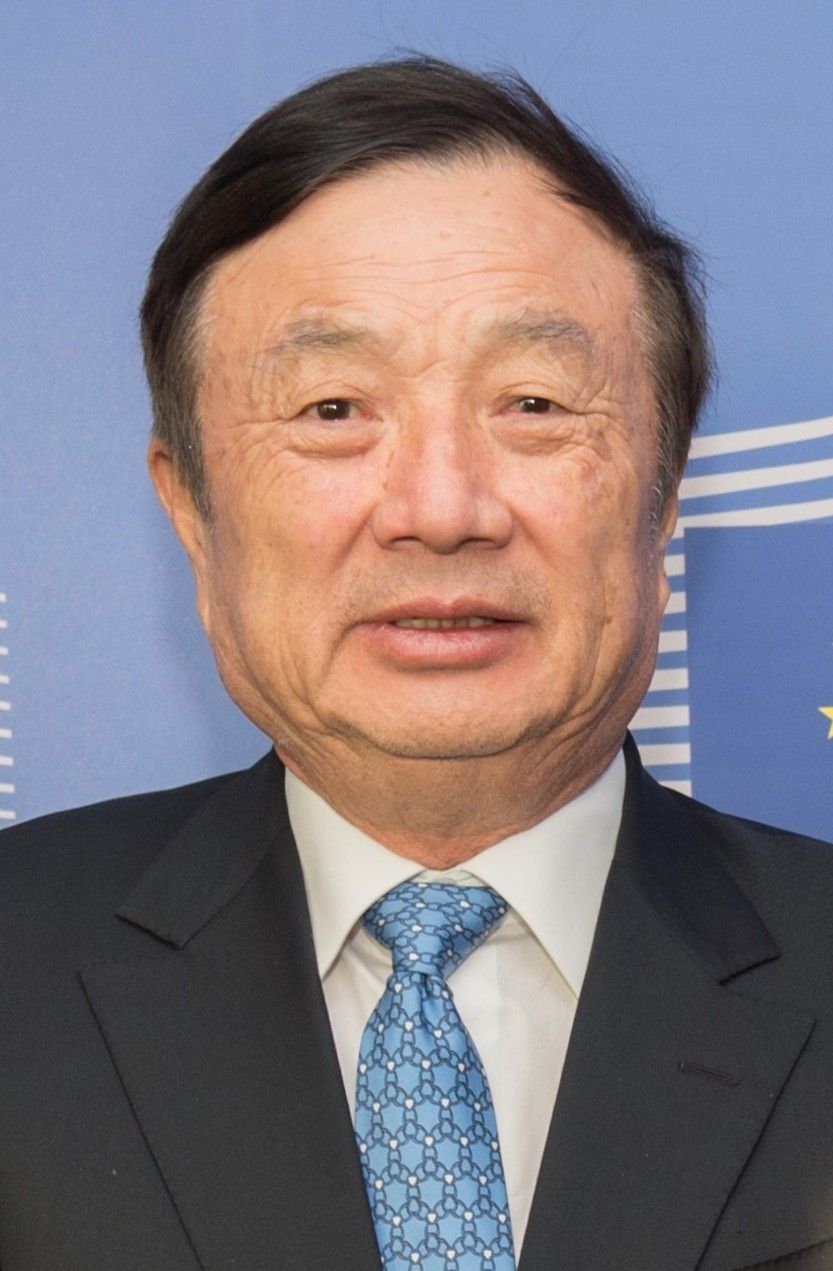
Ren Zhengfei
Ren Zhengfei53.35 OPS
Trade Now →
Who is Ren Zhengfei and why is he famous?
Ren Zhengfei (born 1944) is the founder of Huawei Technologies, the Chinese multinational telecommunications equipment and consumer electronics company that has become one of the most consequential firms in modern global technology. He founded Huawei in 1987 in Shenzhen with approximately 21,000 RMB in initial capital, growing it over nearly four decades into the world's largest telecommunications equipment maker and at various points the world's largest smartphone manufacturer by units shipped. A former officer in the People's Liberation Army's engineering corps, his military background and Huawei's role in critical telecommunications infrastructure have made him one of the most internationally scrutinized Chinese business figures. He has been the central figure in US-China technology tensions since the Trump administration's 2019 sanctions and entity list designation of Huawei, and his daughter Meng Wanzhou's December 2018 arrest in Canada at US request added a personal dimension to those tensions.
What is Ren Zhengfei's core legacy?
Ren's core legacy is building Huawei from a small regional electronics reseller into a global telecommunications infrastructure leader and demonstrating that a Chinese company could compete at the frontier of telecommunications technology against Cisco, Ericsson, Nokia, and other established Western firms. Huawei's 5G technology leadership, its role in deploying telecommunications infrastructure across emerging markets, its HiSilicon semiconductor design subsidiary, and its consumer electronics business made it one of the most technologically capable Chinese firms. Beyond Huawei, his management philosophy — emphasized through the "Huawei Basic Law" company constitution, customer-centricity, long-term R&D investment exceeding 15% of revenue, and the employee shareholding system — has been studied as a distinctive model in Chinese management. His resilience through US sanctions and the company's pivot toward semiconductor self-sufficiency under sanctions pressure further define the legacy.
Why is Ren Zhengfei controversial?
Ren is significantly controversial primarily because of Huawei's geopolitical position. Western governments — particularly the US, UK, Australia, Canada, and increasingly continental European countries — have raised concerns about whether Huawei equipment in telecommunications infrastructure creates national security risks given Chinese intelligence laws requiring company cooperation with state authorities. US sanctions starting in 2019 effectively cut Huawei off from advanced semiconductors and Google Mobile Services, dramatically affecting the smartphone business. His PLA background, while limited and decades-old, is cited by critics as evidence of state-military connections. Supporters argue Huawei is a private commercial enterprise with employee shareholding, that no evidence has been publicly produced of intelligence-related backdoors, and that Western actions reflect protectionism rather than legitimate security concerns. The dispute fundamentally shapes his international reputation.
What is the key biographical fact about Ren Zhengfei?
Ren's defining biographical fact is his transition from PLA engineering officer to entrepreneur during the early reform era. Born in Guizhou Province to a family of teachers, he studied at the Chongqing Institute of Architecture and Engineering, then served in the PLA's engineering corps working on infrastructure projects including a major synthetic fiber factory in Liaoning. He was demobilized in 1983 during military downsizing and worked in the electronics industry in Shenzhen before founding Huawei in 1987 at age 43. He has emphasized in interviews that his early career instilled disciplined approach to engineering and operations. His personal living style is famously modest given his wealth, with reports of flying coach class, sharing taxis, and living in non-ostentatious housing. His autobiography of sorts comes through extensive internal Huawei writings that have been published over decades.
What was the defining business event of Ren Zhengfei's career?
The defining business event is the May 2019 US Commerce Department addition of Huawei to the Entity List, followed by progressively tighter restrictions through 2020 that cut Huawei off from advanced semiconductors fabricated using US technology. The sanctions dramatically affected Huawei's smartphone business, which had been on track to surpass Samsung as the world's largest, and forced the company into a fundamental strategic pivot. The arrest of his daughter Meng Wanzhou, Huawei's CFO, in Vancouver on December 1, 2018 at US extradition request added personal dimension and lasted until her September 2021 release. The subsequent multi-year struggle to develop domestic semiconductor capability, the 2023 launch of the Mate 60 smartphone with a domestically-fabricated 7nm-class chip, and Huawei's broader resurgence from 2023 onward represent the company-saving response to the sanctions challenge.
How does Ren's relationship with Xi Jinping shape his reputation?
The relationship between Ren and Xi Jinping's administration is collaborative and strategically significant. Huawei's resilience and resurgence under sanctions has been framed by the Chinese state as a demonstration of indigenous technology capability and the success of the broader "dual circulation" and technology self-sufficiency strategies. Huawei's relationships with state-affiliated semiconductor manufacturers, particularly SMIC, are central to China's semiconductor self-sufficiency efforts. Xi's visits to Huawei facilities and the company's prominent positioning in major Chinese industrial policy initiatives signal strong state alignment. However, Huawei has maintained a strict employee-shareholding ownership structure and Ren has consistently denied state ownership, presenting the company as a fully commercial enterprise. The Ren-Xi era dynamic represents the closest alignment of major private Chinese enterprise with state strategic priorities.
How is Ren Zhengfei viewed differently across countries?
International perception of Ren varies extremely sharply by region, more so than perhaps any other current business figure. In the United States, UK, Australia, and Canada, he is viewed primarily through the security-risk lens, with sustained government and media attention to alleged intelligence connections. In Germany and France, where Huawei has substantial telecommunications equipment market share, perception is more mixed and commercially-influenced. In emerging markets where Huawei has deployed extensive infrastructure — across Africa, Southeast Asia, the Middle East, and Latin America — he is generally viewed as a partner who built capability that Western firms would not. In Russia, particularly after 2022 Western sanctions, Huawei's presence has expanded and Ren's reputation is positive. Within China, he is one of the most respected business figures, particularly after the sanctions resilience narrative. These geographic splits create extreme dispersion in JudgeMarket flow.
What is Ren's broader economic and political impact?
Ren's broader economic impact is exceptional. Huawei's R&D investment over decades — sustained at industry-leading percentages of revenue — has produced fundamental contributions to telecommunications standards, particularly in 4G LTE and 5G. The company's role in deploying telecommunications infrastructure across emerging markets accelerated digital development in regions where Western firms saw insufficient commercial return. Huawei's response to sanctions catalyzed a broader Chinese semiconductor self-sufficiency push that has produced substantial domestic capability investment. The company's HarmonyOS operating system, developed in response to losing Google Mobile Services, represents one of the few viable non-Android, non-iOS mobile operating systems globally. Politically, Huawei's situation has become a central case study in technology decoupling and the broader US-China strategic competition framework.
What is the bull case for Ren Zhengfei's reputation?
The bull case for Ren rests on Huawei's remarkable resilience under sanctions and the long-term importance of the technologies the company has developed. Bulls argue that surviving and ultimately reaccelerating under sanctions demonstrates institutional capability and strategic foresight, that the Mate 60 launch in 2023 signaled the failure of sanctions to permanently constrain Huawei, and that the company's semiconductor and infrastructure capabilities will compound over decades. They point to his cultural standing within China as a defining figure of indigenous technology development, comparable to the most consequential modern Chinese industrialists. They argue that historical reassessment will treat his career as one of the most significant in modern Chinese commercial history, particularly if China's broader technology self-sufficiency push succeeds. Trading bulls accumulate on sanctions-related dips.
What is the bear case for Ren Zhengfei's reputation?
The bear case centers on continued sanctions pressure, succession risk given his age (he turned 80 in 2024), and the structural constraints on Huawei's international expansion. Bears argue that even with the Mate 60 launch demonstrating domestic semiconductor capability, Huawei's most advanced chip access remains constrained relative to global frontier, limiting competitive position in high-end smartphones and AI accelerators. They note that Huawei's international telecommunications equipment market share has declined substantially in Western and aligned markets and is unlikely to recover. They point to succession planning concerns, with no clear sole successor identified though daughter Meng Wanzhou holds senior position. They argue that the geopolitical environment will likely tighten further, with European countries gradually following US restrictions. Bears short into rallies driven by Mate 60-style domestic capability announcements.
How does Ren Zhengfei's OPS price reflect public consensus on JudgeMarket?
Ren Zhengfei trades as a geopolitically-exposed asset with high volatility tied to US-China relations news. His JudgeMarket price tends to respond sharply to sanctions news, Huawei strategic announcements, semiconductor industry developments, and broader US-China political events. The trader base shows extreme polarization between traders viewing him through commercial-and-resilience lens (typically Chinese-language flow and emerging market traders) and traders viewing him through security-risk lens (typically Western flow). The 50 mark for Ren may strongly reflect this polarized average between high bull conviction and high bear conviction, rather than lukewarm middle. Order book dynamics often show extreme bids and offers, reflecting the strength of conviction on both sides. His price is among the most geopolitically sensitive on JudgeMarket.
What events typically move Ren's price?
Ren's price moves on a clear geopolitically-influenced set of catalysts. US sanctions policy developments — including any expansion, tightening, or potential easing of restrictions on Huawei or related Chinese semiconductor activities — produce sharp moves. Huawei product launches, particularly any indication of new domestic semiconductor capability, drive significant repricing. Huawei financial disclosures and quarterly performance updates affect price. Major contract wins or losses in telecommunications infrastructure deployments affect price. US-China diplomatic developments more broadly produce moves, including major bilateral meetings, trade actions, and Taiwan-related developments. Personal events including his rare interviews (he gives infrequent but substantial international press interviews), public appearances, and any health-related news at his age produce significant moves. Meng Wanzhou-related news also produces sharp price reactions.
How does Ren Zhengfei compare to other Chinese business figures on JudgeMarket?
Compared to Jack Ma, Ren trades with substantially higher geopolitical exposure and stronger state alignment, reflecting Huawei's strategic-technology profile versus Alibaba's consumer-platform profile. Compared to Lei Jun, Ren represents core strategic technology while Lei represents consumer technology, with very different international perception dynamics. Compared to Dong Mingzhu, Ren operates in a fundamentally different competitive environment with much greater international constraint. Compared to Xi Jinping, Ren's commercial profile is closely aligned with Xi-era technology priorities, making Xi-Ren pair trades meaningful expressions of views on Chinese technology policy outcomes. Compared to Elon Musk as a fellow technology founder operating at strategic scale, Ren represents the Chinese counterpart with very different relationship to state, market, and international regulation.
What is the long-term reputation outlook for Ren?
Ren Zhengfei's long-term reputation outlook depends heavily on the trajectory of US-China technology relations and Huawei's continued capability development. Baseline scenarios involve continued cultural standing in China as a defining figure of indigenous technology development, with international reputation remaining sharply split by geography. Upside scenarios involve Huawei achieving sustained competitive position at global technology frontier, successful succession transition, and possible long-term reassessment as US-China tensions evolve. Downside scenarios involve continued sanctions tightening, succession difficulties given his age, or any major operational setback at Huawei. The range of plausible long-term outcomes is wide given his age, the geopolitical environment, and the strategic significance of Huawei. His reputation will likely remain among the most geographically polarized of any major business figure.
Is Ren Zhengfei a good long-term position on JudgeMarket?
Ren Zhengfei is a high-conviction, geopolitically-exposed position suited for traders with strong views on US-China technology relations and Chinese indigenous technology capability. The bull case rests on Huawei's continued resilience, cultural standing in China, and historical reassessment of his strategic significance. The bear case rests on sanctions pressure, succession risk, and structural international constraints. Position sizing should reflect the elevated geopolitical volatility — gap moves on US-China news are common. Pair trades against Xi Jinping (expressing views on Chinese technology policy outcomes), Jack Ma (expressing strategic-versus-consumer technology views), or Donald Trump (expressing US-China relations views) can capture specific dynamics. Most long-term holders should size positions to reflect geopolitical tail risk on both sides.
Ren Zhengfei
Ren Zhengfei53.35 OPS
Trade Now →

Related Content

Trade Ren ZhengfeiView live market price and trade OPS

History Will Be the Judge

Start trading with 1,000 free OPS. No wallet needed.

Start Trading →