Логотип Judge MarketJudgeMarketUS
Результати пошуку Запросити друзів FAQ поки немає. Блог Білдери Натисніть, щоб завантажити
© 2026 JudgeMarket
AboutPrivacyTermsWhat is OPSNewsBlog
ГоловнаГаманець
Home>Napoleon Bonaparte>FAQ

Napoleon Bonaparte: 15 Frequently Asked Questions

Everything about Napoleon Bonaparte — military genius, emperor, lawmaker. His conquests, exile, and enduring legacy explained.
Apr 1, 2026
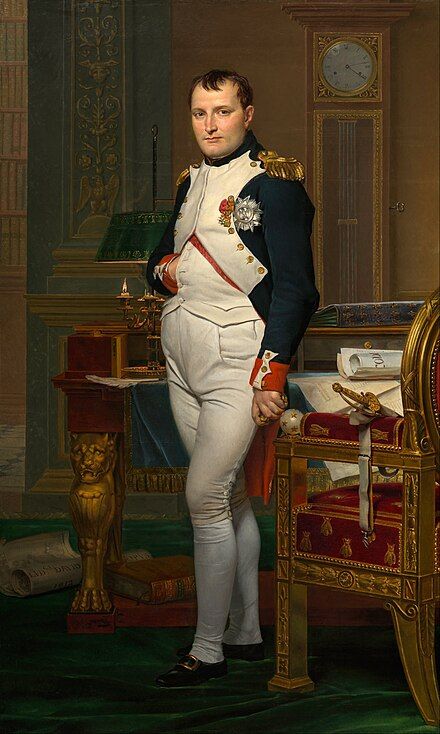
Napoleon Bonaparte
Napoleon Bonaparte62.14 OPS
Trade Now →
When and where was Napoleon Bonaparte born?
Napoleon Bonaparte was born on August 15, 1769, in Ajaccio on the island of Corsica, just one year after France acquired the territory from the Republic of Genoa. He was the fourth of eight surviving children in the Buonaparte family, minor Italian nobility. His Corsican origins shaped his outsider identity within mainland French society, fueling both his ambition and the prejudice he faced at military school in Brienne and later at the Ecole Militaire in Paris. His early years on Corsica instilled a fierce independence that would define his character throughout his extraordinary rise to power.
How did Napoleon die, and where was he buried?
Napoleon died on May 5, 1821, on the remote island of Saint Helena in the South Atlantic, where he had been exiled by the British after his defeat at Waterloo. He was 51 years old. The official cause of death was stomach cancer, though arsenic poisoning theories have persisted for decades based on hair sample analyses. He was initially buried on Saint Helena in the Valley of the Willows. In 1840, King Louis-Philippe arranged the return of his remains to France, where they were interred with great ceremony at Les Invalides in Paris — a monument that remains one of the most visited sites in France today.
How did Napoleon rise to power in France?
Napoleon's rise was a product of revolutionary chaos and personal brilliance. After distinguishing himself at the Siege of Toulon in 1793, he gained prominence by suppressing a royalist uprising in Paris in 1795. His spectacular Italian Campaign of 1796-1797 made him a national hero. When the Directory government grew unstable, Napoleon seized his opportunity with the coup of 18 Brumaire on November 9, 1799, overthrowing the government and installing himself as First Consul. Unlike Julius Caesar, who crossed a literal Rubicon, Napoleon's power grab emerged from the institutional vacuum left by the Revolution. By 1804, he had crowned himself Emperor of the French.
What were Napoleon's most important battles?
Napoleon commanded over 60 battles, with a remarkable win rate exceeding 80%. His masterpiece was Austerlitz (December 2, 1805), where he crushed the combined armies of Austria and Russia through deliberate feigned weakness and devastating counterattack — widely considered the greatest tactical victory in military history. Marengo (1800) secured his political position; Jena-Auerstedt (1806) dismantled Prussian power in a single day; Wagram (1809) defeated Austria again. His catastrophic defeats were equally consequential: the retreat from Moscow in 1812 destroyed the Grande Armee, Leipzig (1813) united all of Europe against him, and Waterloo (1815) ended his career forever. Like Genghis Khan, Napoleon's battlefield genius reshaped continental boundaries.
What is the Napoleonic Code, and why does it matter?
The Napoleonic Code (Code Civil des Francais), enacted in 1804, was a comprehensive civil law code that replaced the patchwork of feudal, royal, and revolutionary laws across France. It established the principles of equality before the law, secular authority over religious matters, property rights, and the sanctity of contracts. Its influence is arguably Napoleon's most enduring achievement — over 40 countries today base their legal systems on it, spanning from continental Europe to Latin America, the Middle East, and parts of Asia. The Code abolished aristocratic privilege and enshrined meritocracy in law. Even Napoleon himself recognized its significance, reportedly saying on Saint Helena that his true glory was not his battles but his civil code.
How did Napoleon redraw the map of Europe?
Napoleon fundamentally restructured Europe's political geography. He dissolved the thousand-year-old Holy Roman Empire in 1806, replacing it with the Confederation of the Rhine. He consolidated hundreds of German states into roughly 40, inadvertently laying the groundwork for eventual German unification. He created the Kingdom of Italy, the Duchy of Warsaw, and satellite states across the continent ruled by his relatives. The Continental System attempted to reshape economic geography by blocking British trade. After his fall, the Congress of Vienna (1814-1815) tried to restore the old order, but the nationalist movements Napoleon had awakened — in Germany, Italy, Poland, and Spain — proved irreversible. The modern nation-state map of Europe is, in many ways, a consequence of Napoleonic disruption.
What military innovations did Napoleon introduce?
Napoleon did not invent new weapons but revolutionized how armies fought. He perfected the corps system, organizing his Grande Armee into self-sufficient units of 20,000-30,000 men that could march independently and converge rapidly on the battlefield. He pioneered the use of massed artillery as an offensive weapon rather than a defensive one, concentrating firepower at decisive points. His emphasis on speed and maneuver — living off the land to avoid slow supply trains — allowed his forces to outpace enemies consistently. He also mastered the strategic use of interior lines, defeating larger coalition armies by concentrating against isolated parts. Like Alexander the Great, Napoleon understood that decisive speed could overcome numerical disadvantage, a principle studied in military academies worldwide to this day.
What was Napoleon's relationship to the French Revolution?
Napoleon's relationship with the Revolution is one of history's great paradoxes. He was a child of the Revolution — without it, a minor Corsican noble could never have risen to command armies by age 26. He defended revolutionary ideals by preserving legal equality, meritocracy, and the abolition of feudalism through the Napoleonic Code. Yet he simultaneously betrayed the Revolution by crowning himself Emperor, restoring a form of aristocracy through his imperial nobility, reimposing slavery in the Caribbean colonies in 1802, and censoring the press. Historians debate whether he was the Revolution's fulfillment or its terminator. In practice, he exported revolutionary principles across Europe through conquest while concentrating more personal power than any Bourbon king had ever held.
Was Napoleon really short, or is that a myth?
The "short Napoleon" stereotype is one of history's most persistent myths. Napoleon stood approximately 5 feet 7 inches (170 cm) tall, which was average or slightly above average for a French man of his era. The confusion arose from three sources: British propaganda cartoonists — especially James Gillray — deliberately depicted him as a tiny, petulant figure; the difference between French and English measurement units (a French inch was longer, so his French-recorded height of 5 feet 2 inches converted to a taller English measurement); and his habit of surrounding himself with the Imperial Guard, who had a minimum height requirement of 5 feet 10 inches. The myth endures because it served British wartime ridicule and later became shorthand for the psychological concept of the "Napoleon complex."
Is Napoleon viewed as a hero or a tyrant?
This debate has raged for over two centuries and remains unresolved. To his admirers, Napoleon was a modernizer who spread Enlightenment values, rationalized governance, ended feudal privilege, and created institutions that endure today. In France, he remains a figure of national pride. To his critics, he was a warmongering dictator whose ambitions caused an estimated 3 to 6 million deaths across Europe, who reinstated slavery, suppressed press freedom, and whose conquests were driven by personal glory rather than ideals. The answer often depends on nationality: he tends to be viewed more favorably in France and parts of southern Europe, more negatively in Britain, Spain, and Russia. Unlike Abraham Lincoln, whose reputation has largely settled into consensus, Napoleon's moral standing remains genuinely contested.
What is Napoleon's cultural impact and legacy?
Napoleon's cultural footprint is immense. He commissioned the Arc de Triomphe, reorganized the Louvre into a public museum, and established the Legion of Honour — France's highest decoration, still awarded today. He standardized the metric system's adoption across his empire. Beethoven originally dedicated his Third Symphony to Napoleon before angrily scratching out the dedication when Napoleon crowned himself Emperor. His life inspired countless works of literature, from Tolstoy's War and Peace to Stendhal's The Red and the Black. In film, he has been portrayed over 1,000 times — more than any other historical figure. His administrative reforms — the prefectoral system, the Banque de France, the baccalaureat exam — remain pillars of French institutional life. Like Winston Churchill, he belongs to that rare category of leaders whose name alone evokes an entire era.
How do historians ultimately judge Napoleon Bonaparte?
Historical assessment of Napoleon has shifted across eras. Nineteenth-century Romantic historians often lionized him as a world-historical genius. The mid-twentieth century brought harsher judgment, with scholars emphasizing the human cost of his wars and his authoritarian tendencies. Contemporary historiography tends toward nuance: acknowledging his transformative institutional legacy while refusing to excuse the devastation his ambitions caused. Andrew Roberts' 2014 biography portrays him sympathetically as a rational modernizer; Adam Zamoyski's 2018 account emphasizes his self-serving mythology. Most modern historians agree on a few points: he was among the greatest military commanders who ever lived, his legal and administrative reforms were genuinely revolutionary, and the price Europe paid for his ambitions was staggering. His net historical impact — positive or negative — remains a matter of genuine scholarly disagreement.
What does Napoleon Bonaparte's market price on JudgeMarket reflect?
On JudgeMarket, Napoleon's OPS (Opinion Points) price represents the collective real-time assessment of his historical reputation by traders worldwide. A higher price signals that participants believe his legacy is being viewed more favorably — perhaps due to new scholarship, cultural events, or public discourse elevating his achievements. A lower price suggests traders see his reputation declining, possibly from increased focus on the human costs of his wars or reassessment of his authoritarian rule. Unlike a simple opinion poll, the market price incorporates conviction: traders must commit their OPS balance to back their view, which incentivizes careful analysis over casual judgment. Napoleon's price often shows volatility around major cultural moments — film releases, bicentennial anniversaries, or academic publications — making him one of the more actively traded historical figures on the platform.
What are the arguments for going long or short on Napoleon Bonaparte?
The bull case for Napoleon rests on his institutional permanence: the Napoleonic Code underpins legal systems across 40+ nations, his administrative reforms still structure French governance, and his military genius continues to dominate strategic studies. New biographical works and major films (like Ridley Scott's 2023 Napoleon) periodically reignite public fascination, driving positive sentiment. The bear case focuses on growing scrutiny of his human costs — the estimated millions of war dead, the reinstatement of slavery in 1802, and the authoritarian suppression of civil liberties. As postcolonial scholarship gains influence, figures who built empires through conquest face increasing reputational headwinds. Traders might also compare his trajectory to peers like Alexander the Great or Genghis Khan, whose reputations face similar tensions between achievement and destruction.
What events or trends could shift Napoleon's reputation and market price?
Several catalysts can move Napoleon's OPS price on JudgeMarket. Major film and television productions generate surges in public interest and often present a particular interpretive lens — heroic or critical — that influences sentiment. Academic publications and historical discoveries (such as newly found correspondence or battlefield archaeology) can reframe established narratives. Anniversary commemorations, like the bicentennial of his death in 2021, create sustained media attention. Broader cultural shifts matter too: rising interest in postcolonial history puts pressure on imperial figures, while renewed appreciation for institutional modernization supports his legacy. Political events can also play a role — when debates about European unity or legal reform surface, Napoleon's contributions gain fresh relevance. Savvy JudgeMarket traders monitor these signals to anticipate price movements before they reach mainstream consensus.
Napoleon Bonaparte
Napoleon Bonaparte62.14 OPS
Trade Now →

Related Content

Alexander the Great vs Napoleon Bonaparte: History's Greatest Military ConquerorsCompare Alexander the Great and Napoleon Bonaparte — two conquerors who reshaped civilizations. Trade their legacy on JudgeMarket with OPS.Genghis Khan vs Napoleon Bonaparte: Two Architects of EmpireGenghis Khan built the largest contiguous land empire in history; Napoleon redrew the political map of Europe. Compare the steppe conqueror and the artillery officer as reputation assets. Trade OPS on JudgeMarket.Julius Caesar vs Napoleon Bonaparte: Who Was the Greater Leader?Julius Caesar and Napoleon Bonaparte — two military geniuses who seized supreme power and reshaped Western civilization. Compare them on JudgeMarket.Trade Napoleon BonaparteView live market price and trade OPS

History Will Be the Judge

Start trading with 1,000 free OPS. No wallet needed.

Start Trading →