Логотип Judge MarketJudgeMarketUS
Результати пошуку Запросити друзів FAQ поки немає. Блог Білдери Натисніть, щоб завантажити
© 2026 JudgeMarket
AboutPrivacyTermsWhat is OPSNewsBlog
ГоловнаГаманець
Home>Lei Jun>FAQ

Lei Jun: 15 Frequently Asked Questions

Explore 15 FAQs about Lei Jun — Xiaomi founder and CEO, leading Chinese consumer electronics figure, and architect of Xiaomi's high-profile entry into the electric vehicle market with the SU7. Trade his reputation on JudgeMarket.
May 27, 2026
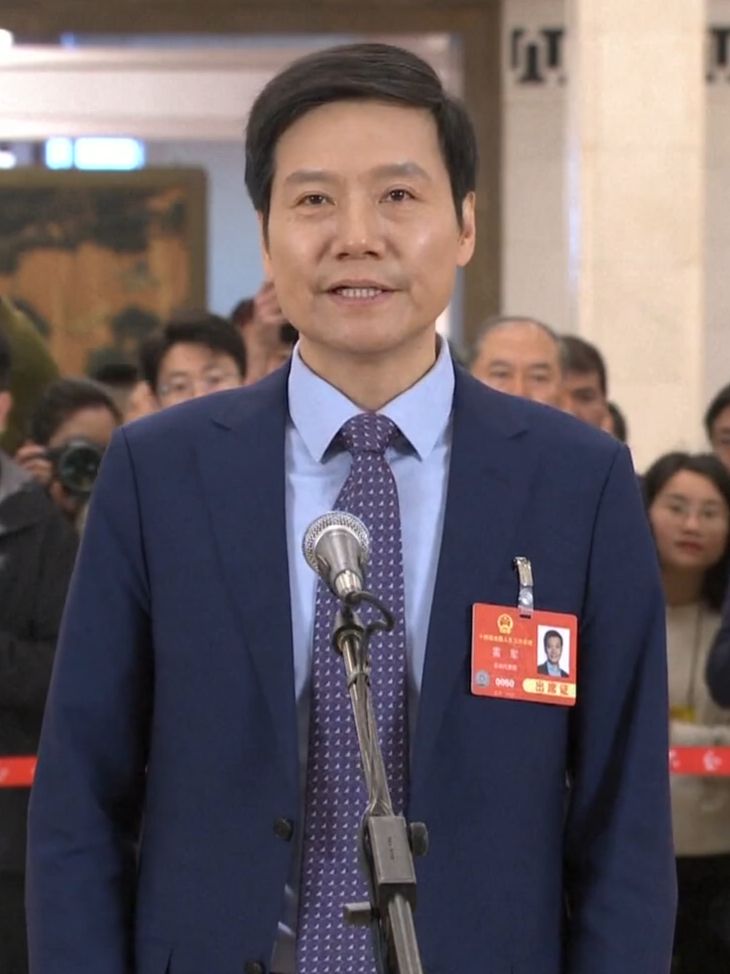
Lei Jun
Lei Jun63.20 OPS
Trade Now →
Who is Lei Jun and why is he famous?
Lei Jun (born 1969) is a Chinese entrepreneur best known as the founder, chairman, and CEO of Xiaomi Corporation, one of the world's largest smartphone makers and a major consumer electronics conglomerate. He founded Xiaomi in April 2010 and transformed it within a decade into a Fortune Global 500 company spanning smartphones, smart home devices, internet services, and consumer IoT products. Before Xiaomi, he was a longtime executive and CEO of Kingsoft, the Chinese software company, and an early angel investor in numerous Chinese internet companies including Vancl, YY, and UCWeb. He is among the most respected and widely-followed Chinese technology entrepreneurs and has emerged as a primary figure in China's rapidly growing electric vehicle market with the launch of Xiaomi's SU7 sedan in 2024.
What is Lei Jun's core legacy?
Lei Jun's core legacy is making advanced consumer electronics affordable and aspirational for hundreds of millions of consumers in China and emerging markets. Xiaomi pioneered a hybrid model combining flash sales, online-first distribution, ecosystem investments in dozens of "Mi-ecosystem" startups, and aggressive pricing that defined a generation of Chinese consumer hardware. The company's MIUI Android skin, low-margin hardware strategy, and broad product range across phones, televisions, laptops, scooters, and home appliances established a new template for vertically integrated consumer brands. The 2024 launch of the Xiaomi SU7 electric sedan extended this template into automobiles with extraordinary commercial success, with deliveries exceeding initial projections and the company committing tens of billions of yuan to EV expansion. Lei's legacy is increasingly defined by whether Xiaomi can succeed as a major automaker.
Why is Lei Jun controversial?
Lei Jun is less personally controversial than many peers but generates significant debate around specific business practices and the broader Xiaomi model. Critics argue that Xiaomi's low-margin smartphone strategy has commoditized the Android market and depressed industry-wide profitability. Patent litigation in markets like India, allegations of copying Apple's product designs and presentation style (Lei's keynote style was extensively compared to Steve Jobs in early years), and questions about the quality consistency across Xiaomi's vast ecosystem product range have all drawn criticism. The aggressive entry into the EV market raises concerns about overcapacity in the Chinese auto industry and questions about whether Xiaomi can sustainably compete against established automakers and EV-native competitors. His role models drawn from Silicon Valley culture also draw criticism from cultural traditionalists in China.
What is the key biographical fact about Lei Jun?
Lei Jun's defining biographical fact is reading the biography "Fire in the Valley" about Silicon Valley as a freshman at Wuhan University in 1987, an experience he has repeatedly cited as inspiring his entrepreneurial path. He completed the four-year computer science program at Wuhan University in two years, graduating in 1991, then joined Kingsoft, becoming general manager at age 25 and CEO at 29. He led Kingsoft through its 2007 Hong Kong IPO before stepping away as CEO and becoming an active angel investor. The decision to found Xiaomi in 2010 at age 40, with co-founders from Google China and other technology companies, came after he had already achieved substantial wealth and could have retired. His sustained intensity at Xiaomi, working long hours and personally leading product presentations, has become part of his public identity.
What was the defining business event of Lei Jun's career?
The defining business event is the March 2024 launch of the Xiaomi SU7 electric sedan, marking Xiaomi's formal entry into the automotive industry after a three-year development effort. Lei personally announced the vehicle at a high-profile event, with initial pricing significantly undercutting Tesla Model 3 and other competitors in China. The launch generated extraordinary commercial response, with reservations and deliveries exceeding internal projections. By late 2024 and into 2025, Xiaomi was reporting strong monthly delivery growth and expanding production capacity, with second model SU7 Ultra and SUV variants planned. Lei staked his personal reputation on the EV venture, calling it "the last major entrepreneurial effort" of his life and committing approximately $10 billion of capital. The success or failure of Xiaomi Auto will define his late-career legacy.
How does Lei Jun's position relate to other Chinese tech leaders?
Lei Jun occupies a distinctive position among Chinese tech leaders — less politically prominent than Jack Ma before 2020, more operationally focused than many peers, and less internationally controversial than Ren Zhengfei at Huawei. His relatively low political profile and focus on consumer products has historically given Xiaomi more regulatory latitude than platform companies focused on financial services or core internet services. His relationship with the Xi Jinping administration has been collaborative rather than confrontational, with Xiaomi presented as a positive example of high-tech manufacturing. Compared to Dong Mingzhu at Gree, with whom Lei famously made a publicized "billion yuan bet" in 2013 about whose company's revenue would be higher in five years, the contrast represents two different models of Chinese industrial development. Lei lost the original 2013 bet by Gree's preferred accounting.
How is Lei Jun viewed differently across countries?
International perception of Lei Jun is generally positive among technology and business audiences, particularly in markets where Xiaomi has substantial consumer presence. In India, despite ongoing regulatory tensions and asset freezes affecting Xiaomi's local operations, the brand remains widely used and Lei is well known. In Southeast Asia, Europe, and Latin America, where Xiaomi has built significant smartphone market share, he is viewed as a major industry figure. In Russia, particularly after Western brand departures in 2022, Xiaomi has become a leading smartphone brand and Lei has gained recognition. In the United States, where Xiaomi's smartphone presence is limited, awareness is concentrated among technology industry observers. Western automotive industry observers have begun studying the SU7 launch with serious attention, elevating Lei's international profile in 2024-2025.
What is Lei Jun's broader economic and political impact?
Lei Jun's economic impact extends well beyond Xiaomi proper. The Mi-ecosystem investment program seeded dozens of Chinese consumer hardware startups in categories from scooters and air purifiers to smart speakers and outdoor equipment, helping create a robust consumer hardware supply chain ecosystem in China. Xiaomi's manufacturing scale and supply chain relationships have supported the development of contract manufacturers and component suppliers. The EV pivot represents a substantial industrial commitment, with Xiaomi's Beijing factory producing tens of thousands of vehicles monthly and supporting employment across the EV supply chain. Politically, Lei has served as a delegate to the National People's Congress, regularly proposing legislation on artificial intelligence, autonomous driving, and consumer protection. His political profile is constructive rather than confrontational.
What is the bull case for Lei Jun's reputation?
The bull case for Lei Jun rests on the Xiaomi SU7 success and the broader EV opportunity. Bulls argue that Xiaomi has demonstrated the ability to enter a notoriously difficult industry (automotive) and achieve immediate commercial traction, suggesting the company can scale into a major global automaker over the coming decade. They point to Xiaomi's smartphone resilience, its high-margin internet services business, and the synergies between its broader consumer electronics ecosystem and connected vehicles. They argue that Lei's relatively constructive relationship with regulators and lower political profile provide stable operating conditions. They note that successful EV pivots by Chinese automakers like BYD have generated extraordinary reputation and shareholder returns, and Xiaomi could follow a similar arc. Trading bulls accumulate on automotive delivery beats.
What is the bear case for Lei Jun's reputation?
The bear case centers on the structural difficulty of automotive manufacturing and Chinese EV overcapacity. Bears argue that the Chinese EV market is already overserved with dozens of competing brands, that price wars are eroding industry-wide profitability, and that Xiaomi's premium pricing may not be sustainable as competition intensifies. They point to historical patterns of consumer electronics companies failing to translate brand strength into automotive success. They note that Xiaomi's smartphone market share has plateaued in several markets and faces pressure from Huawei's resurgence in China. They argue that the capital intensity of automotive manufacturing could pressure Xiaomi's margins for years. They observe that any major safety incident with SU7 vehicles could reverse Lei's reputation rapidly. Bears short into hype-driven rallies around new model announcements.
How does Lei Jun's OPS price reflect public consensus on JudgeMarket?
Lei Jun trades as a high-momentum, operationally-driven asset, with price discovery closely tied to Xiaomi's monthly automotive delivery figures, smartphone market share, and competitive positioning. His JudgeMarket price has been notably reactive to SU7 delivery announcements, with positive surprises producing meaningful upward repricing. The trader base for Lei tends to be less polarized than for Jack Ma or Donald Trump, with a more concentrated bull-base based on EV execution rather than polarized partisan or ideological views. The 50 mark for Lei tends to reflect genuine middle conviction rather than polarized average. His price character is more like a fundamental equity than a polarized political asset, making it suitable for traders applying execution-based analytical frameworks.
What events typically move Lei Jun's price?
Lei Jun's price moves primarily on operational catalysts. Xiaomi monthly automotive delivery figures (typically published in the first week of each month) are major catalysts, with both absolute delivery numbers and growth rates analyzed. New model announcements, particularly for the SU7 Ultra and the planned SUV variant, produce significant price moves. Smartphone market share data and quarterly earnings releases drive moves. Strategic announcements about international expansion, particularly any EV exports to Europe or other markets, are closely watched. Macro events affecting the Chinese EV industry — including subsidy policy, charging infrastructure, and competitor announcements from BYD, NIO, and others — produce sector-driven moves that affect Lei. His own keynote presentations and product launches are themselves significant catalysts.
How does Lei Jun compare to other Chinese business figures on JudgeMarket?
Compared to Jack Ma, Lei Jun trades with greater current operational momentum and lower regulatory tail risk, reflecting Xiaomi's more focused product-company profile versus Alibaba's platform breadth. Compared to Ren Zhengfei, Lei represents a more consumer-facing path while Ren represents a more strategic-technology path with greater geopolitical exposure. Compared to Dong Mingzhu, Lei represents a younger and more diversified business archetype, with the famous 2013 bet between them now a historical artifact. Compared to Elon Musk as a fellow tech-CEO-turned-EV-maker, Lei represents the Chinese expression of this archetype, with substantially lower volatility and a more institutional operational style. Pair trades among Chinese entrepreneurs and against Musk express specific theses about the global EV market.
What is the long-term reputation outlook for Lei Jun?
Lei Jun's long-term reputation outlook is broadly constructive, with the trajectory largely determined by whether Xiaomi Auto succeeds as a sustainable major automaker. Baseline scenarios involve Xiaomi establishing itself as one of several major Chinese EV brands with significant domestic share and modest international presence, supporting a moderate-positive long-term reputation. Upside scenarios involve Xiaomi becoming a top-tier global EV manufacturer comparable to BYD or beyond, which would elevate Lei into the pantheon of major Chinese industrialists. Downside scenarios involve automotive losses pressuring the broader business or any major safety or quality issue. The asymmetry currently favors the upside given execution momentum, but the multi-year scale of the EV investment means the verdict will play out over five to ten years.
Is Lei Jun a good long-term position on JudgeMarket?
Lei Jun is a moderate-to-high-conviction operational asset particularly suited for traders bullish on Chinese consumer technology and EV trajectory. The bull case rests on continued SU7 success, expansion into additional EV models, and Xiaomi establishing itself as a major global automaker. The bear case rests on EV industry overcapacity, smartphone market plateauing, and execution challenges in scaling automotive production. Compared to more volatile political assets, Lei trades with a more equity-like character driven by quarterly operational data, making him suitable for traders applying systematic operational analysis. Pair trades against Jack Ma (expressing China-tech-momentum views) or Elon Musk (expressing global EV competition views) can capture specific dynamics. Most long-term holders should size positions to reflect EV execution conviction.
Lei Jun
Lei Jun63.20 OPS
Trade Now →

Related Content

Jack Ma vs Lei Jun: E-commerce Pioneer vs Hardware OperatorJack Ma built Alibaba into China's e-commerce giant. Lei Jun built Xiaomi into a global hardware brand and is now reshaping Chinese EVs. Compare on JudgeMarket.Trade Lei JunView live market price and trade OPS

History Will Be the Judge

Start trading with 1,000 free OPS. No wallet needed.

Start Trading →