Логотип Judge MarketJudgeMarketUS
Результати пошуку Запросити друзів FAQ поки немає. Блог Білдери Натисніть, щоб завантажити
© 2026 JudgeMarket
AboutPrivacyTermsWhat is OPSNewsBlog
ГоловнаГаманець
Home>Dong Mingzhu>FAQ

Dong Mingzhu: 15 Frequently Asked Questions

Explore 15 FAQs about Dong Mingzhu — Gree Electric chairwoman, iconic Chinese businesswoman, and one of the most prominent industrialists in modern China. Trade her reputation on JudgeMarket.
May 27, 2026
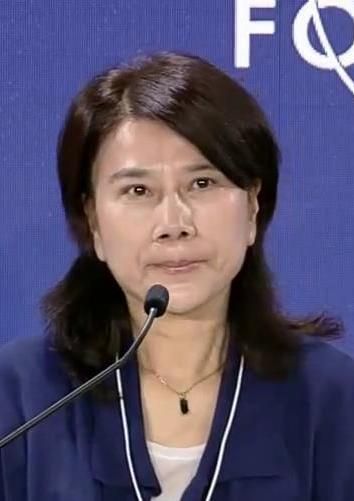
Dong Mingzhu
Dong Mingzhu21.47 OPS -2.41%
Trade Now →
Who is Dong Mingzhu and why is she famous?
Dong Mingzhu (born 1954) is a Chinese businesswoman who has served as chairwoman of Gree Electric Appliances since 2012 and previously as its president from 2001. She is one of the most prominent and longest-serving women industrial leaders in contemporary China, having joined Gree as a sales representative in 1990 and risen through the ranks over three decades. Under her leadership, Gree became the world's largest air conditioner manufacturer by unit volume and one of the most valuable Chinese white-goods companies. Beyond Gree, she has become a major public figure through her direct public commentary, her famous 2013 "billion yuan bet" with Lei Jun of Xiaomi, her extensive use of livestreaming commerce, and her self-branding as the personal face of Gree products. She has served as a delegate to the National People's Congress for multiple terms.
What is Dong Mingzhu's core legacy?
Dong's core legacy is building Gree from a regional Zhuhai air conditioner assembler into the world's largest air conditioner manufacturer and demonstrating that a Chinese state-derived industrial enterprise could compete globally on quality and brand. She championed Gree's pivot from contract manufacturing to own-brand production, established a quality-control reputation in a sector previously dominated by lower-cost competition, and built a manufacturing operation that vertically integrated significant portions of the air conditioner supply chain. She also diversified Gree into related categories including refrigerators, washing machines, kitchen appliances, and most ambitiously into smartphones and electric vehicles (with mixed commercial results). Her broader contribution to Chinese industrial culture is making women's leadership of a major manufacturer visible and demonstrating sustained executive longevity in a sector with rapid management turnover.
Why is Dong Mingzhu controversial?
Dong's controversies span business strategy, public statements, and governance. Critics argue that her diversification of Gree into smartphones (Gree-branded handsets failed commercially) and electric vehicles (the Yinlong acquisition) destroyed shareholder value and represented strategic overreach beyond air conditioner core competence. Her direct, sometimes blunt public commentary has generated significant debate, including controversial statements on hiring practices, employee treatment, and competitor companies. Her positioning of herself as the personal face of Gree, including putting her image on product packaging, has been criticized as conflating personal brand with corporate identity. Her extended tenure as chairwoman past traditional retirement age has generated succession planning questions. Her relationship with company governance and major shareholders has been periodically contested.
What is the key biographical fact about Dong Mingzhu?
Dong's defining biographical fact is being widowed in 1984 when her son was just two years old, an event she has cited as fundamentally shaping her work ethic and life direction. After her husband's death, she raised her son largely as a single mother while building her career, joining Gree in 1990 at age 36 — relatively late by entrepreneurial standards. She rose through the sales organization at Gree initially in Anhui province, where she famously recovered substantial overdue receivables that the company had written off, establishing a reputation for tenacity. Her trajectory from young widow to sales representative to chairwoman of a Fortune Global 500 company is among the most documented women's executive arcs in modern Chinese business history, and she has spoken extensively about how the early loss shaped her approach to work and leadership.
What was the defining business event of Dong Mingzhu's career?
The defining business event has multiple candidates. The 2013 "billion yuan bet" with Lei Jun of Xiaomi — in which she publicly wagered with Lei about whose company would have higher revenue in five years — became a cultural touchstone for the contrast between traditional Chinese manufacturing and new-internet entrepreneurship. The subsequent business outcomes have been variously interpreted, with both sides claiming a form of victory depending on accounting framework. The 2016-2018 attempted acquisition of Yinlong New Energy, an electric bus and lithium battery manufacturer, represented a major strategic diversification attempt; the deal was initially blocked by Gree shareholders, then Dong personally invested, and the venture's mixed performance has been one of the defining strategic episodes of her chairmanship. Her continued direct involvement in Gree's commercial operations into her 70s also remains defining.
How does Dong's position relate to other Chinese tech and business figures?
Dong Mingzhu occupies the position of senior industrial leader within the broader Chinese business landscape. Her relationship with Lei Jun — initially competitive through the 2013 bet, subsequently evolving into mutual respect even as their companies follow different paths — is the most documented inter-CEO relationship in contemporary Chinese business. Her relationship with Jack Ma's Alibaba ecosystem has been collaborative, with Gree products extensively distributed through Tmall and Taobao. Her broader position represents the traditional-manufacturing pole within Chinese industry, contrasting with the internet-platform pole of Ma and the consumer-electronics pole of Lei. Her political profile has been constructive but distinctive, with her NPC delegate role providing direct engagement with policy-making on manufacturing, intellectual property, and consumer protection issues.
How is Dong Mingzhu viewed differently across countries?
International perception of Dong is significant within global air conditioning and home appliance industries but less prominent in general business audiences than figures like Jack Ma or Lei Jun. In Southeast Asian, Middle Eastern, and African markets where Gree air conditioners have substantial market share, she is well known among industry observers. In Japan, where Gree competes against Daikin and other established air conditioner manufacturers, she is recognized as a primary competitor. In Western markets where Gree's brand presence is more limited, awareness is concentrated among observers of Chinese industrial development and women's executive leadership globally. Within Chinese diaspora communities, she is widely recognized as a major business figure. Her relatively low English-language media presence keeps her international profile bounded compared to more globally-fluent Chinese executives.
What is Dong's broader economic and political impact?
Dong's broader impact extends through Gree's role in Chinese white-goods industrial development and her direct policy advocacy through the NPC. Gree's manufacturing scale and supplier ecosystem have supported employment and component manufacturing across multiple Chinese provinces. The company's brand-building demonstrated a model that other Chinese white-goods makers have emulated. Her NPC proposals over multiple terms have addressed intellectual property protection (a longstanding Gree concern given competitor patent disputes), consumer product safety, and manufacturing employment policy. Her public advocacy for Chinese-branded products over foreign brands aligns with broader policy emphasis on domestic industrial capability. Her role as a high-profile woman executive in a male-dominated heavy-industry sector has been culturally significant in normalizing women's senior leadership in Chinese manufacturing.
What is the bull case for Dong Mingzhu's reputation?
The bull case for Dong rests on the durability of Gree's market position and the historical pattern of Chinese state-affiliated industrial leaders gaining reputation through long tenure and operational continuity. Bulls argue that Gree's leadership position in global air conditioning is structurally durable, that her continued personal involvement provides operational continuity, and that her cultural standing as a leading Chinese woman executive will support a positive long-term legacy regardless of subsequent diversification outcomes. They point to her sustained ability to generate public attention and effective brand association, supporting Gree's premium pricing relative to competitors. They argue that historical reassessment of Chinese industrial leadership in the 2000s-2020s era will treat her favorably as one of the most consistent and operationally durable figures. Trading bulls accumulate on dips driven by short-term controversy.
What is the bear case for Dong Mingzhu's reputation?
The bear case centers on strategic missteps in diversification, succession risk, and the structural challenges facing the broader Chinese white-goods industry. Bears argue that the Yinlong EV venture and the Gree smartphone effort destroyed substantial value and reflect strategic judgment problems. They point to her extended tenure past traditional retirement age as raising succession risk, with unclear identification of her successor as chairwoman. They note that the Chinese air conditioner market is mature and increasingly competitive, with margin pressure from competitors including Midea and Haier. They argue that her personal brand conflation with Gree creates reputation risk if any major corporate governance or product safety issue emerges. Bears short into rallies driven by short-term operational beats that may not reflect underlying competitive position.
How does Dong Mingzhu's OPS price reflect public consensus on JudgeMarket?
Dong Mingzhu trades as a stable industrial-figure asset with relatively lower volatility than internet-era tech entrepreneurs. Her JudgeMarket price tends to respond to Gree quarterly earnings, white-goods industry data, and notable public statements rather than to political or geopolitical news. The trader base shows polarization between admirers of her operational longevity and critics of her diversification record, but the polarization is less acute than for political assets. The 50 mark for Dong may reflect this moderate polarization, with conviction more bounded than for figures with stronger ideological or political associations. Her price character is suitable for traders applying traditional industrial-figure analytical frameworks, with order book depth typically concentrated and trading hours skewed toward Asian market timing.
What events typically move Dong Mingzhu's price?
Dong's price moves on a clear set of catalysts. Gree quarterly earnings releases drive medium-term repricing, with both top-line and air-conditioning segment margins watched. White-goods industry data, including air conditioner sales figures from China and major export markets, produce sector-driven moves. Strategic announcements about Gree diversification, particularly any new ventures in electric vehicles, smart home, or other categories, produce significant moves with substantial volatility. Public statements during livestreaming sessions, interviews, and NPC sessions can produce sharp short-term moves. Personal events including any health-related news given her age affect price meaningfully. Competitor news, particularly from Midea, Haier, and Daikin, produces relative-position moves. Succession-related announcements at Gree are particularly impactful catalysts.
How does Dong Mingzhu compare to other Chinese business figures on JudgeMarket?
Compared to Jack Ma, Dong trades as a more operationally stable and politically lower-risk asset, reflecting Gree's traditional manufacturing profile versus Alibaba's regulated platform position. Compared to Lei Jun, Dong represents traditional industrial leadership while Lei represents consumer-tech execution; the historical 2013 bet between them remains an actively-referenced cultural artifact in trader analysis. Compared to Ren Zhengfei, Dong's lower geopolitical exposure and more domestic focus produce a different risk profile, with Ren carrying substantially higher sanctions-related volatility. Compared to Luo Yonghao, Dong represents established industrial scale while Luo represents folk-hero entrepreneurial culture. Pair trades among Chinese business figures often involve Dong to express industrial-stability views relative to other categories.
What is the long-term reputation outlook for Dong Mingzhu?
Dong Mingzhu's long-term reputation outlook is moderately positive with bounded range. Baseline scenarios involve continued recognition as one of the most prominent women industrial leaders in contemporary Chinese history, with reputation primarily determined by Gree's continued global air conditioning leadership and her eventual succession transition. Upside scenarios involve continued operational success, successful management transition, and historical reassessment emphasizing her sustained execution capability over three-plus decades. Downside scenarios involve Gree losing market share, succession transition difficulties, or any major governance issue. The reputation range is more bounded than for politically-exposed or geopolitically-significant figures, making her one of the lower-volatility legacy figures on the Chinese business segment of JudgeMarket.
Is Dong Mingzhu a good long-term position on JudgeMarket?
Dong Mingzhu is a stable, moderate-conviction position suited for traders seeking lower-volatility Chinese industrial exposure. The bull case rests on Gree's durable competitive position, her cultural significance as a leading Chinese woman executive, and bounded reputation downside. The bear case rests on strategic diversification missteps, succession risk, and broader white-goods industry maturation. Her relatively bounded reputation range makes her suitable for moderate position sizing without requiring strong directional conviction. Pair trades against Lei Jun (expressing traditional-manufacturing-versus-new-tech views) or Jack Ma (expressing operational-stability views) capture specific dynamics. Most long-term holders should consider Dong a stable allocation within a diversified Chinese business basket, with measured accumulation on extreme dips driven by short-term operational variance.
Dong Mingzhu
Dong Mingzhu21.47 OPS -2.41%
Trade Now →

Related Content

Trade Dong MingzhuView live market price and trade OPS

History Will Be the Judge

Start trading with 1,000 free OPS. No wallet needed.

Start Trading →