Логотип JudgeMarketJudgeMarketUS
Награды Пригласить друзей Новости Блог Билдеры Поддержка
© 2026 JudgeMarket
AboutPrivacyTermsWhat is OPSNewsBlog
ГлавнаяКошелёк
Home>Chiang Kai-shek>FAQ

Chiang Kai-shek: 15 Frequently Asked Questions

Explore 15 FAQs about Chiang Kai-shek — leader of the Republic of China from 1928 to 1975, generalissimo of the Nationalist Chinese government, and one of the most consequential and contested figures of 20th-century Asia. Trade his reputation on JudgeMarket.
May 27, 2026
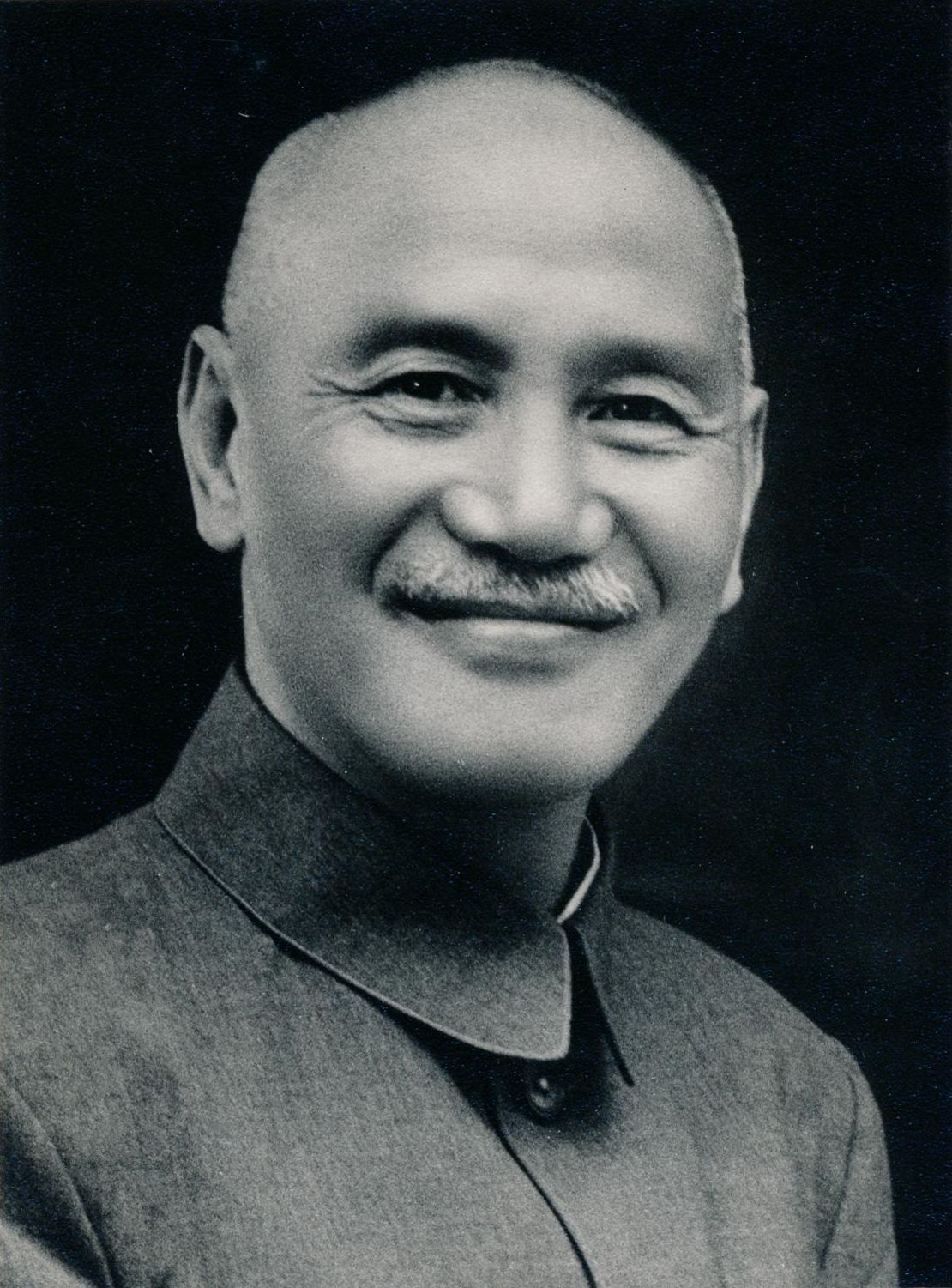
Chiang Kai-shek
Chiang Kai-shek46.68 OPS
Trade Now →
Who is Chiang Kai-shek and why is he famous?
Chiang Kai-shek (1887–1975) was the leader of the Republic of China for nearly five decades — first on the mainland from 1928 to 1949 as Generalissimo of the Nationalist (KMT) government, then on Taiwan from 1949 to his death in 1975. He led China through the Second Sino-Japanese War (1937–1945), the Chinese Civil War against Mao Zedong's Communists, and the relocation of the ROC government to Taiwan following the Communist victory. On Taiwan he ruled through martial law, presided over rapid economic development, and maintained the ROC's UN seat as the recognized China until 1971. His historical reputation is among the most contested in modern Asian history, viewed dramatically differently across mainland China, Taiwan, and the West.
What is Chiang Kai-shek's main political legacy?
Chiang's legacy has multiple inseparable strands. He unified much of China under the Nationalist government through the Northern Expedition (1926–1928), led Chinese resistance against Japanese invasion at enormous human cost, ultimately lost the Civil War to the Communists, and then governed Taiwan as the ROC government-in-exile until his death. On Taiwan, his rule combined harsh authoritarianism — including the February 28 incident of 1947 and the "White Terror" suppression of dissent — with industrial development that laid the foundation for Taiwan's eventual economic transformation. He maintained the legal fiction of ROC sovereignty over all of China, including UN representation until 1971 when the PRC took the seat. His son Chiang Ching-kuo succeeded him and ultimately initiated democratization.
Why is Chiang Kai-shek controversial?
Chiang's controversy spans military, political, and human rights dimensions. Military critics note his repeated battlefield reverses and disagreements with US advisors during World War II. Political critics cite the corruption of his wartime government, the failure of his postwar policies that contributed to Communist victory, and his authoritarian rule on Taiwan including the February 28 incident in which thousands of Taiwanese were killed by ROC forces. The White Terror period suppressed political dissent through executions, imprisonments, and surveillance. He is also criticized for resource extraction from Taiwan to support his mainland recovery ambitions. Supporters credit him with leading wartime resistance to Japan, preserving the ROC as a distinct political entity, and building Taiwan's industrial foundation.
What was Chiang Kai-shek's early career?
Chiang was born in 1887 in Xikou, Zhejiang province. He attended the Baoding Military Academy and Tokyo Shinbu Gakkō, joining Sun Yat-sen's Tongmenghui revolutionary organization in Japan. He participated in the 1911 Revolution that ended the Qing dynasty, then served in increasingly senior military positions under Sun Yat-sen in the southern KMT government. After studying in the Soviet Union briefly in 1923, he was appointed Commandant of the Whampoa Military Academy in 1924, which became his power base. Following Sun's death in 1925, he emerged as the dominant KMT military figure. The 1926–1928 Northern Expedition brought much of China under nominal Nationalist control, with Chiang as commander.
What was the relationship between Chiang and Mao?
Chiang and Mao Zedong were the two defining figures of 20th-century Chinese politics, locked in a struggle for control of China from the 1920s through 1949. The KMT and CCP initially cooperated in the early 1920s under Sun Yat-sen's "United Front" policy, but Chiang launched the violent April 1927 Shanghai purge against Communists, beginning the long civil war. The two sides cooperated in the Second United Front against Japan from 1937 to 1945, though with persistent tension. After Japanese surrender, full civil war resumed, ending in Communist victory in 1949. Chiang retreated to Taiwan with approximately 1.2 million followers, while Mao established the PRC on the mainland. Both leaders maintained that their government was the legitimate one for all of China until their respective deaths.
What was the February 28 incident?
On February 27, 1947, an altercation between Taiwanese cigarette vendors and ROC tobacco monopoly enforcement officers in Taipei sparked island-wide protests against KMT misrule. Taiwan, returned to ROC sovereignty in 1945 after fifty years of Japanese colonization, had experienced rapid economic deterioration and corruption under the incoming mainland administration. On February 28, ROC forces fired on protesters, triggering days of unrest. Chiang dispatched mainland troops who carried out indiscriminate killings of Taiwanese civilians, with elite figures targeted disproportionately. Scholarly estimates of casualties range from approximately 10,000 to 30,000 deaths. The event was suppressed from public discussion for decades and only formally acknowledged by the ROC government after democratization. It remains the foundational trauma in Taiwan's relationship with the mainland-arrived KMT government.
How is Chiang Kai-shek viewed differently across regions?
In mainland China, official discourse historically portrayed Chiang as a corrupt warlord and class enemy, though more recent reassessment under Xi Jinping has acknowledged his wartime resistance against Japan. In Taiwan, opinion divides sharply along partisan and identity lines — KMT traditionalists revere him as the founding leader who preserved ROC continuity, while DPP supporters and Taiwanese-identity voters emphasize the February 28 incident and authoritarian rule. Statue removals and his mausoleum at Cihu remain politically contentious. In the United States, Cold War-era admiration has given way to more critical scholarly assessment. In Japan, he is remembered as the wartime adversary who reportedly advocated leniency toward Japan after surrender. Among overseas Chinese diaspora communities, opinion varies dramatically by political orientation.
What was Chiang's role in World War II?
Chiang led the Chinese resistance against Japanese invasion from 1937 to 1945, holding down millions of Japanese troops who could otherwise have been deployed against Allied forces in the Pacific. China suffered an estimated 15–20 million deaths during the war, by far the highest among Allied nations after the Soviet Union. Chiang attended the 1943 Cairo Conference with Roosevelt and Churchill, formally placing China among the Allied powers. The war devastated China's economy and KMT military strength, weakening Chiang's position relative to the Communists. Despite extensive US aid and General Joseph Stilwell's mission, the relationship between Chiang and his American advisors was famously tense, with Stilwell openly contemptuous in private writings. The war's end found Chiang nominally victorious but strategically weakened.
What economic and institutional impact did Chiang have on Taiwan?
Despite his authoritarian rule, Chiang's Taiwan years included substantial economic development. Land reform implemented in the late 1940s — which had been politically impossible on the mainland — redistributed agricultural land and created a base for rural prosperity. State-led industrial policy, technocratic ministries staffed by mainland-educated experts, US aid until 1965, and export-oriented manufacturing built the foundation for the "Taiwan Miracle" that accelerated after his death. The Ten Major Construction Projects launched in the early 1970s further industrialized Taiwan's infrastructure. Educational expansion, public health programs, and the gradual emergence of a Taiwanese middle class all occurred under his rule even as political freedoms remained tightly constrained.
What is the bull case for Chiang Kai-shek's reputation?
Bulls argue Chiang's leadership during World War II — holding down Japanese forces at enormous cost — was a pivotal contribution to Allied victory often underweighted in Western historiography. They credit him with preserving the ROC as a distinct political entity that became Taiwan's institutional foundation, with implementing land reform and economic policies that enabled the Taiwan Miracle, and with maintaining a coherent anti-Communist position during the Cold War. They argue his authoritarian rule was a product of war and existential threat rather than personal preference. Bulls also note that subsequent democratization under his son Chiang Ching-kuo was made possible by the institutional foundation Chiang Kai-shek built.
What is the bear case for Chiang Kai-shek's reputation?
Bears point to the February 28 incident and White Terror as fundamental human rights violations. They cite battlefield failures and corruption during the Civil War that contributed to Communist victory, the harshness of mainland rule before retreat, and the suppression of Taiwanese political identity under his Taiwan rule. Critics argue his economic claims rest on inheritance from Japanese colonial development and US Cold War aid rather than indigenous accomplishment. They note that he never made peace with democratization and that his legacy required his son to dismantle. From PRC perspectives, of course, he is viewed as a class enemy and defeated rival to Mao Zedong, though contemporary revisionism is partial.
How does Chiang Kai-shek's OPS price on JudgeMarket reflect public consensus?
Chiang Kai-shek is one of the most polarized historical figures on JudgeMarket. His price reflects irreconcilable views across mainland Chinese, Taiwanese KMT, Taiwanese DPP, Western, and Japanese constituencies. A price near the middle does not represent ambivalence — it represents an active dispute among groups with fundamentally different framings. His order book shows significant trading volume on commemorative dates, statue-removal controversies, and any reassessment in mainland China. Long-term price action depends heavily on whether KMT-aligned versus Taiwan-identity narratives dominate in Taiwan's political culture.
What events typically move Chiang Kai-shek's price?
Chiang's price moves on commemoration dates (October 31, his birthday; April 5, his death anniversary), February 28 anniversaries that emphasize his negative legacy, Taiwan political battles over historical memory (statue removals, mausoleum guard changes, textbook revisions), KMT internal developments under Cheng Li-wun, Han Kuo-yu, and others, mainland Chinese statements reassessing his wartime role, and major historical anniversaries (WWII commemorations, ROC founding). Cross-strait events that highlight ROC sovereignty questions also move his price.
How does Chiang Kai-shek compare to other historical leaders?
Compared to Mao Zedong, Chiang lost the central political contest but preserved an alternative political tradition that ultimately delivered Taiwan's democracy. Compared to Chiang Ching-kuo, Chiang Kai-shek established authoritarian rule that his son ultimately reformed. Compared to other authoritarian-era founders, Chiang's legacy is complicated by the institutional path that led to democratization rather than collapse. Among 20th-century Allied wartime leaders, his contribution to defeating Japan is often underweighted relative to Winston Churchill or others. On JudgeMarket, his closest comparables are other contested 20th-century strongmen whose legacies remain actively debated.
What is the long-term reputation outlook for Chiang Kai-shek?
Chiang's long-term reputation is among the more uncertain historical figures on JudgeMarket. In mainland China, modest rehabilitation has occurred but remains constrained. In Taiwan, his standing has eroded as Taiwanese identity politics has strengthened and democratic-era reassessment has emphasized the February 28 incident. Whether KMT eventually regains executive power and reshapes Taiwan's historical narrative will significantly affect his standing. In Western scholarship, more nuanced reassessments of his wartime role continue but the broader trend has been critical. He is unlikely to reach consensus heroic or villainous status — his legacy will remain actively contested.
Is Chiang Kai-shek a good long-term position on JudgeMarket?
Chiang Kai-shek is a high-conviction, long-cycle position. The bull case rests on wartime contribution reassessment, KMT political revival, and broader rehabilitation of his anti-Communist Cold War positioning. The bear case rests on continued Taiwan identity politics, February 28 memory, and scholarly emphasis on his failures rather than achievements. Pair trades against Mao Zedong express views on the Civil War's lasting verdict, against Chiang Ching-kuo express views on which Chiang's reputation will be valued more, and against Lee Teng-hui express views on whether the authoritarian or democratic Taiwan narrative dominates. Position sizing should reflect the long time horizons involved in historical reassessment.
Chiang Kai-shek
Chiang Kai-shek46.68 OPS
Trade Now →

Related Content

Chiang Kai-shek vs Chiang Ching-kuo: Father, Son, and the ROC TransitionChiang Kai-shek and Chiang Ching-kuo shaped the Republic of China across two generations. Compare the authoritarian founder with the reformer who began Taiwan's democratization, on JudgeMarket.Chiang Kai-shek vs Mao Zedong: How Does the Market Reread the Chinese Civil War?Chiang Kai-shek and Mao Zedong fought for the future of China and left two rival states. Compare their records, ideologies, and how JudgeMarket prices each.Trade Chiang Kai-shekView live market price and trade OPS

History Will Be the Judge

Start trading with 1,000 free OPS. No wallet needed.

Start Trading →