Logo do Judge MarketJudgeMarketUS
Recompensas Convidar Amigos Notícias Blog Builders Suporte
© 2026 JudgeMarket
AboutPrivacyTermsWhat is OPSNewsBlog
InícioCarteira
Home>Sam Bankman-Fried>FAQ

Sam Bankman-Fried: 15 Frequently Asked Questions

Explore 15 FAQs about Sam Bankman-Fried (SBF) — FTX founder, once worth $26 billion, now serving a 25-year federal prison sentence for one of the largest fraud cases in US history. Trade his reputation on JudgeMarket.
May 27, 2026
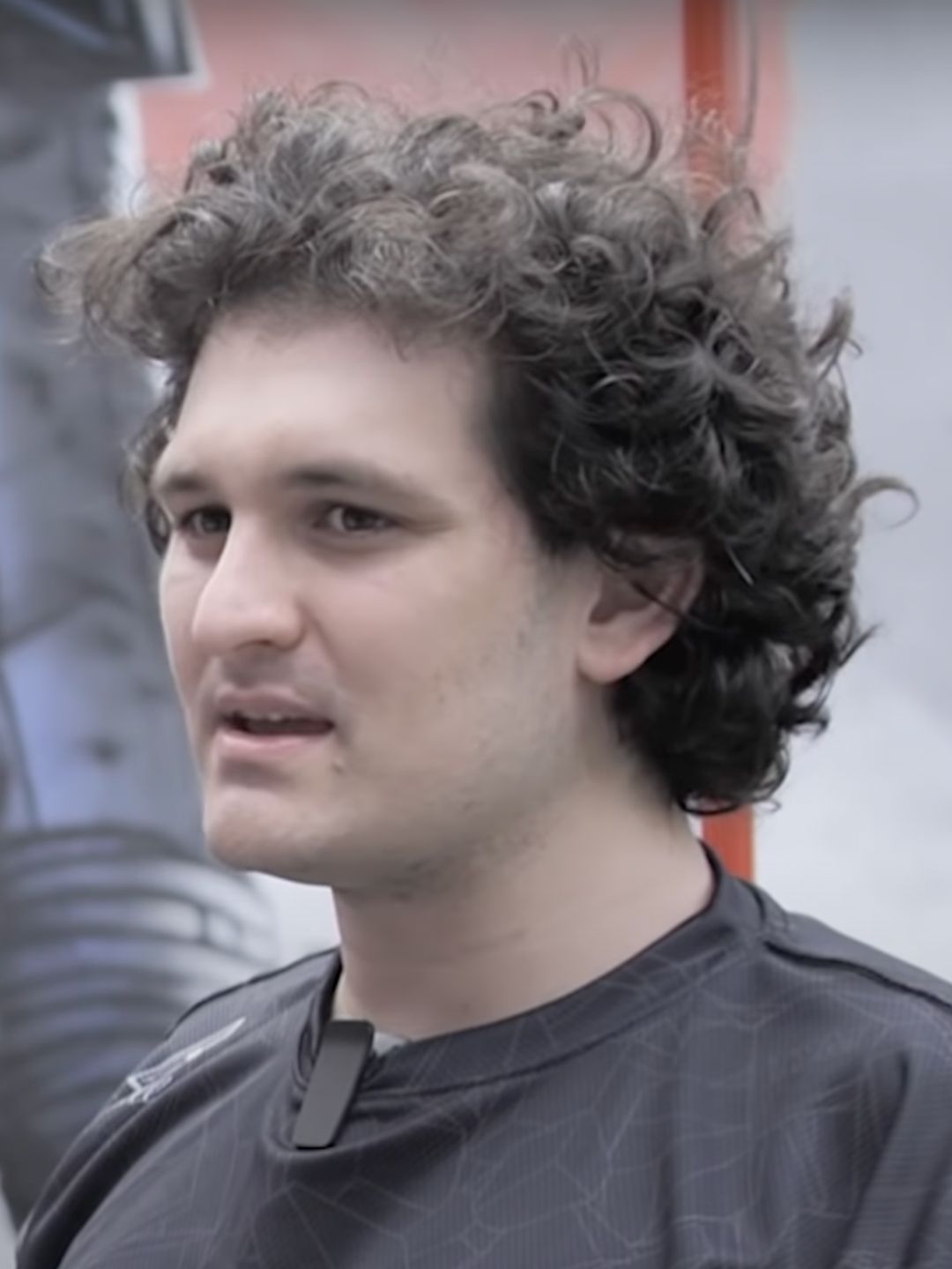
Sam Bankman-Fried
Sam Bankman-Fried5.85 OPS -2.50%
Trade Now →
Who is Sam Bankman-Fried and why is he famous?
Sam Bankman-Fried, universally known as SBF (born 1992 in Stanford, California, to two Stanford law professors), is the disgraced founder of FTX, once the second-largest cryptocurrency exchange in the world, and of Alameda Research, a major crypto trading firm. After graduating from MIT in physics, he worked at quantitative trading firm Jane Street, then founded Alameda in 2017 and FTX in 2019. He briefly held a net worth estimated at $26 billion and was among the most politically connected crypto executives, donating extensively to US political campaigns and meeting with senior policymakers. In November 2022, FTX collapsed in a matter of days after Changpeng Zhao of Binance announced he would liquidate Binance's FTT holdings, exposing that customer deposits at FTX had been transferred to Alameda. SBF was arrested in the Bahamas in December 2022, extradited to the US, convicted of seven counts of fraud and conspiracy in November 2023, and sentenced in March 2024 to 25 years in federal prison.
What was Sam Bankman-Fried's role in crypto?
Before the collapse, SBF positioned himself as both a major exchange operator and the public face of "responsible" crypto. FTX grew rapidly from its 2019 founding into a top-tier derivatives and spot venue, particularly popular with sophisticated traders due to its product design. Alameda Research was one of the largest crypto market-makers and proprietary trading firms. SBF cultivated relationships with policymakers, testified before Congress, and advocated for crypto regulatory frameworks — including, controversially, ones that competitors viewed as designed to constrain decentralized finance while protecting centralized exchanges like FTX. He bought naming rights to the Miami Heat arena, sponsored MLB umpires, and ran high-profile celebrity endorsement campaigns. The "effective altruism" framing — that he was earning to give — became a central component of the brand and a major recruiting tool for talent.
Why is Sam Bankman-Fried controversial?
The controversy is now historical and definitive. The November 2022 collapse revealed that customer funds at FTX had been transferred to Alameda Research and used for trading losses, venture investments, real estate purchases (including roughly $40 million in Bahamas property), political donations, and loans to FTX executives. The fraud was estimated at approximately $8 billion in customer losses. The 2023 trial — at which co-founders Caroline Ellison, Gary Wang, and Nishad Singh testified for the prosecution after pleading guilty — established that SBF had directed or knowingly enabled the misuse of customer funds over a period of years. The political donations, ostensibly bipartisan but heavily Democratic-leaning, became a separate scandal that prompted return of funds from many recipients. The "effective altruism" framing, retrospectively, was widely viewed as either delusional self-justification or active misdirection.
What was Sam Bankman-Fried's origin moment?
The formative early moment was in 2017-2018. SBF, then in his mid-twenties, identified a persistent arbitrage between Bitcoin prices on US and Japanese exchanges and built Alameda Research to capture it. The success of that arbitrage trade (reportedly tens of millions of dollars in profit) provided both capital and credibility. He founded FTX in 2019 in Hong Kong, then relocated to the Bahamas. The 2020-2021 bull market and the launch of innovative derivative products (perpetual swaps with novel collateral mechanics, tokenized equities) propelled FTX rapidly up the exchange volume rankings. The pivotal turn into fraud, according to trial testimony, began earlier than externally visible — with Alameda effectively using FTX customer deposits as a credit line that was never authorized and never disclosed.
What was FTX's defining product or decision?
FTX's defining product was its derivatives platform, particularly the unified margin and collateral system that allowed traders to use a wide range of assets as collateral for positions. This was attractive to sophisticated traders and contributed to FTX's rapid market share gains. The defining defining decision, however, was the establishment of an undisclosed back-door credit relationship between FTX and Alameda Research that allowed Alameda to draw on FTX customer deposits. This single architectural decision — implemented via code that exempted Alameda from the platform's normal margin liquidation logic — was the operational mechanism of the fraud. Everything else, including the celebrity endorsements, the political donations, and the public-policy advocacy, sat downstream of the fact that the entire business depended on misusing customer funds.
How does Sam Bankman-Fried relate to other crypto figures?
The defining relationship was with Changpeng Zhao. Binance was an early FTX investor; that investment was bought back in 2021 with FTT tokens as consideration. In November 2022, CZ's tweet announcing Binance would liquidate the FTT triggered the bank run that destroyed FTX. The episode is widely viewed as the moment one of crypto's largest exchanges destroyed the other through a strategic move that was simultaneously industry-leadership and competitive warfare. With Brian Armstrong, the contrast became the post-FTX defining narrative — Coinbase's regulatory-first strategy was vindicated by FTX's collapse. With Vitalik Buterin, the relationship had been polite but distant; after the collapse Buterin wrote thoughtfully about what crypto could learn. With Justin Sun, SBF was a counterparty during the November 2022 collapse, when Sun publicly floated bailout discussions that ultimately did not materialize. With Michael Saylor, SBF's leveraged trading approach was the inverse of Saylor's long-term holding thesis.
How is Sam Bankman-Fried viewed in crypto vs traditional finance?
Within crypto, SBF is overwhelmingly viewed as the most damaging single figure in the industry's history — the source of an $8 billion fraud, a reputation-destroying scandal, and a regulatory backlash that constrained the industry for years. There is a small contrarian narrative arguing that his sentencing was disproportionate relative to outcomes (FTX customers were eventually substantially repaid through liquidation proceeds, given the recovery of crypto prices) but this view is not widespread. In traditional finance, SBF is treated as the crypto-era's defining fraud, comparable in cultural impact to Bernie Madoff. The political establishment that previously embraced him has thoroughly distanced itself, and his name is now used as a cautionary reference in policy discussions about crypto regulation. The trial itself was treated as a referendum on the broader culture of risk-taking, branded effective altruism, and lax governance that defined the 2020-2022 crypto bubble.
What is Sam Bankman-Fried's broader impact?
SBF's broader impact has been substantially negative for crypto. The FTX collapse contributed to a multi-year crypto bear market, multiple secondary exchange failures (BlockFi, Genesis, others), and a regulatory backlash that produced the SEC enforcement actions against multiple crypto firms in 2023. The episode permanently damaged the "effective altruism" movement, which lost both funding and credibility. The political donation scandal contributed to broader scrutiny of crypto industry political influence. On the positive side — if it can be called that — the collapse accelerated the development of proof-of-reserves frameworks at other exchanges, validated Brian Armstrong's compliance-first approach, and clarified for policymakers and the public the difference between speculative centralized venues and decentralized crypto infrastructure. The cultural impact extends beyond crypto into journalism (multiple bestselling books, including Michael Lewis's "Going Infinite"), film, and ongoing legal academic study.
What is the bull case for Sam Bankman-Fried's reputation?
The bull case is narrow but exists. FTX customers were eventually largely repaid through bankruptcy proceedings as crypto prices recovered, which has fed a contrarian narrative that the actual financial harm was less than commonly understood. Some critics of the 25-year sentence argue it was disproportionate given non-violent white-collar precedents and the eventual recovery for creditors. There is also a "rehabilitation arc" possibility — over decades, narratives sometimes soften, particularly if SBF cooperates with investigators on other matters, writes a credible reckoning, or contributes meaningfully to compliance reform from prison. Some traders bet on the variance: that even a small probability of partial rehabilitation, combined with a deeply discounted current price, produces favorable expected value over long time horizons. The bull case is fundamentally a bet on time and narrative evolution, not on present-day facts.
What is the bear case against Sam Bankman-Fried?
The bear case is straightforward and dominant. SBF is a convicted federal felon serving a 25-year sentence, with the conviction upheld and the broad factual narrative settled in the historical record. The fraud was deliberate, sustained over years, and involved misappropriation of billions in customer deposits. Co-conspirators have testified extensively about his direction of the underlying activity. His public statements before and during the trial — including the much-mocked New York Times DealBook interview shortly after the collapse — damaged sympathy for him. The political donation network has unwound. The "effective altruism" framing is now widely viewed as cynical or delusional. Future appeals are unlikely to succeed in disturbing the conviction. From a reputation-pricing standpoint, the floor is genuinely uncertain — historical fraud figures have sometimes been rehabilitated and sometimes have not, and the path from "convicted fraudster" to "rehabilitated elder" is rare.
How does Sam Bankman-Fried's price on JudgeMarket reflect public consensus?
Sam Bankman-Fried trades on JudgeMarket at a deeply discounted price reflecting the collective verdict that his actions constituted one of the most damaging episodes in crypto history. The price tends to sit well below other controversial figures because the conviction is final and the factual record is established. Volatility comes from news events: court filings related to civil cases, parole-related news (though parole is years away), book and film releases that revisit the narrative, and any cooperation he provides on related investigations. The price is also affected by broader crypto sentiment — a thriving crypto industry reminds the market of what was lost; a struggling industry can either reinforce blame for him or distract from his case. A small but persistent contrarian trading interest provides ongoing two-sided liquidity even at low absolute price levels.
What events typically move Sam Bankman-Fried's price?
Court filings in ongoing FTX bankruptcy proceedings move the price, particularly any that bear on customer recovery levels or that reveal previously undisclosed information about the fraud. New journalistic exposes (the Michael Lewis book, follow-up investigations) tend to produce sharp downward moves. Anything bearing on possible appeals or sentence modification produces upward moves on rare positive outcomes and downward moves on denials. Macro crypto sentiment moves his price mildly, with strong crypto bull markets sometimes reminding the public of FTX-era harms. Coverage of Changpeng Zhao's post-prison rehabilitation can move SBF's price by comparison — generally downward, since CZ's lighter sentence and ongoing freedom highlight SBF's situation. Anniversary coverage of the FTX collapse (November) produces seasonal volatility.
How does Sam Bankman-Fried compare to other crypto figures?
The contrast with every other crypto figure on JudgeMarket is severe. Compared to Brian Armstrong, SBF is the inverse — fraud versus compliance, conviction versus reliability, prison versus public-company CEO. Compared to Changpeng Zhao, SBF received a vastly longer sentence and his fraud was substantially larger; the post-FTX comparison generally elevates CZ relative to SBF. Compared to Justin Sun, SBF is the cautionary tale Sun has so far avoided becoming; both faced enforcement, but SBF was convicted while Sun has navigated multiple cases without criminal conviction. Compared to Vitalik Buterin and Satoshi Nakamoto, the contrast is total — those figures are valued for intellectual contribution and personal restraint, qualities SBF lacked. Compared to Michael Saylor, the contrast is between disciplined long-term conviction and leveraged speculation that destroyed customer funds.
What is the long-term outlook for Sam Bankman-Fried's reputation?
The long-term trajectory is fundamentally constrained by the conviction. Realistically, SBF will be in federal prison until the late 2040s under current sentencing, with possible early release on good behavior potentially reducing that. The base-case outlook is that he becomes a permanently negative reference in crypto history, comparable to figures like Bernie Madoff in traditional finance. The bull-case rehabilitation scenarios — substantive cooperation with investigators, a credible written reckoning, partial sentence reduction — are possible but historically rare for fraud at this scale. Cultural reassessment over decades is possible but unpredictable. The most likely scenario is that the price drifts within a low range, with occasional sharp moves on news events but no fundamental rerating in either direction over the next decade.
Is Sam Bankman-Fried a good long-term position on JudgeMarket?
Sam Bankman-Fried is among the most challenging positions on JudgeMarket. The price is genuinely depressed and the floor is uncertain — historical analogs (Madoff, Ivar Kreuger, others) suggest convicted financial fraudsters can remain at very low reputation levels indefinitely. The bull case requires unusual events: substantive rehabilitation, narrative softening over decades, or a partial reframing of the harm. The bear case is dominant and continuous. Some sophisticated traders take long positions on the variance argument — buying at very low absolute prices on the theory that even small probability of any positive rerating produces favorable expected value — but this is a specialized bet rather than a conviction holding. For most traders, SBF is more useful as a short proxy when crypto sentiment turns negative, or as a reference point for evaluating other controversial figures' relative quality. Position sizing should reflect the high uncertainty and the possibility of sustained low prices.
Sam Bankman-Fried
Sam Bankman-Fried5.85 OPS -2.50%
Trade Now →

Related Content

Sam Bankman-Fried vs Changpeng Zhao: FTX, Binance, and the 2022 Crypto ReckoningSam Bankman-Fried and Changpeng Zhao led two crypto exchanges to the top — and both fell. Compare FTX's fraud collapse with Binance's settlement on JudgeMarket.Trade Sam Bankman-FriedView live market price and trade OPS

History Will Be the Judge

Start trading with 1,000 free OPS. No wallet needed.

Start Trading →