Logo do Judge MarketJudgeMarketUS
Recompensas Convidar Amigos Notícias Blog Builders Suporte
© 2026 JudgeMarket
AboutPrivacyTermsWhat is OPSNewsBlog
InícioCarteira
Home>John Lee Ka-chiu>FAQ

John Lee Ka-chiu: 15 Frequently Asked Questions

Explore 15 FAQs about John Lee Ka-chiu — Chief Executive of Hong Kong since 2022, former Chief Secretary and Security Secretary, and the leader of post-National-Security-Law Hong Kong. Trade his reputation on JudgeMarket.
May 27, 2026
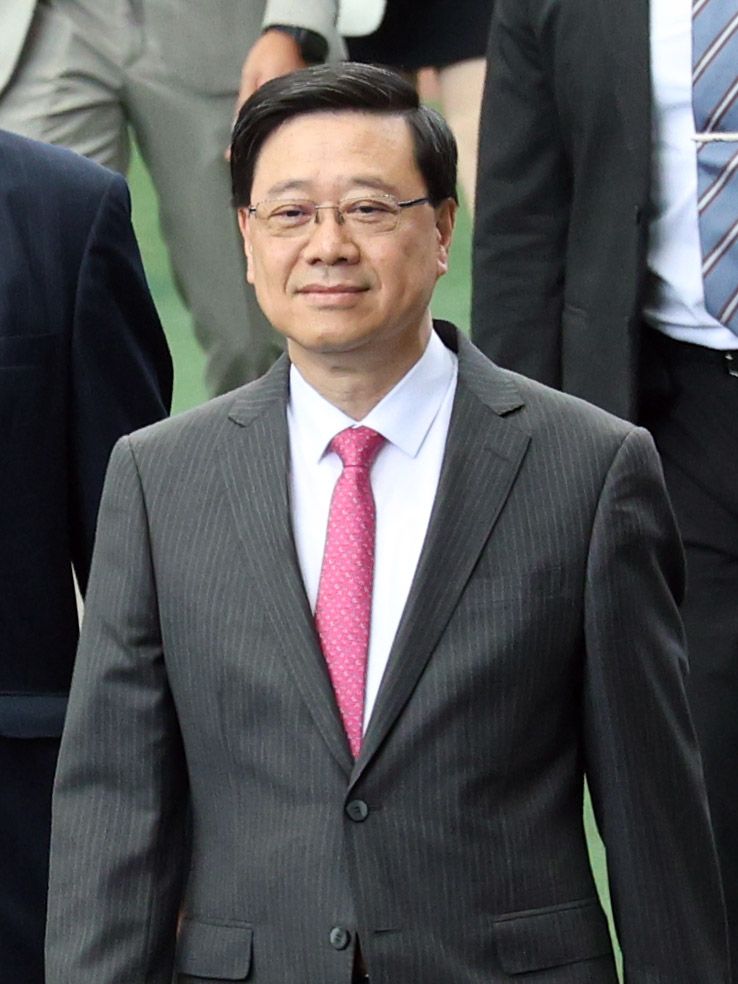
John Lee Ka-chiu
John Lee Ka-chiu10.59 OPS +35.94%
Trade Now →
Who is John Lee Ka-chiu and why is he famous?
John Lee Ka-chiu (born 1957) has served as Chief Executive of the Hong Kong Special Administrative Region since July 2022. A career police officer before transitioning to senior government posts, he served as Under Secretary for Security, Secretary for Security, and then Chief Secretary for Administration before being selected for the chief executive role. His selection as the sole approved candidate by a Beijing-aligned election committee, and his background in security rather than business or administration, marked a significant shift in Hong Kong's leadership profile. His tenure has been defined by full implementation of the 2020 National Security Law, additional Article 23 legislation in 2024, post-COVID economic recovery efforts, and Hong Kong's continued integration with mainland China's Greater Bay Area framework.
What is John Lee's main political role and policy focus?
Lee's central policy thrust has been completing the post-2019 political transformation of Hong Kong and pivoting to economic competitiveness within the new political framework. His administration enacted the long-delayed Article 23 national security legislation in March 2024, completing the local legal architecture begun by Beijing's 2020 National Security Law. Economic priorities include developing the Northern Metropolis project bordering Shenzhen, attracting mainland Chinese talent and capital, recapturing financial competitiveness lost to Singapore during the pandemic, and integrating with the Greater Bay Area. His policy addresses include emphasis on national identity education, public service efficiency, and housing supply expansion. The administration also handles complex US-Hong Kong tensions including sanctions on senior officials.
Why is John Lee controversial?
Lee is controversial internationally and among Hong Kong's pro-democracy diaspora for several reasons. His selection as the sole candidate in the 2022 election — with no opposition allowed — was criticized as eliminating democratic competition. His security background and role in the 2019 protest response, including support for the controversial extradition bill that sparked the protests, color international perceptions. He is under US sanctions imposed in 2020 for his role in implementing the National Security Law. The Article 23 legislation has been criticized as further restricting civil liberties already constrained by the 2020 NSL. Within Hong Kong, his approval ratings vary significantly across age and political identity groups. Supporters credit him with stabilizing Hong Kong, refocusing on economic priorities, and effective administration.
What was John Lee's background?
Lee was born in Hong Kong in 1957. He joined the Royal Hong Kong Police Force in 1977 at age 19 and spent over thirty years in policing, rising to Deputy Commissioner before transferring to political appointment in 2012 as Under Secretary for Security. He was promoted to Secretary for Security in 2017, then Chief Secretary for Administration in 2021. His police background includes serving during the colonial period, the 1997 handover, and the various security challenges of the post-handover era. Without business or financial background that has characterized most Hong Kong chief executives, his profile represents a clear shift toward security and administrative capability over economic networks.
How did John Lee become Chief Executive?
Lee was selected as Hong Kong's Chief Executive in May 2022 in an uncontested election by the 1,488-member Election Committee — a body restructured in 2021 after the post-2019 political reforms that further reduced direct democratic input. He received 1,416 votes from the committee, with no opposition candidate. Outgoing Chief Executive Carrie Lam did not seek a second term. His selection followed Beijing's apparent preference signals and the broader pattern of prioritizing security-focused leadership for the post-2020-NSL period. He took office on July 1, 2022, the 25th anniversary of Hong Kong's return to Chinese sovereignty, with Xi Jinping making his first visit to Hong Kong since the pandemic for the inauguration.
What was Article 23 legislation?
Article 23 of Hong Kong's Basic Law requires the city to enact local legislation on national security covering treason, sedition, theft of state secrets, and related offenses. An earlier attempt to enact such legislation in 2003 was withdrawn after massive public protests, becoming one of the most politically significant retreats of post-handover government. The Lee administration enacted Article 23 legislation in March 2024, completing the local legal framework begun by Beijing's 2020 National Security Law. The new law, the Safeguarding National Security Ordinance, includes provisions on external interference, state secrets, sedition, and other offenses. International criticism focused on broad definitions that critics argued could criminalize routine business, journalism, and civic activity. Lee characterized the law as overdue completion of constitutional obligations.
How is John Lee viewed differently across regions?
In mainland China, Lee is generally viewed favorably as a steady administrator implementing Beijing's framework for Hong Kong. Among Hong Kong residents, opinion varies significantly — older residents, government and security sector employees, and business interests often view him positively for stability and administrative competence; younger residents, pro-democracy supporters, and many in the diaspora view him negatively. In the United States and UK, where he is under sanctions, official perception is hostile and Hong Kong policy criticisms continue. Among the Hong Kong diaspora, particularly those who emigrated post-2020, Lee is viewed as symbolic of the city's political transformation. In Taiwan, his tenure is studied as a cautionary example of post-handover trajectory.
What is John Lee's relationship to Beijing?
Lee operates within the post-2020 Hong Kong political framework that gives Beijing substantially greater direct oversight than the earlier post-handover years. He has been a consistent implementer of central government priorities, with no visible signs of significant policy disagreement with Beijing. His selection itself reflected Beijing's preferences. The Article 23 legislation and various other administration initiatives have followed central government direction. His relationship with Xi Jinping appears stable, with high-level meetings during Xi's Hong Kong visits and various commemorative occasions. This contrasts with earlier chief executives like Donald Tsang or Leung Chun-ying who had more visible navigation of central-local tensions.
What economic policies has John Lee pursued?
Lee's economic agenda focuses on three main areas: integrating Hong Kong more deeply with the Greater Bay Area mainland cities, attracting mainland talent and capital to offset emigration losses, and restoring Hong Kong's competitive financial center positioning. The Northern Metropolis project envisions large-scale development near the Shenzhen border, partly addressing housing affordability and partly creating economic integration. Talent attraction programs target professionals from mainland China, Southeast Asia, and elsewhere. Financial sector initiatives have included efforts to develop dual-listing for Chinese companies, expand RMB business, and develop financial technology. The challenge has been competing with Singapore for regional financial center status while operating under sanctions and political constraints affecting some Western firms' Hong Kong operations.
What is the bull case for John Lee Ka-chiu's reputation?
Bulls argue Lee has provided stable, effective administration in a difficult period, focusing on economic recovery after the pandemic and political turmoil. They credit him with completing the long-pending Article 23 legislation that earlier governments could not, with practical economic initiatives including the Northern Metropolis, and with restoring administrative discipline after a politically chaotic period. They view his security background as appropriate for the challenges he inherited. They argue that his close alignment with Beijing reflects Hong Kong's constitutional reality rather than personal subservience. Long-term, if Hong Kong stabilizes economically and politically, his stewardship will be credited.
What is the bear case for John Lee Ka-chiu's reputation?
Bears point to his role in implementing legislation that has substantially reduced Hong Kong's civil liberties, his lack of democratic mandate (selected uncontested by 1,500 electors), the continued exodus of professionals and capital from Hong Kong during his tenure, and the difficulty of restoring international competitiveness while implementing political restrictions that affect business confidence. Critics argue the security-focused approach reflects rather than resolves Hong Kong's underlying challenges. They cite continued political prosecutions, including the Jimmy Lai trial and numerous activist convictions, as fundamental problems his administration has not addressed. They note that Hong Kong's GDP growth and various competitiveness indicators have lagged regional comparators.
How does John Lee's OPS price on JudgeMarket reflect public consensus?
John Lee Ka-chiu is among the more polarized contemporary Asian political figures on JudgeMarket. His price reflects sharp disagreement between constituencies viewing him as effective administrator versus those viewing him as instrument of political restriction. Mainland Chinese and pro-Beijing audiences tend to bid him up; international democratic and Hong Kong diaspora constituencies tend to hit toward 0. His order book typically shows wide spreads reflecting the polarization. As an active executive, his price responds to ongoing Hong Kong news cycles, particularly political prosecutions, economic data, and Beijing-related developments.
What events typically move John Lee's price?
Lee's price moves on Hong Kong political prosecutions and judicial decisions (Jimmy Lai trial, 47 democrats case verdicts), legislative actions including Article 23 implementation details, economic data (GDP, financial center rankings, capital flows), Greater Bay Area developments, US-Hong Kong tensions including any new sanctions or policy changes, Xi Jinping-era policy directives affecting Hong Kong, mainland China developments that ripple to Hong Kong, and his own public statements. Comparisons with Singapore as regional financial center also affect his price by reflecting on his economic stewardship.
How does John Lee compare to other regional leaders?
Compared to Xi Jinping, Lee operates within the framework Xi has set for Hong Kong rather than as independent actor. Compared to Hong Kong predecessors (not all on roster), Lee represents a security-focused rather than business-focused leadership profile. Compared to Lai Ching-te and Taiwan leadership, Lee represents the opposite pole — implementation of Beijing's framework versus defense of Taiwan's autonomy. Compared to Singapore leaders (not on roster), the contrast in city-state governance models is increasingly drawn. On JudgeMarket, his closest comparables are other current PRC and SAR-aligned officials, though his Hong Kong-specific profile makes him distinct.
What is the long-term reputation outlook for John Lee Ka-chiu?
Lee's long-term reputation depends on how Hong Kong's post-2020 trajectory ultimately unfolds. If Hong Kong stabilizes economically and politically with the new framework holding, his stewardship will be credited within Hong Kong and mainland China at least. If Hong Kong's competitive position continues to erode, he may be remembered as presiding over the city's decline. The Article 23 implementation and political prosecutions will continue to anchor international criticism. He is unlikely to develop foundational reputation status given the constraints of his role, but stable middle-tier standing is achievable depending on outcomes.
Is John Lee Ka-chiu a good long-term position on JudgeMarket?
John Lee Ka-chiu is a polarized contemporary position with significant downside risk from international sanctions context and upside potential from administrative effectiveness narrative. The bull case rests on stable Hong Kong administration, Article 23 completion, and economic recovery. The bear case rests on continued civil liberties concerns, talent and capital exodus, and competitive decline relative to Singapore. Position sizing should reflect the active executive nature of his role and the polarization of his asset. Pair trades against Xi Jinping can express views on Hong Kong's relationship to mainland leadership trajectory, against Lai Ching-te on the comparative trajectories of post-British and post-Japanese former territories, and against regional comparables on city-state governance outcomes.
John Lee Ka-chiu
John Lee Ka-chiu10.59 OPS +35.94%
Trade Now →

Related Content

Trade John Lee Ka-chiuView live market price and trade OPS

History Will Be the Judge

Start trading with 1,000 free OPS. No wallet needed.

Start Trading →