Logo do Judge MarketJudgeMarketUS
Recompensas Convidar Amigos Notícias Blog Builders Suporte
© 2026 JudgeMarket
AboutPrivacyTermsWhat is OPSNewsBlog
InícioCarteira
Home>Chiang Ching-kuo>FAQ

Chiang Ching-kuo: 15 Frequently Asked Questions

Explore 15 FAQs about Chiang Ching-kuo — ROC President from 1978 to 1988, son of Chiang Kai-shek, and the leader who lifted martial law and initiated Taiwan's democratic transition. Trade his reputation on JudgeMarket.
May 27, 2026
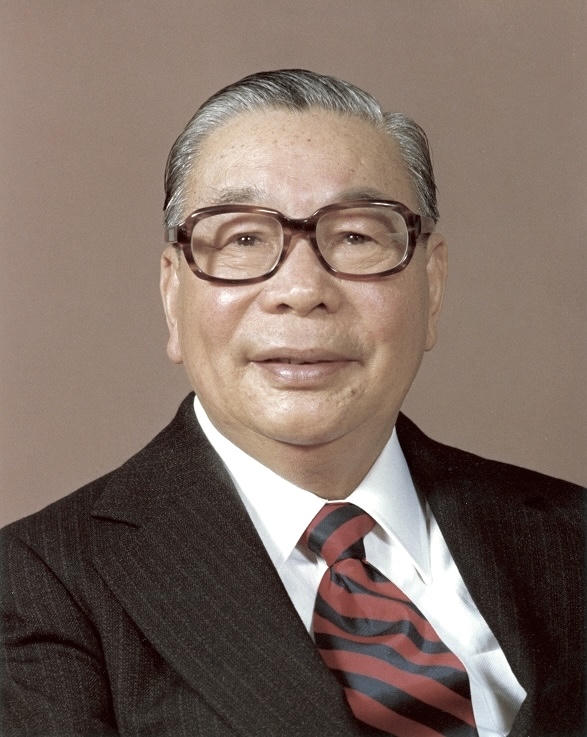
Chiang Ching-kuo
Chiang Ching-kuo56.96 OPS -8.00%
Trade Now →
Who is Chiang Ching-kuo and why is he famous?
Chiang Ching-kuo (1910–1988) served as President of the Republic of China from 1978 to 1988 and as Premier from 1972 to 1978. The elder son of Chiang Kai-shek, he spent twelve formative years in the Soviet Union (1925–1937) where he studied at Sun Yat-sen University in Moscow and worked in Soviet industry. After returning to China, he served in various Nationalist government positions including security and intelligence roles. On Taiwan, he held senior security positions before becoming Premier and President. His decade as president is most consequential for initiating Taiwan's democratic transition — lifting martial law in 1987, allowing opposition parties, and selecting Lee Teng-hui as his successor, who completed the democratization process.
What is Chiang Ching-kuo's main political legacy?
Chiang Ching-kuo's legacy is the orderly transition from authoritarian to democratic governance and the maturation of Taiwan's economic miracle. He lifted martial law in July 1987 after 38 years of continuous emergency rule, legalized opposition political parties, ended the ban on travel to mainland China to visit relatives, and selected an ethnically Taiwanese vice president — Lee Teng-hui — who succeeded him as president. He oversaw the Ten Major Construction Projects that modernized Taiwan's infrastructure, deepened export-oriented industrialization, and managed Taiwan's adjustment after losing US diplomatic recognition in 1979. His personal style — direct contact with ordinary Taiwanese, willingness to travel widely on the island, and apparent austerity — earned him significant popular affection that survives in retrospective polling.
Why is Chiang Ching-kuo controversial?
Chiang Ching-kuo's controversy stems from his earlier security and intelligence roles, particularly during the White Terror period. Before becoming Premier and President, he ran ROC security services and was implicated in surveillance, detention, and persecution of political dissidents. The 1984 Henry Liu murder in California — in which intelligence operatives assassinated a Chinese-American journalist critical of the Chiang family — produced major US-Taiwan tensions and is widely attributed to his security apparatus. Critics also note that his democratization was constrained, late, and forced by circumstances rather than proactive vision. Supporters argue his transition decisions were genuinely transformational and that he deserves recognition for what he ultimately delivered regardless of earlier roles.
What was Chiang Ching-kuo's early life?
Chiang Ching-kuo was born in 1910 in Xikou, Zhejiang province, the same village as his father. He was sent to the Soviet Union at age 15 to study, becoming a committed leftist during his Moscow years, marrying a Russian wife (Faina Vakhreva, later known as Chiang Fang-liang), and working as an industrial manager. He returned to China in 1937 only after his father's reluctant permission, having been held effectively as a diplomatic hostage during the periods of KMT-Soviet tension. He served in various administrative and security positions during the wartime KMT government and after the retreat to Taiwan. His Soviet experience left him with technocratic sympathies and organizational discipline different from his father's traditional military style.
How did Chiang Ching-kuo come to power on Taiwan?
After the ROC government's relocation to Taiwan in 1949, Chiang Ching-kuo gradually built his power base through security and intelligence positions, the youth corps, and the political officer system in the military. He served as Defense Minister in the 1960s, then Vice Premier and Premier from 1972. When Chiang Kai-shek died in April 1975, Vice President Yen Chia-kan succeeded as a transitional figure, with Chiang Ching-kuo assuming the presidency in 1978 after a constitutionally prescribed interval. His succession was carefully managed to preserve continuity while allowing his own political style to gradually emerge. By the early 1980s he was substantively in charge and beginning the reforms that defined his presidency.
How did Chiang Ching-kuo lift martial law?
The decision to lift martial law unfolded over Chiang Ching-kuo's second term. The DPP was founded in September 1986 — technically still illegal under martial law — and Chiang chose not to suppress it. On July 14, 1987, he formally lifted martial law, ending 38 years of continuous emergency rule. The decision was paired with the lifting of bans on opposition political parties and on new newspaper licensing, ending the major instruments of authoritarian control. He also lifted the ban on travel to mainland China in November 1987, allowing veterans and others to visit relatives separated since 1949. He died less than three months later, in January 1988, with the democratization process well begun but far from complete — work that Lee Teng-hui carried forward.
What was the Henry Liu incident?
In October 1984, Chinese-American writer Henry Liu (Liu Yi-liang), who had written a critical biography of Chiang Ching-kuo, was assassinated outside his California home by members of the Taiwanese Bamboo Union gang. Subsequent US investigation traced the operation to ROC military intelligence, with Vice Admiral Wang Hsi-ling — director of the Military Intelligence Bureau — implicated. The incident produced major US-Taiwan diplomatic tension and led to the prosecution of intelligence officials in Taiwan. Whether Chiang Ching-kuo personally ordered the operation has remained disputed, with subsequent declassified documents suggesting his son Chiang Hsiao-wu may have been involved without his father's full knowledge. The episode complicated Chiang Ching-kuo's later reformist reputation and contributed to his decision to ensure no member of his family would succeed him politically.
How is Chiang Ching-kuo viewed differently across regions?
In Taiwan, Chiang Ching-kuo is among the most positively remembered presidents in retrospective polling, with significant support across partisan lines. KMT supporters revere him as the leader who modernized Taiwan economically and democratized politically. Many DPP-leaning Taiwanese view him more positively than his father, acknowledging his democratization decisions. In mainland China, his decision to allow cross-strait visits in 1987 is viewed positively, and his Soviet-era background has occasionally been highlighted in PRC framing. In the United States, his reputation has improved with documentation of the democratization decisions, though the Henry Liu case remains a stain. Among overseas Chinese, opinion varies but generally treats him as more reform-oriented than his father.
What was Chiang Ching-kuo's relationship to his father and successor?
Chiang Ching-kuo lived in his father Chiang Kai-shek's shadow for most of his life. The relationship was strained during Chiang Ching-kuo's Soviet years and complicated by his Soviet wife and leftist sympathies. After his return to China, he served his father loyally while developing his own administrative style — more technocratic, less aristocratic, more direct with ordinary people. His selection of Lee Teng-hui — an ethnic Taiwanese, US-educated agricultural economist with no Chiang-family ties — as Vice President in 1984 signaled his intent to end the dynastic political pattern. He also reportedly told visitors that "no member of the Chiang family should run for president again," a vow honored despite later challenges. Lee succeeded him in January 1988 and completed the democratic transition Chiang had initiated.
What is the bull case for Chiang Ching-kuo's reputation?
Bulls argue Chiang Ching-kuo delivered Taiwan's foundational political transformation while maintaining economic momentum and institutional continuity — a rare combination in authoritarian-to-democratic transitions. They credit him with infrastructure modernization through the Ten Major Construction Projects, deepening Taiwan's industrialization, peaceful handling of the 1979 loss of US recognition, the courageous decision to lift martial law in 1987 despite establishment opposition, and the visionary selection of Lee Teng-hui as successor. They point to his enduring popular affection in Taiwan including from non-KMT voters as evidence that his contributions transcended partisan identity. They argue his security-era past must be weighed against his ultimate reformist legacy.
What is the bear case for Chiang Ching-kuo's reputation?
Bears emphasize his earlier role in the White Terror security apparatus, the Henry Liu murder and broader pattern of overseas operations against dissidents, the harshness of his pre-Premier political work, and the late and constrained nature of his eventual democratization. They argue democratization was forced by demographic and political circumstances rather than freely chosen. Critics also note that the Taiwan economic miracle owes much to factors beyond his policy — Cold War aid, demographics, and earlier foundations laid under different leadership. From PRC perspectives, his refusal of unification talks despite cross-strait visit normalization was an obstacle to peaceful reunification.
How does Chiang Ching-kuo's OPS price on JudgeMarket reflect public consensus?
Chiang Ching-kuo typically trades at a relatively elevated price among Taiwan-related historical figures, reflecting the cross-partisan respect he generally receives even from DPP-leaning audiences. His price is less polarized than his father Chiang Kai-shek's, as the democratization legacy provides common ground that the earlier authoritarian period lacks. His order book typically shows orderly trading reflecting broader consensus on key facts. Cross-strait events that highlight his 1987 cross-strait visit decision and democratization anniversaries (July 14 martial law lifting, January 13 death anniversary) generate periodic price movements.
What events typically move Chiang Ching-kuo's price?
Chiang Ching-kuo's price moves on commemoration dates, Taiwan democratization anniversaries, KMT internal developments that invoke his legacy, Cheng Li-wun and Han Kuo-yu leadership decisions that align with or depart from his political style, cross-strait events that reframe his 1987 decisions, and historical scholarship on Taiwan's democratization. Comparative discussions of Lee Teng-hui's democratic completion versus his initiation also affect his price. Mainland Chinese commentary on his legacy occasionally moves the asset.
How does Chiang Ching-kuo compare to other Taiwan leaders?
Compared to Chiang Kai-shek, Chiang Ching-kuo represents the reformist continuation — same dynastic origin but very different political destination. Compared to Lee Teng-hui, Chiang Ching-kuo initiated what Lee completed, with the two leaders' combined reputations defining Taiwan's democratic transition. Compared to subsequent presidents Chen Shui-bian, Tsai Ing-wen, and Lai Ching-te, Chiang Ching-kuo represents the foundational predecessor whose decisions made their political careers possible. Compared to Deng Xiaoping on the mainland, Chiang Ching-kuo's choice to pair economic reform with political democratization stands in striking contrast.
What is the long-term reputation outlook for Chiang Ching-kuo?
Chiang Ching-kuo's long-term reputation has a strong base in Taiwan democratic memory and a path to gradual strengthening. The democratization decisions are increasingly recognized as central to Taiwan's modern story, while the White Terror and Henry Liu issues remain limitations on his upward potential. He benefits from comparison with both his more authoritarian father and the more polarizing contemporary leaders. As Taiwan's democratic project matures, his role as initiator gains historical weight. He is unlikely to face significant reputation downside absent major historical reassessment.
Is Chiang Ching-kuo a good long-term position on JudgeMarket?
Chiang Ching-kuo is among the more stable Taiwan historical positions on JudgeMarket. The bull case rests on durable Taiwan democratic memory, continued recognition of his transformational decisions, and cross-partisan affection that has held over decades. The bear case is bounded — even harsh critics acknowledge significant achievements — and primarily concerns the earlier security-era record. Compared to active politicians, he offers more stable exposure to Taiwan reform-era narratives. Pair trades against Chiang Kai-shek can express views on dynastic legacy partitioning, against Lee Teng-hui on initiator versus completer of democratization, and against Deng Xiaoping on contrasting authoritarian reform paths.
Chiang Ching-kuo
Chiang Ching-kuo56.96 OPS -8.00%
Trade Now →

Related Content

Chiang Kai-shek vs Chiang Ching-kuo: Father, Son, and the ROC TransitionChiang Kai-shek and Chiang Ching-kuo shaped the Republic of China across two generations. Compare the authoritarian founder with the reformer who began Taiwan's democratization, on JudgeMarket.Lee Teng-hui vs Chiang Ching-kuo: Who Made Taiwan a Democracy?Lee Teng-hui and Chiang Ching-kuo are the two figures most associated with Taiwan's democratization. Compare the patron and the executor on JudgeMarket.Trade Chiang Ching-kuoView live market price and trade OPS

History Will Be the Judge

Start trading with 1,000 free OPS. No wallet needed.

Start Trading →