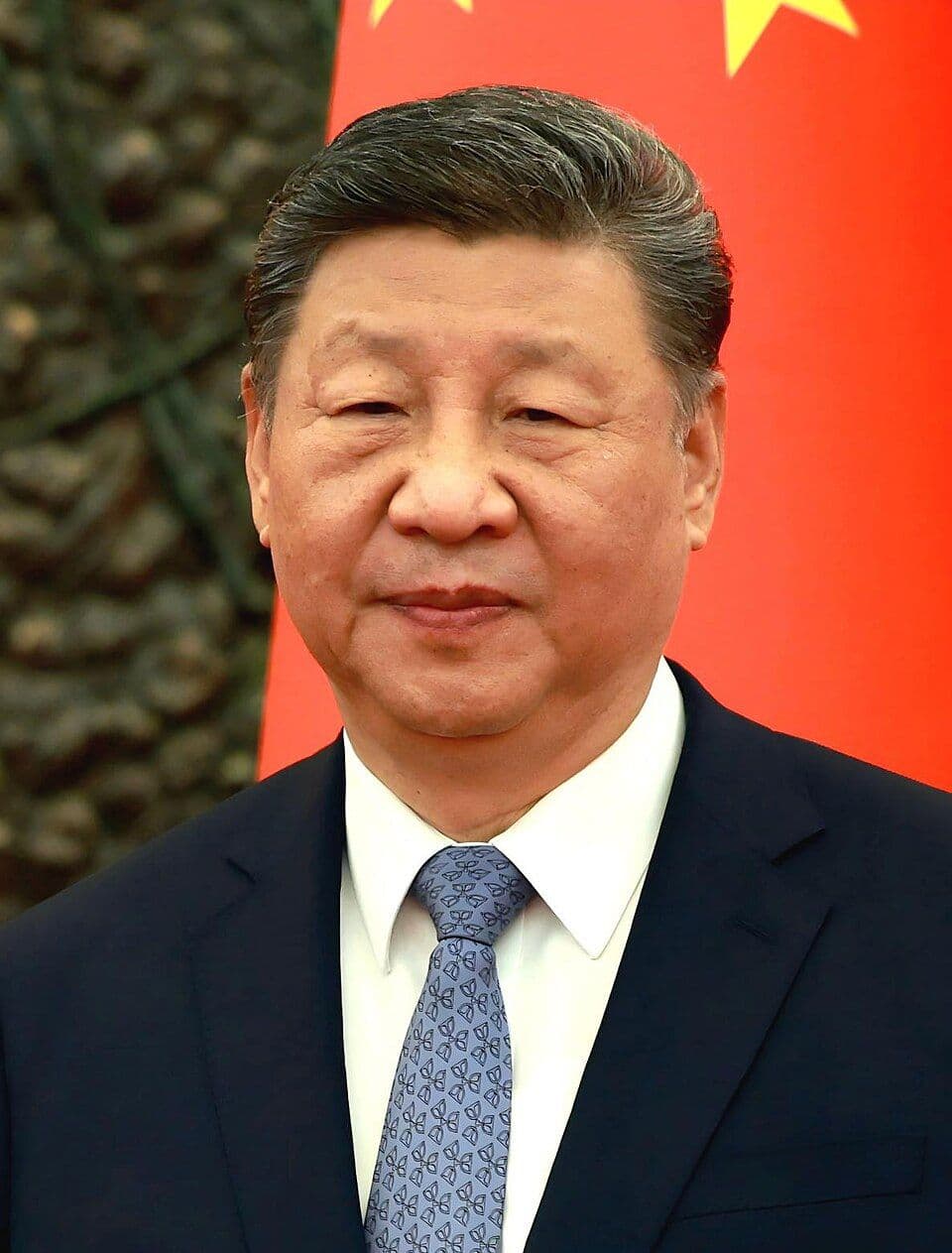
 Xi Jinping landed in Pyongyang on Monday for a two-day state visit, greeted at the airport by Kim Jong Un and his wife as Chinese state media captured the welcome on CCTV — the first state-level Sino-DPRK visit in seven years. Ahead of the talks Xi urged Pyongyang to join Beijing in rejecting "any scheme or action aimed at reviving militarism," the Japan Times reported in flagging the line as a thinly-veiled swipe at Tokyo. Yonhap reported Kim's wife was visible alongside the leader for the airport welcome, with Xinhua framing the trip as Beijing's premier diplomatic move of the year.
What's the public framing? A two-day state visit at Kim Jong Un's invitation, with Xi using his pre-trip article to call for "strategic dialogue" between the two countries and a shared push toward a "multipolar world order," KBS World reported. The contributed article in DPRK state media set the conceptual frame before the bilateral talks opened.
Why the Japan swipe? Xi's "reviving militarism" line lands on Tokyo without naming it, the Japan Times reported, a framing aimed at the Takaichi-era defence build-up that the Chinese foreign ministry has been targeting since the Koizumi Shangri-La address. Routing the criticism through a Pyongyang state-visit set-piece adds an alignment element to the substantive critique.
Who greeted him? Kim and his wife were seen at the airport meeting Xi, with the appearance carried live on CCTV, Yonhap reported. The spousal-presence element gives the welcome an extra protocol-weight signal, with the optics designed for the Chinese domestic audience as much as for the bilateral track.
What's on the talks agenda? Beijing has framed the agenda around strategic-dialogue cooperation and multipolar-world-order push, KBS World reported, with the underlying nuclear question now publicly off the negotiating table per Kim Yo Jong's eve-of-trip "nonnegotiable" framing. The summit becomes about bloc-coordination optics rather than substantive denuclearisation diplomacy.
How does this fit Seoul's calculus? Lee Jae Myung opens his 1-year anniversary press conference the same day Xi is in Pyongyang, Yonhap reported, with the South Korean president publicly reaffirming denuclearisation even as Beijing-Pyongyang harden the bilateral track. The parallel calendars draw a clear contrast between the two regional approaches.
What survives the visit? A photo-op restart of state-level China-DPRK visits after the seven-year COVID-era gap, the Japan Times reported. Whether the trip translates into measurable DPRK-posture changes toward Seoul, Tokyo or Washington is the open question.
Figures referenced: Xi Jinping. — JudgeMarket.