לוגו JudgeMarketJudgeMarketUS
תגמולים הזמן חברים חדשות בלוג בונים תמיכה
© 2026 JudgeMarket
AboutPrivacyTermsWhat is OPSNewsBlog
ביתארנק
Home>Sanae Takaichi>FAQ

Sanae Takaichi: 15 Frequently Asked Questions

Explore 15 FAQs about Sanae Takaichi — Prime Minister of Japan and President of the Liberal Democratic Party, Japan's first female prime minister and a defining conservative leader of the post-Abe era. Trade her reputation on JudgeMarket.
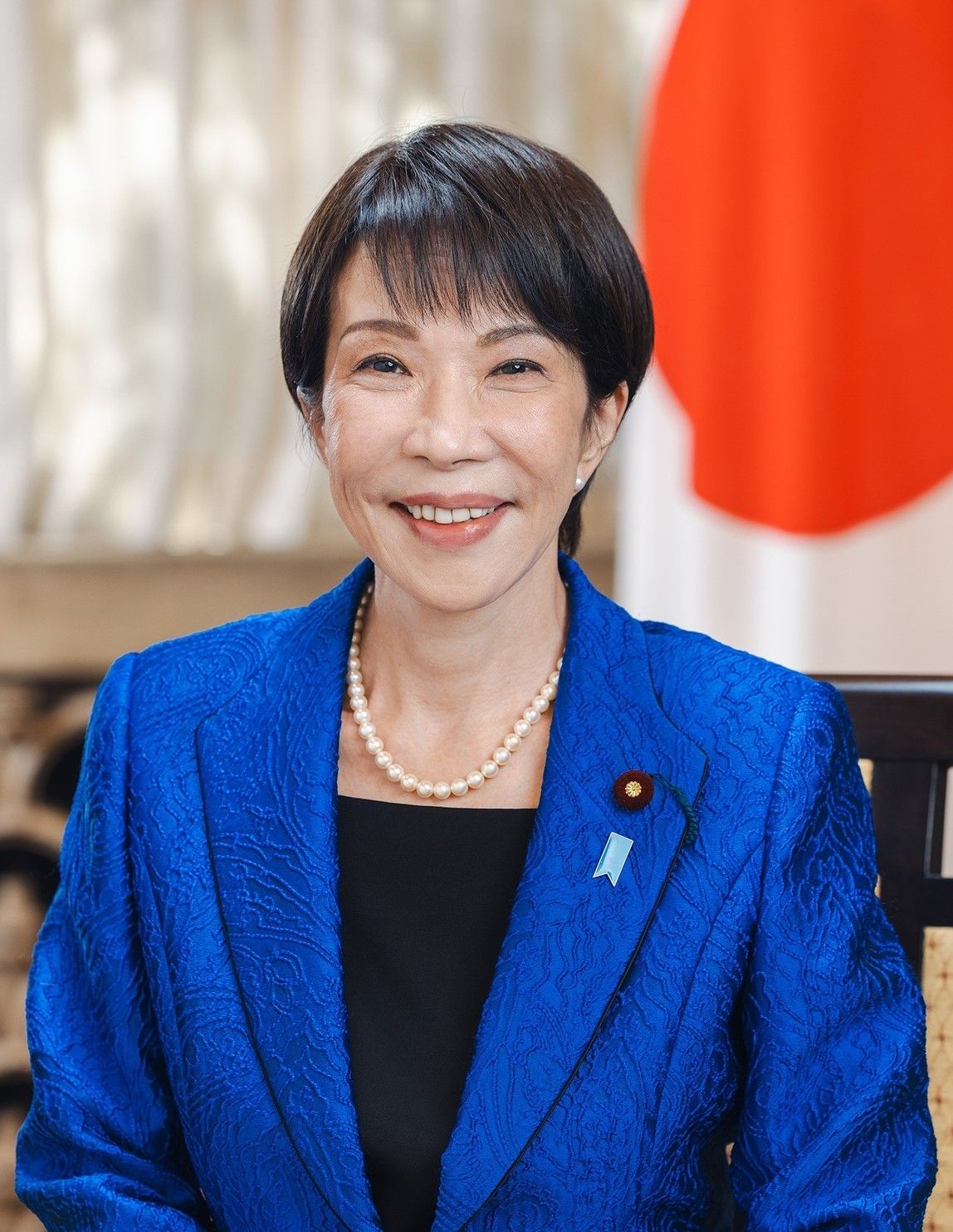
May 27, 2026
Sanae Takaichi
Sanae Takaichi78.38 OPS
Trade Now →
Who is Sanae Takaichi and why is she famous?
Sanae Takaichi (born 1961) is Prime Minister of Japan and President of the Liberal Democratic Party (LDP), having taken office as Japan's first female prime minister. A long-serving LDP politician from Nara, she has held multiple ministerial positions including Minister for Internal Affairs and Communications, Minister of Economic Security, and Minister in charge of Policy related to Children. Closely associated with the late Shinzo Abe's conservative wing of the LDP, she has been a leading voice for security-focused, economically active conservative policymaking. Her election as LDP president and subsequent elevation to prime minister marked both a historic gender milestone and a continuation of the Abe-era conservative tradition in Japanese politics.
What is Sanae Takaichi's main political role and focus?
Takaichi's premiership has emphasized economic security (semiconductors, supply chains, critical minerals), defense spending expansion in line with the post-2022 Japanese security policy revision, traditional conservative cultural positioning, and active foreign policy particularly toward the US-Japan alliance, Taiwan, and the broader Indo-Pacific. She has continued the post-Abe trajectory of expanding Japan's military capabilities, reinterpreting constitutional constraints, and deepening defense cooperation with regional democracies. Her economic policy combines fiscal activism — building on the Abenomics tradition — with structural reforms aimed at competitiveness in semiconductor and advanced manufacturing sectors. Her cabinet has prioritized continuity with broad LDP policy while reflecting her own conservative emphases.
Why is Sanae Takaichi controversial?
Takaichi is controversial across several dimensions. Her visits to Yasukuni Shrine — which honors Japan's war dead including convicted Class A war criminals — have drawn predictable criticism from China and South Korea while reassuring her conservative base. Her historical views on wartime issues including the comfort women question are revisionist by Korean and Chinese standards. Her positions on constitutional revision, particularly regarding Article 9's pacifist constraints, are more assertive than mainstream Japanese opinion. Some of her associations with conservative organizations including those previously linked to controversial groups have drawn scrutiny. Within Japan, her economic policy mixing fiscal activism with strict monetary discipline draws ongoing debate. Supporters credit her with principled conservative leadership and Japan's first female prime minister status.
What was Sanae Takaichi's background?
Takaichi was born in Nara Prefecture in 1961. She graduated from Kobe University law school. Her early career included work for the Matsushita Institute of Government and Management, a political training institute. She first won a Lower House seat in 1993 and has served multiple terms representing Nara. She is married to former Diet member Taku Yamamoto. Her policy interests have centered on telecommunications, economic security, technology policy, and constitutional issues. She has been a prominent voice in the LDP's conservative wing, closely associated with Shinzo Abe throughout her career and consistent with his vision of Japan's strategic posture. Her cabinet roles before becoming prime minister gave her substantial executive experience across multiple policy domains.
How did Sanae Takaichi become Prime Minister?
Takaichi's path to the premiership involved multiple LDP presidential election attempts. She ran for LDP president previously without success but built support over time, particularly within the party's conservative factions. Her eventual victory in the LDP presidential election made her party leader, and since the LDP held parliamentary plurality, she was elevated to prime minister through the normal Diet election of the head of government. Her selection reflected internal LDP dynamics including factional considerations following the dissolution of the Abe faction and other reorganizations. Her gender-pioneering status as Japan's first female prime minister gave her election historic significance regardless of policy positions.
How does Sanae Takaichi relate to her predecessors?
Takaichi explicitly positions herself as continuing the legacy of Shinzo Abe, Japan's longest-serving prime minister assassinated in 2022. She shares Abe's emphases on national security, constitutional revision, economic activism, and assertive regional diplomacy. Compared to immediate predecessors Yoshihide Suga, Fumio Kishida, and Shigeru Ishiba, she represents a more clearly defined conservative position. The LDP's evolution from the Koizumi reform era through Abe's long tenure and the subsequent shorter premierships has positioned the conservative wing she represents as durable. Her continuation of Abe-era strategic posture provides international predictability while her gender-pioneering role provides domestic political novelty.
How is Sanae Takaichi viewed differently across regions?
Within Japan, Takaichi's approval reflects the standard LDP partisan landscape — strong conservative support, opposition from progressive and pacifist constituencies, generational and gender dynamics that add complexity to a female conservative leader. In the United States, she is viewed as a reliable alliance partner who continues post-Abe strategic alignment. In Taiwan under Lai Ching-te, her leadership is welcomed for continued strong Japan-Taiwan ties — Japan has been a particularly important partner for Taiwan under both Tsai and Lai administrations. In mainland China under Xi Jinping, she is viewed with skepticism due to her historical positions and Yasukuni visits, though the bilateral relationship continues to function with managed disagreement. In South Korea, her historical positions create persistent friction.
What economic policies has Sanae Takaichi pursued?
Takaichi's economic agenda combines fiscal activism, technology-focused industrial policy, and supply chain resilience. She has continued and extended government investment in semiconductors and advanced manufacturing, including TSMC's Japan investments and Rapidus development. Energy policy includes nuclear restart commitments balancing security and decarbonization. Defense spending toward the 2 percent of GDP target inherited from her predecessors continues. Wage growth and the persistent challenge of Japan's deflationary mindset receive continued attention. The yen's weakness creates ongoing tension between export competitiveness and consumer purchasing power. Her economic policy is generally viewed as continuity with post-Abe-era LDP direction rather than fundamental departure.
What is the bull case for Sanae Takaichi's reputation?
Bulls argue Takaichi is providing principled, continuous LDP leadership that aligns with Japan's strategic needs — a more assertive security posture, economic competitiveness in critical sectors, and active alliance diplomacy. They credit her with making history as Japan's first female prime minister while demonstrating that gender pioneers can also be ideologically committed conservatives. They view her continuation of the Abe-era trajectory as appropriate for an era of intensifying regional security challenges. They argue her clear policy positions provide political clarity that recent shorter premierships have lacked. Long-term, if Japan navigates the Indo-Pacific security environment successfully and economic revitalization continues, her stewardship will be credited.
What is the bear case for Sanae Takaichi's reputation?
Bears point to her historical revisionism that complicates Japan's relationships with neighbors including South Korea and China. They cite the persistent challenges Japan faces — declining population, debt levels, productivity stagnation, energy dependence — that no LDP leader has yet effectively addressed. Critics view her Yasukuni visits as unnecessary provocations that damage Japan's regional standing. Her constitutional revision aspirations face fundamental public skepticism that may not be possible to overcome. From progressive Japanese perspectives, her conservative cultural positioning represents resistance to needed social modernization. Economic critics question whether continued fiscal activism is sustainable given Japan's debt profile.
How does Sanae Takaichi's OPS price on JudgeMarket reflect public consensus?
Sanae Takaichi trades as an active executive with significant volatility. Her price reflects partisan polarization within Japan, regional historical-political dynamics affecting Chinese, Korean, and Taiwan perceptions, and broader assessments of Japanese political stability. The gender-pioneering status provides some baseline positive sentiment among international audiences valuing female leadership representation, though balanced against conservative policy positions among some of those same audiences. Her order book reflects both immediate political news cycle and longer-term Japan strategic positioning narratives.
What events typically move Sanae Takaichi's price?
Takaichi's price moves on Diet elections and political dynamics within the LDP and broader Japanese political landscape, Yasukuni Shrine visits and historical statement controversies, defense spending and constitutional revision developments, US-Japan alliance events including any summit-level interactions, Taiwan-related cross-strait events that engage Japan's security concerns, semiconductor industry developments including the Rapidus project, currency and economic data, and regional security developments involving China and North Korea. Her health and any signs of political challenge within the LDP also affect her price.
How does Sanae Takaichi compare to other regional leaders?
Compared to Xi Jinping, Takaichi represents the democratic regional counterpart with assertive but rules-based security posture. Compared to Lai Ching-te in Taiwan, she represents the principal Indo-Pacific democratic partner whose support is strategically critical. Compared to historical Japanese leaders including Abe (not on roster), she represents continuation of his political tradition. Compared to other female heads of government globally, her ideological positioning differs significantly from progressive female leaders — she more closely resembles the conservative tradition. On JudgeMarket, her price often moves in correlation with regional security narratives, with Xi Jinping-related news cycles having significant impact.
What is the long-term reputation outlook for Sanae Takaichi?
Takaichi's long-term reputation depends on her premiership length, policy outcomes, and Japan's broader trajectory. If she serves a substantial tenure with significant achievements in security, technology, or economic revitalization, her standing builds toward potential Abe-era comparison. If her premiership is short or limited by internal LDP dynamics, her reputation may settle into a more modest historical position. Her gender-pioneering status provides durable historical weight regardless of policy outcomes. Her historical-revisionist positions will continue to anchor regional criticism that limits her broader international standing.
Is Sanae Takaichi a good long-term position on JudgeMarket?
Sanae Takaichi is an active premier position with significant volatility from ongoing political and regional events. The bull case rests on substantial premiership duration, continued Abe-tradition policy success, and broader Japan strategic positioning vindication. The bear case rests on shorter tenure possibilities, regional friction costs, and the persistent challenges Japan faces that no recent leader has overcome. Pair trades against Lai Ching-te can express views on Indo-Pacific democratic positioning, against Xi Jinping on regional balance, and against historical Japanese conservative figures on continuity of political tradition. Position sizing should account for active premier volatility and the genuine uncertainty about her premiership duration.
Sanae Takaichi
Sanae Takaichi78.38 OPS
Trade Now →

Related Content

Trade Sanae TakaichiView live market price and trade OPS

History Will Be the Judge

Start trading with 1,000 free OPS. No wallet needed.

Start Trading →