Logo JudgeMarketJudgeMarketUS
Récompenses Inviter des amis Actualités Blog Développeurs Assistance
© 2026 JudgeMarket
AboutPrivacyTermsWhat is OPSNewsBlog
AccueilPortefeuille
Home>Vitalik Buterin>FAQ

Vitalik Buterin: 15 Frequently Asked Questions

Explore 15 FAQs about Vitalik Buterin — co-founder of Ethereum, leading public intellectual of the crypto era, and one of the most influential developers alive. Trade his reputation on JudgeMarket.
May 27, 2026
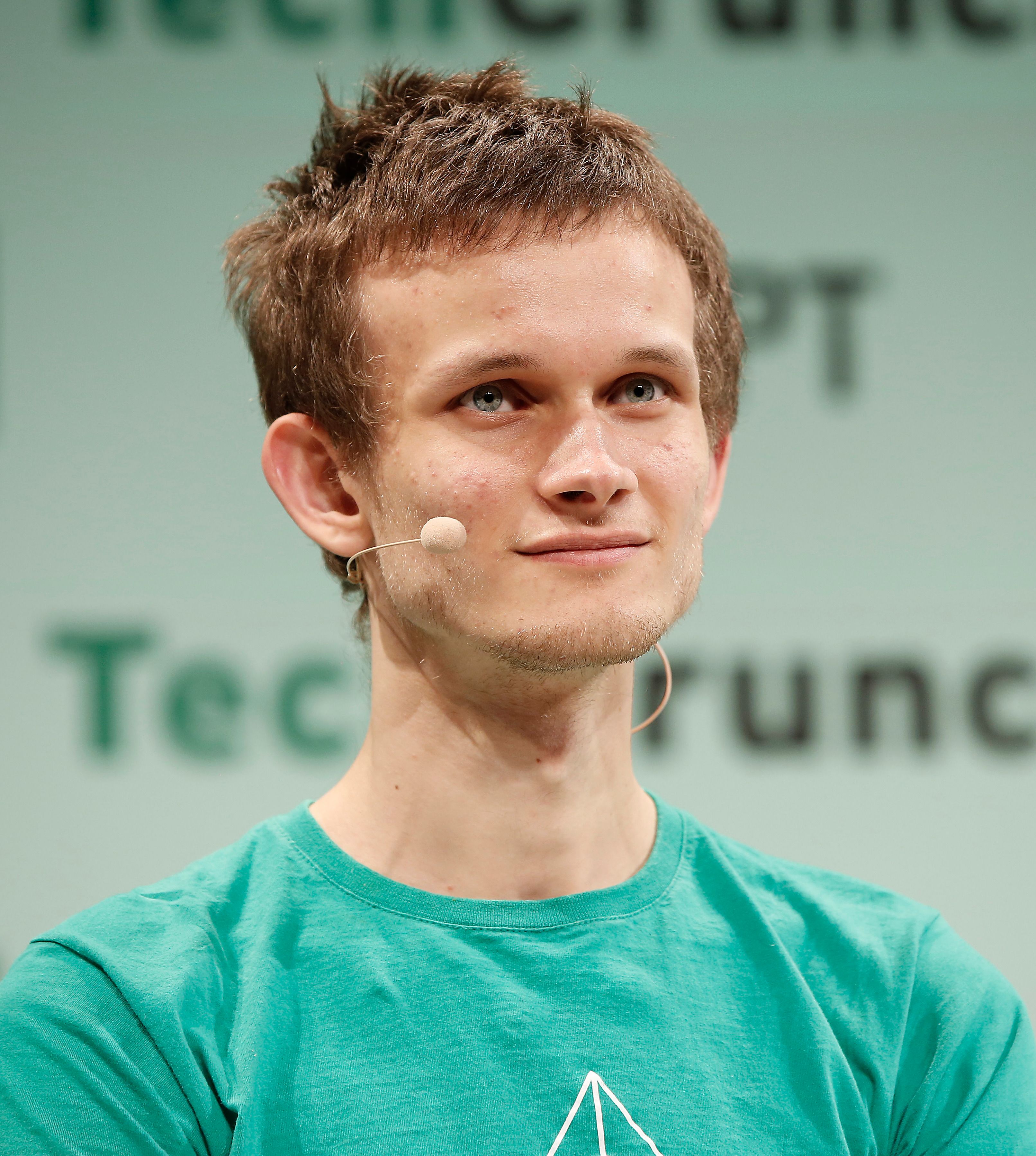
Vitalik Buterin
Vitalik Buterin80.53 OPS
Trade Now →
Who is Vitalik Buterin and why is he famous?
Vitalik Buterin (born 1994 in Kolomna, Russia, raised in Canada) is the principal co-founder and the most prominent public face of Ethereum, the second-largest cryptocurrency network and the dominant smart-contract platform. He proposed Ethereum in late 2013 at age 19 in a white paper that generalized Bitcoin's blockchain into a Turing-complete computing environment. He co-founded the Ethereum Foundation, helped lead the network through its 2015 launch, and remains the most influential voice on its protocol direction even though he holds no formal executive title. Beyond Ethereum, Buterin is widely regarded as the most articulate public intellectual the crypto industry has produced, writing extensively on mechanism design, governance, public goods funding, and political philosophy. He famously survives on a modest personal style, traveling frequently with a backpack, and is one of the few crypto billionaires viewed with broad respect outside the industry.
What was Vitalik Buterin's core contribution to crypto?
Buterin's central contribution was extending the blockchain concept from a single-purpose payment ledger into a general-purpose computational platform. The Ethereum white paper, published in late 2013, proposed that arbitrary programs (smart contracts) could be executed on a decentralized network, with state changes verified by consensus and paid for in a native token (ether). This insight enabled an entire industry: decentralized finance (DeFi), non-fungible tokens (NFTs), decentralized autonomous organizations (DAOs), and Layer-2 scaling networks all rest on the foundation Ethereum provided. Subsequent Ethereum upgrades — the Merge (transition from proof-of-work to proof-of-stake in 2022), EIP-1559 (fee burning), and the Dencun/Pectra rollup-centric roadmap — have been shaped substantially by his research and advocacy. The technical lineage from Satoshi Nakamoto's Bitcoin to Buterin's Ethereum is the central narrative of crypto's first two decades.
Why is Vitalik Buterin admired (and sometimes criticized)?
Buterin is admired for combining technical depth with unusual ethical seriousness. He writes blog posts that engage with topics ranging from quadratic voting to longevity research to political theory, treating them with academic rigor rather than promotional spin. He has used his personal ETH holdings to fund public goods, including a $1 billion-plus donation of SHIB tokens to India's COVID relief fund in 2021. Critics, however, raise several concerns: Ethereum's complexity and high transaction fees during peak usage have been a recurring problem; his outsized influence over a supposedly decentralized network raises governance questions; and some Bitcoin maximalists argue Ethereum's flexibility introduces attack surface and economic instability. His writing on "regenerative" economic mechanisms and his support for quadratic funding have also drawn criticism from those who see them as technocratic.
What was Vitalik Buterin's origin moment?
The formative episode came in 2013. Working as a writer for Bitcoin Magazine, which he had co-founded in 2011, Buterin became convinced that Bitcoin's scripting language was too limited to support the financial primitives he believed blockchains could enable. He proposed extensions to the Bitcoin protocol but was rebuffed, so in late 2013 he wrote the Ethereum white paper proposing a new platform. He won a Thiel Fellowship in 2014, which allowed him to drop out of the University of Waterloo and focus full-time on Ethereum. The network launched in July 2015 after a 2014 crowdsale that raised roughly $18 million in BTC. The 2016 DAO hack, which prompted a contentious hard fork that split Ethereum from Ethereum Classic, was the first major governance crisis and established the pattern of Buterin's intellectual leadership in the absence of formal authority.
What is Ethereum's defining technical achievement?
The Merge — Ethereum's September 2022 transition from energy-intensive proof-of-work mining to proof-of-stake validation — is the defining technical achievement of Buterin's career. The upgrade reduced Ethereum's energy consumption by roughly 99.95% while preserving the network's continuous operation and economic state. It had been promised for years and repeatedly delayed, making its successful execution a credibility milestone for the entire smart-contract category. Subsequent upgrades have continued the rollup-centric scaling roadmap Buterin championed: data availability sampling (Dencun's blob transactions in 2024), Verkle trees for stateless clients, and account abstraction. The roadmap is unusually transparent for a multi-hundred-billion-dollar protocol, with Buterin publishing diagrams and detailed posts about each phase, treating Ethereum development as an open intellectual project.
How does Vitalik Buterin relate to other crypto founders?
Buterin's relationship to Satoshi Nakamoto is genealogical and reverential — he extended Satoshi's invention rather than competing with it. With Changpeng Zhao, the relationship is symbiotic but tense: Binance lists Ethereum tokens and Binance Smart Chain is an EVM-compatible competitor, while Buterin has publicly criticized centralized exchange governance. With Sam Bankman-Fried, Buterin maintained a polite but distant relationship; after FTX collapsed, he wrote thoughtfully about what crypto could learn from the disaster, neither vindictive nor sympathetic. With Brian Armstrong, the relationship is professional — Coinbase contributes substantially to Ethereum infrastructure through its Base Layer-2. With Michael Saylor, Buterin has been a polite ideological opponent, defending Ethereum's broader application set against Saylor's Bitcoin-only thesis. With Justin Sun, Buterin has generally kept distance, with Ethereum core developers viewing Tron skeptically.
How is Vitalik Buterin viewed in crypto vs traditional finance?
Within crypto, Buterin is one of the most universally respected figures — even Bitcoin maximalists who disagree with Ethereum's design generally acknowledge his intellectual seriousness and personal integrity. In traditional finance and academia, he commands unusual respect for a crypto figure: he has spoken at the IMF, MIT, and major economics conferences, and his writings are cited in academic mechanism-design literature. Regulators have generally treated him as a good-faith actor; he has met with US senators and EU officials on policy questions. The contrast with how regulators view exchange operators is stark — Buterin is seen as a researcher rather than an entrepreneur extracting rent. This dual credibility, in crypto and outside it, is rare and contributes meaningfully to his JudgeMarket valuation.
What is Vitalik Buterin's broader impact on technology and society?
Buterin's impact extends beyond Ethereum into mechanism design, governance research, and political philosophy. His writings on quadratic voting and quadratic funding (with economist Glen Weyl) have influenced experimental democratic governance projects. His essays on "soulbound tokens" anticipate non-financial uses of blockchain identity. He has funded longevity research, COVID-19 efforts, and AI safety initiatives. His public conversations with figures like Audrey Tang (Taiwan's former digital minister) and Balaji Srinivasan have shaped a distinctive "network state" intellectual movement. The breadth of his interests — combining cryptography, economics, political science, and philosophy — has made him a model for what a technical founder can be in the post-Bitcoin era, more akin to a public intellectual than to a typical tech CEO.
What is the bull case for Vitalik Buterin's reputation?
The bull case is that Ethereum's role as a global settlement and computation layer becomes only more central as DeFi, tokenization of real-world assets, and onchain identity mature. If trillions of dollars in financial assets migrate onchain via Ethereum and its Layer-2 ecosystem, Buterin's standing approaches that of a foundational systems inventor. His personal reputation is unusually robust: he has avoided scandal, avoided extracting personal wealth aggressively, and maintained credibility across crypto cycles. Unlike many founders, he is young (early 30s) and likely to continue producing influential work for decades. His public intellectual role gives him a second career trajectory — even if he stepped back from Ethereum, his writing and research would continue to shape the field.
What is the bear case against Vitalik Buterin?
Several bear arguments deserve attention. Ethereum's complexity and recurring fee spikes have left openings for competing Layer-1s (Solana, Avalanche, and others) to claim market share, and Buterin's reputation is partly hostage to Ethereum's continued technical leadership. Centralization of staked ETH in services like Lido raises governance risks he has publicly worried about but cannot directly solve. Regulatory risk is real — though Buterin himself is rarely a direct target, US classification of ETH as a security would damage the entire ecosystem. There are also long-term personal risks: he could burn out, lose interest, or take a controversial public position that alienates parts of his constituency. Finally, the "philosopher-king" perception is fragile — any sign that his influence over Ethereum is coercive rather than persuasive could erode the legitimacy that makes his role unique.
How does Vitalik Buterin's price on JudgeMarket reflect public consensus?
Vitalik Buterin trades at a premium that reflects his unusual dual standing: a builder with a credible technical record and a public intellectual respected outside crypto. His price is meaningfully correlated with ETH's market performance but less mechanically than Satoshi Nakamoto's is to BTC, because his ongoing work generates fresh news flow independent of token prices. The collective verdict treats him as one of the cleanest figures in crypto — high quality, high consistency, low scandal — which produces relatively stable prices punctuated by upward moves on major protocol upgrades and downward moves on broader crypto crises. His youth means traders are partly pricing in decades of expected future contribution, not just an established legacy.
What events typically move Vitalik Buterin's price?
Major Ethereum protocol upgrades (the Merge, Dencun, future Pectra/Verge milestones) tend to move his price upward when they ship successfully and downward when they slip materially. ETH price action itself is a strong short-term driver, especially during sharp drawdowns. Influential blog posts and conference talks can produce modest upward moves by reinforcing his intellectual brand. Negative drivers include high-profile DeFi hacks or smart-contract failures that damage the Ethereum ecosystem narrative, governance controversies around staking centralization, and competitive moves by other Layer-1s. Macro events that hurt crypto broadly (regulatory crackdowns, exchange collapses, hostile US administration policy) tend to depress his price along with the market. Personal controversies are rare and historically have not produced sustained drawdowns.
How does Vitalik Buterin compare to other crypto figures?
Compared to Satoshi Nakamoto, Buterin is the inverse archetype: highly visible, prolific, evolving — and therefore carries more personal risk but also more upside from ongoing achievement. Compared to Changpeng Zhao and Brian Armstrong, Buterin operates outside the centralized-exchange business model and faces fundamentally different risks: he is exposed to protocol risk and intellectual reputation risk rather than regulatory and operational risk. Compared to Michael Saylor, Buterin represents the "crypto-as-platform" thesis against the "Bitcoin-as-money" thesis. Compared to Sam Bankman-Fried and Justin Sun, the contrast is in personal conduct — Buterin's restraint and intellectual seriousness are precisely the qualities those figures lacked. On JudgeMarket, his price typically trades meaningfully above other living crypto founders for these reasons.
What is the long-term outlook for Vitalik Buterin's reputation?
The long-term trajectory looks structurally positive but not without risk. If Ethereum entrenches as the dominant smart-contract platform over the next 10-20 years, Buterin enters the pantheon of computing history alongside figures who created foundational protocols. If competing platforms erode Ethereum's market share substantially, his standing remains strong but more specialized — a "founding researcher" rather than a "platform inventor." His personal trajectory matters: continued thoughtful public output reinforces the brand, while withdrawal or scandal would weaken it. The most likely scenario is steady upward drift punctuated by cycles tied to ETH price and protocol milestones, with his reputation ultimately settling well above other living crypto figures but somewhat below Satoshi's mythological status.
Is Vitalik Buterin a good long-term position on JudgeMarket?
Vitalik Buterin is among the higher-quality long-term positions in crypto on JudgeMarket. The combination of an established technical legacy, an active intellectual presence, and unusually low personal-scandal risk produces a favorable risk-reward profile. The bull case rests on Ethereum's continued centrality to onchain finance and Buterin's continued production of influential work over the next several decades. The bear case is largely systemic — crypto regulatory crackdowns, competing protocols, or protocol failures — rather than personal. Position sizing should consider correlation with ETH price and with broader crypto sentiment; traders already holding crypto exposure should account for that overlap. For investors seeking exposure to the smart-contract narrative through a single highly credible person, Buterin is the cleanest available proxy.
Vitalik Buterin
Vitalik Buterin80.53 OPS
Trade Now →

Related Content

Satoshi Nakamoto vs Vitalik Buterin: Bitcoin Genesis vs Ethereum ArchitectSatoshi Nakamoto and Vitalik Buterin defined two paradigms of public blockchain. Compare the anonymous founder of Bitcoin with the open architect of Ethereum on JudgeMarket.Trade Vitalik ButerinView live market price and trade OPS

History Will Be the Judge

Start trading with 1,000 free OPS. No wallet needed.

Start Trading →