Logo de JudgeMarketJudgeMarketUS
Recompensas Invitar amigos Noticias Blog Creadores Soporte
© 2026 JudgeMarket
AboutPrivacyTermsWhat is OPSNewsBlog
InicioBilletera
Home>Tsai Ing-wen>FAQ

Tsai Ing-wen: 15 Frequently Asked Questions

Explore 15 FAQs about Tsai Ing-wen — Taiwan's first female president, leader of the DPP from 2016 to 2024, and a defining figure of Taiwan's democratic consolidation. Trade her reputation on JudgeMarket.
May 27, 2026
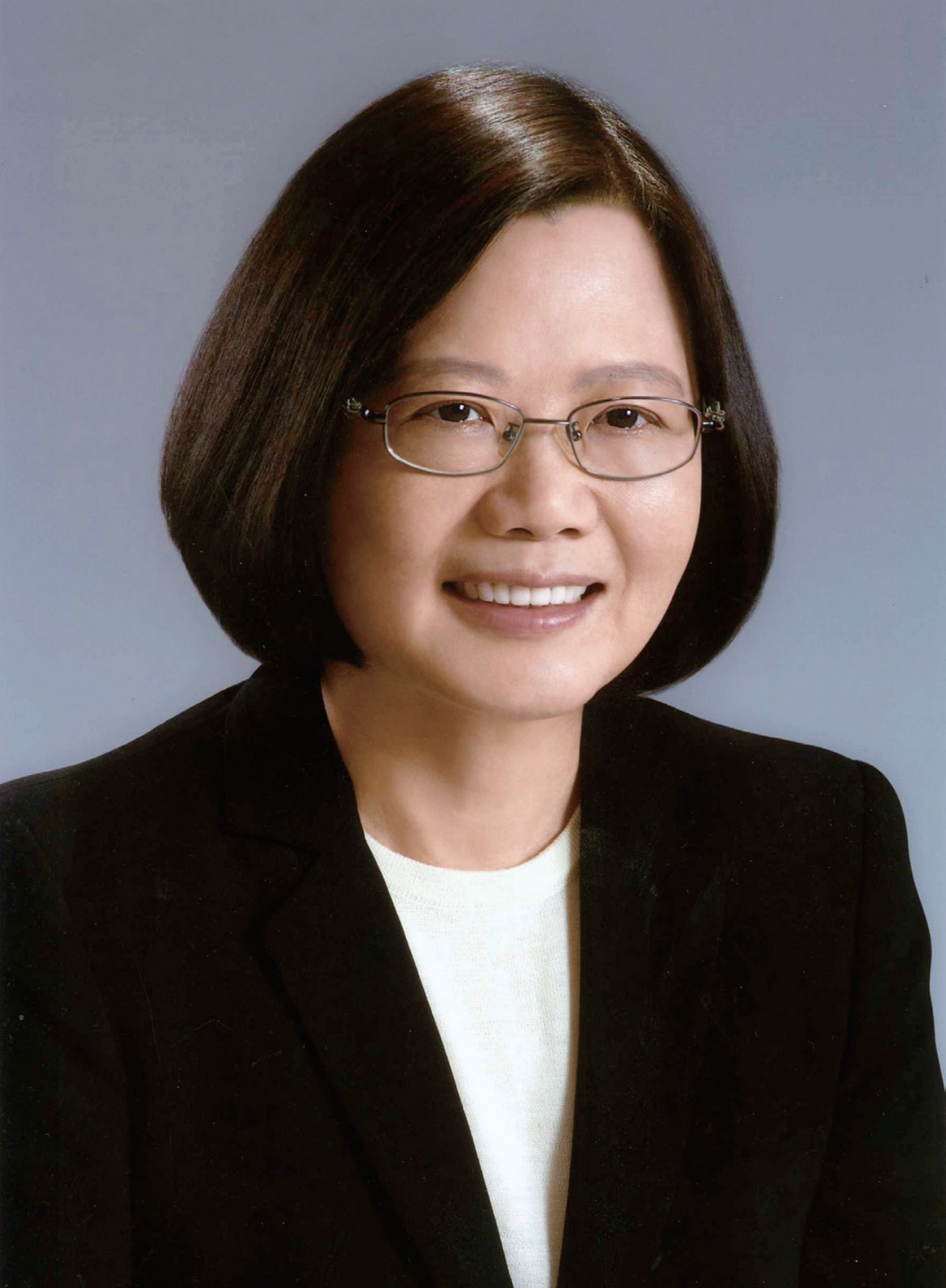
Tsai Ing-wen
Tsai Ing-wen64.14 OPS -0.59%
Trade Now →
Who is Tsai Ing-wen and why is she famous?
Tsai Ing-wen (born 1956) served as President of the Republic of China (Taiwan) from May 2016 to May 2024, becoming Taiwan's first female president and the first head of state elected without family ties to traditional Taiwanese political dynasties. A trade lawyer educated at National Taiwan University, Cornell, and the London School of Economics, she chaired the Mainland Affairs Council under Chen Shui-bian, led the Democratic Progressive Party through two stints as chairperson, and rebuilt the party after its 2008 defeat. Her two terms were defined by Taiwan's strategic alignment with the United States, semiconductor industry prominence (TSMC), pandemic management widely considered among the world's most successful, and continuous pressure from the Xi Jinping-led People's Republic of China.
What is Tsai Ing-wen's main political legacy?
Tsai's legacy centers on Taiwan's emergence as a globally recognized actor distinct from China, the strengthening of US-Taiwan relations, the integration of Taiwan into critical global supply chains (especially semiconductors), and significant social reforms including the 2019 legalization of same-sex marriage — Asia's first. She pursued the "New Southbound Policy" to diversify economic dependence away from the mainland, modernized military capabilities, and presided over Taiwan's COVID-19 response that avoided sustained outbreaks for nearly two years. She also navigated the Hong Kong crisis of 2019–2020 and the Russia-Ukraine war's strategic implications. She handed the presidency to her vice president Lai Ching-te, continuing DPP rule for an unprecedented third term.
Why is Tsai Ing-wen controversial?
Tsai is controversial primarily within Taiwan's polarized political landscape. KMT and TPP critics argue she heightened cross-strait tensions, weakened economic ties with the mainland that benefited Taiwanese exporters, mishandled energy policy (the 2017 island-wide blackout), and pursued judicial reforms that some viewed as politically motivated. Pension reforms affecting military, civil servants, and teachers drew major protests in her first term. Outside Taiwan, mainland Chinese authorities labeled her a "separatist" and severed official cross-strait dialogue immediately after her 2016 inauguration. Supporters credit her with sober crisis management, defense of democratic institutions, and refusal to bow to pressure from Xi Jinping's administration.
What was Tsai Ing-wen's early career?
Tsai was born in Pingtung County, southern Taiwan, in 1956. After graduating from National Taiwan University law school in 1978, she earned an LLM from Cornell in 1980 and a PhD from the London School of Economics in 1984. Returning to Taiwan, she became an academic specializing in international trade law and helped negotiate Taiwan's WTO accession. She served as Mainland Affairs Council chair under President Chen Shui-bian from 2000 to 2004, then briefly as Vice Premier. She joined the DPP in 2004, became party chair in 2008 after the party's electoral collapse, and led its rebuilding. She lost the 2012 presidential election to KMT incumbent Ma Ying-jeou before winning in 2016 by a wide margin.
How did Tsai Ing-wen handle relations with China?
Tsai's cross-strait policy emphasized maintaining the status quo without accepting the so-called "1992 Consensus" — a framework Beijing demands as a precondition for dialogue. This produced an immediate freeze in official communications after her 2016 inauguration. The PRC pressured Taiwan diplomatically (poaching diplomatic allies), economically (restricting tourism and agricultural imports), and militarily (increasing PLA air and naval activity around Taiwan). The 2022 visit by US House Speaker Nancy Pelosi triggered the largest PLA military exercises around Taiwan in decades. Despite this, Tsai maintained that Taiwan would not provoke conflict but would not yield to coercion — a posture that consolidated international sympathy and contributed to deeper US-Taiwan ties.
How is Tsai Ing-wen viewed differently across regions?
Within Taiwan, opinion divides largely along partisan lines. DPP supporters and many independents view her as a steady, competent leader who defended Taiwan's autonomy under unprecedented pressure. KMT and TPP supporters argue she unnecessarily antagonized Beijing and damaged cross-strait economic interests. In the United States and most democracies, she is highly regarded — Time named her one of the most influential people, and she has been cited as a model crisis leader. In mainland China, official discourse treats her with hostility, framing her as a separatist. Hong Kong democracy supporters view her as a regional ally. In Southeast Asia, her New Southbound Policy was generally welcomed though impact varied.
What was Tsai Ing-wen's relationship to her predecessors?
Tsai inherited DPP leadership after the Chen Shui-bian era ended in disgrace with Chen's imprisonment for corruption. Her project as party chair was to rebuild the DPP's credibility, professionalize its organization, and broaden its appeal beyond traditional southern Taiwan strongholds. She represents a generational and stylistic break from Chen — restrained, technocratic, lawyerly rather than charismatic and populist. She also reframed the DPP relationship to the legacy of Lee Teng-hui, Taiwan's first directly elected president, presenting herself as a continuation of his project of democratic consolidation and Taiwanese identity. She successfully delivered the presidency to her chosen successor Lai Ching-te, an outcome neither Chen nor Lee Teng-hui achieved.
What economic and social impact did Tsai have?
Tsai's tenure coincided with Taiwan's emergence as the indispensable node in global advanced semiconductor manufacturing, with TSMC's geopolitical importance becoming a central topic of international strategy. Her administration pursued the "5+2 Industrial Innovation" plan focused on biotech, smart machinery, defense, green energy, IoT, and renewables. The same-sex marriage legalization in May 2019 made Taiwan the first Asian society to legally recognize such unions. Pension reform affecting public-sector retirees was a major political battle. Energy policy included a controversial nuclear phase-out commitment alongside renewable energy expansion. Taiwan's GDP grew steadily during her tenure, supported by strong tech exports, even as broader Asian economies faced pandemic disruption.
What is the bull case for Tsai Ing-wen's reputation?
Bulls argue Tsai successfully steered Taiwan through one of the most challenging strategic environments in its democratic history without major missteps. They credit her with bringing Taiwan to unprecedented international visibility and respect, with the world's best early pandemic response, with marriage equality, with maintaining economic stability under PRC pressure, with strengthening US-Taiwan relations to historic levels, and with delivering an orderly DPP succession. They view her as an exemplar of disciplined democratic leadership and a counter-image to the strongman politics gaining ground elsewhere. Her global reputation, especially in democracies, is high and likely to compound.
What is the bear case for Tsai Ing-wen's reputation?
Bears argue Tsai's policies hardened cross-strait positions to Taiwan's long-term detriment, raised military tensions, and committed Taiwan to dependence on the US that may prove unreliable. They cite the 2017 blackout and energy policy controversies, judicial reforms criticized as partisan, pension reform that alienated significant constituencies, declining birth rates and housing affordability problems that worsened on her watch, and corruption allegations against various DPP figures. Critics also argue that her cautious lawyerly style left bolder reform opportunities on the table. From a Beijing perspective, of course, she is fundamentally cast as the architect of unacceptable separatist consolidation.
How does Tsai Ing-wen's OPS price on JudgeMarket reflect public consensus?
Tsai Ing-wen typically trades at a relatively elevated price, reflecting strong international democratic sentiment and broad domestic recognition even from some critics. Her price tends to be less polarized than Chen Shui-bian or current active politicians like Lai Ching-te and Han Kuo-yu, as her completed presidency allows more dispassionate evaluation. However, her price still reflects cross-strait tension dynamics — escalations tend to bid her up among Western and Taiwan democratic constituencies while pressuring her among mainland Chinese audiences. Her order book is among the more orderly for Taiwan-related assets.
What events typically move Tsai Ing-wen's price?
Tsai's price now moves on retrospective catalysts rather than active politics. These include any official commemorations or critiques of her tenure, KMT or DPP electoral developments that prompt reassessment of her era, cross-strait events that vindicate or challenge her strategic positioning, Lai Ching-te administration outcomes that reflect on her succession choice, semiconductor industry developments that highlight Taiwan's economic strategy, and any international honors or speaking engagements she undertakes in her post-presidency. Major Taiwan elections and PRC-Taiwan dynamics broadly drive her price.
How does Tsai Ing-wen compare to other Taiwan leaders?
Compared to Lee Teng-hui, Tsai operated in a Taiwan already democratized but facing a much more powerful PRC. Compared to Chen Shui-bian, her DPP predecessor, she was vastly more disciplined and avoided the personal corruption that destroyed Chen's legacy. Compared to Lai Ching-te, her successor, she represents the more cautious wing of the DPP relative to Lai's more historically pro-independence reputation. Compared to KMT figures like Han Kuo-yu, her style and ideological orientation are nearly opposite. On JudgeMarket, Tsai often serves as the high-watermark benchmark against which other contemporary Taiwan politicians are priced.
What is the long-term reputation outlook for Tsai Ing-wen?
Tsai's long-term reputation has multiple plausible trajectories. If cross-strait peace endures and Taiwan continues to thrive economically and democratically, she will likely be remembered as a foundational figure of contemporary Taiwanese statecraft, alongside Lee Teng-hui and Chiang Ching-kuo. If conflict ultimately erupts under successors, her record will be debated in terms of whether her positioning was wise or destabilizing. Her global democratic reputation provides a durable floor independent of cross-strait outcomes. The same-sex marriage legalization will likely be remembered favorably across regional and historical comparisons.
Is Tsai Ing-wen a good long-term position on JudgeMarket?
Tsai Ing-wen is a relatively stable long-term position. The bull case rests on completed achievements (pandemic response, marriage equality, international standing) that compound rather than degrade, and on the possibility that her strategic positioning will be vindicated by long-term outcomes. The bear case depends largely on future events — particularly any cross-strait conflict — that could be attributed in part to her tenure's choices. Pair trades against Lai Ching-te can express views on whether the DPP's strategic continuity will be valued by future history, and against Chen Shui-bian to express views on the DPP's modernized versus founding-era profile.
Tsai Ing-wen
Tsai Ing-wen64.14 OPS -0.59%
Trade Now →

Related Content

Tsai Ing-wen vs Han Kuo-yu: DPP vs KMT and the 2020 Taiwan ElectionTsai Ing-wen and Han Kuo-yu — two figures who defined Taiwan's most polarizing modern election. Compare their politics, records, and JudgeMarket reputations.Tsai Ing-wen vs Lai Ching-te: DPP Succession and Taiwan's Path ForwardTsai Ing-wen and Lai Ching-te — two consecutive DPP presidents shaping Taiwan's relationship with Beijing. Compare their styles, records, and how JudgeMarket prices each.Trade Tsai Ing-wenView live market price and trade OPS

History Will Be the Judge

Start trading with 1,000 free OPS. No wallet needed.

Start Trading →