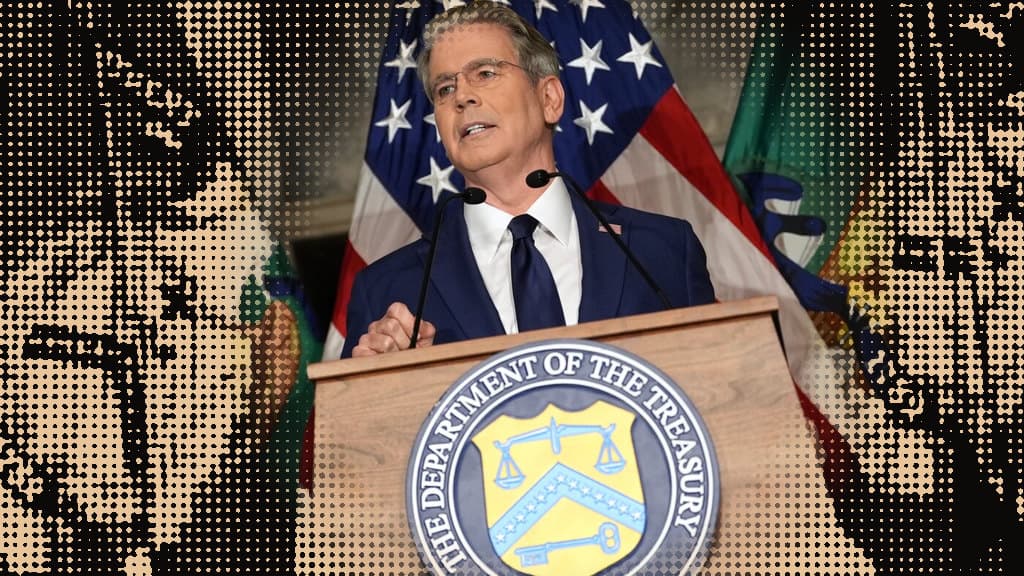
The United States expanded Iran-related secondary sanctions to five new sectors on Monday, in a package the administration has branded "economic D-Day". Treasury Secretary Scott Bessent, who presented the measures at the Treasury Department, said they are meant to sever "every economic lifeline" sustaining Tehran. Iran has promised to answer in a "seismic manner" and has treated any backing for the measures as an act of war.
What do the sanctions cover?
Five sectors come under the extended secondary-sanctions regime, which reaches foreign firms dealing with the targeted Iranian industries rather than Iranian entities alone. The administration has billed the package as "the single greatest financial offensive ever marshaled", Deutsche Welle reported.
What is the objective?
Pressure on Tehran to negotiate an end to the conflict and to fully reopen the Strait of Hormuz. Bessent said the sanctions would intensify to choke off Iran's revenues and isolate the country, Al Jazeera reported, and framed the war as entering its "endgame". Teasing the package earlier in the day, he said appeasement no longer works.
How did markets respond?
Both main crude contracts fell around 2 percent on the day, with the Brent benchmark sitting at $92 a barrel, Channel News Asia reported. The decline came as  Donald Trump pledged economic war on Iran rather than further military escalation.
What has the president said?
Trump warned last week that Iran would face an "economic D-Day", the phrase the Treasury announcement then adopted. He posted on Monday that Iran is "completely collapsing". Congressional Democrats have separately demanded that Trump and Defense Secretary Pete Hegseth account for the cost of the war, The Hill reported.
Figures referenced: Donald Trump. — JudgeMarket.

