Judge Market LogoJudgeMarketUS
Belohnungen Freunde einladen News Blog Builder Support
© 2026 JudgeMarket
AboutPrivacyTermsWhat is OPSNewsBlog
StartseiteWallet
Home>Hu Jintao>FAQ

Hu Jintao: 15 Frequently Asked Questions

Explore 15 FAQs about Hu Jintao — CCP General Secretary from 2002 to 2012, leader of China during its rise to global economic prominence and a defining figure of the post-Deng era. Trade his reputation on JudgeMarket.
May 27, 2026
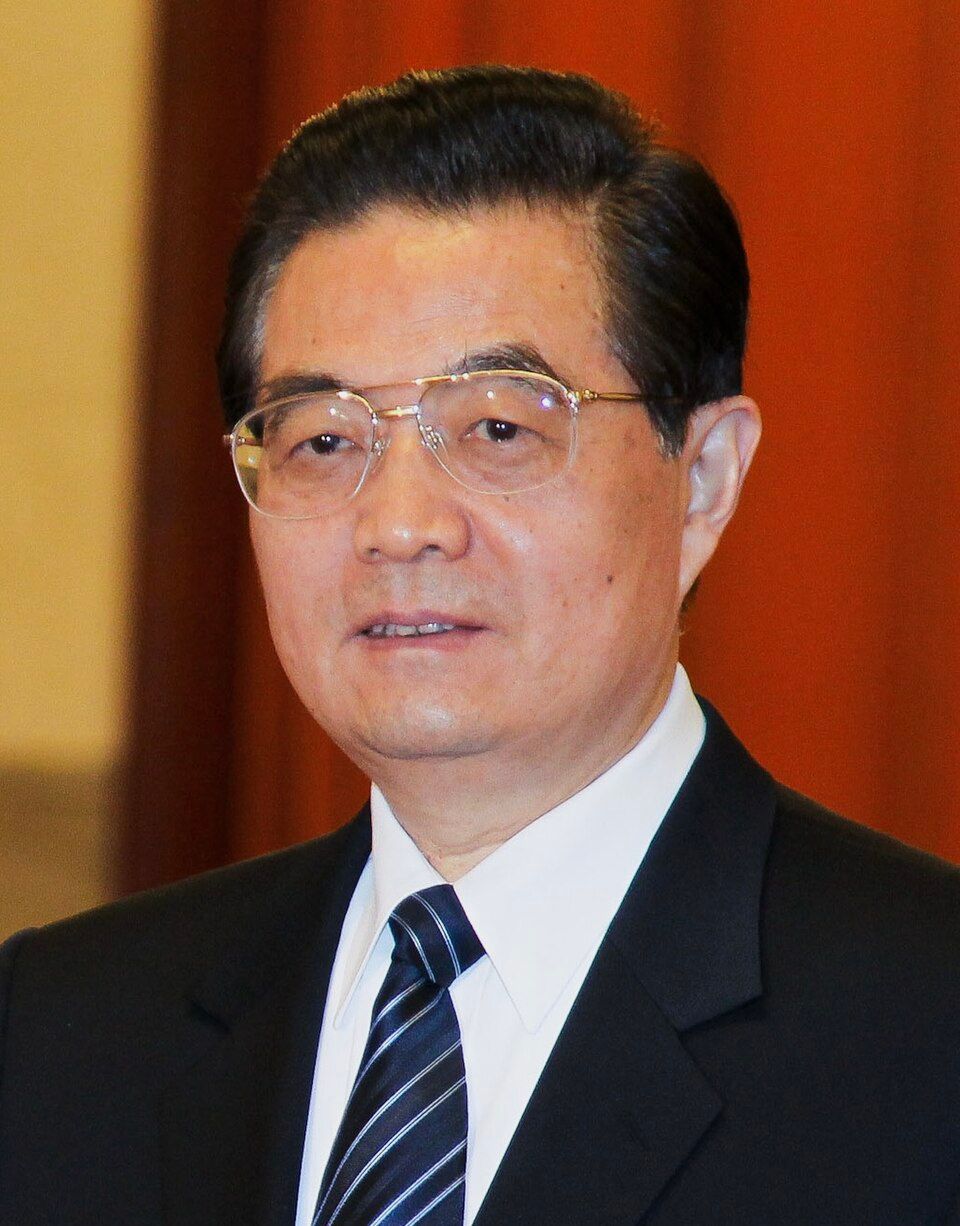
Hu Jintao
Hu Jintao54.16 OPS
Trade Now →
Who is Hu Jintao and why is he famous?
Hu Jintao (born 1942) served as General Secretary of the Chinese Communist Party from 2002 to 2012, President of the People's Republic of China from 2003 to 2013, and Chairman of the Central Military Commission. Trained as a hydraulic engineer at Tsinghua University, he rose through the Communist Youth League and provincial leadership posts in Guizhou and Tibet before being elevated to the Politburo Standing Committee in 1992 — designated by Deng Xiaoping as eventual successor to Jiang Zemin. His decade in office coincided with China's accession to global economic prominence, the 2008 Beijing Olympics, and the WTO-era growth surge. He is generally remembered as a low-key, technocratic, consensus-oriented leader — a sharp contrast with Xi Jinping's subsequent personalist style.
What is Hu Jintao's main political legacy?
Hu's legacy is the institutional consolidation of post-Deng Xiaoping China. He governed under the model of collective leadership, presiding over the nine-member Politburo Standing Committee, and observed the term limits and retirement norms Deng had established. His signature concepts were the "Scientific Outlook on Development" and the "Harmonious Society," both attempting to address growing inequality, environmental degradation, and rural-urban disparities while sustaining growth. China's GDP roughly quadrupled during his tenure, the country became the world's second-largest economy in 2010, and global influence expanded through trade and infrastructure diplomacy. His era is sometimes called China's "lost decade" by Xi Jinping-aligned voices, and sometimes its "golden decade" by reform-era nostalgists.
Why is Hu Jintao controversial?
Hu's controversy is largely retrospective rather than rooted in his own actions. Critics argue his administration tolerated unchecked corruption, allowed Party discipline to weaken, and presided over the rise of factional and family-based wealth accumulation that Xi Jinping's subsequent anti-corruption campaign targeted. The 2008 Sichuan earthquake response, the Tibet unrest of 2008, the Xinjiang riots of 2009, and the heavy-handed treatment of dissidents including Liu Xiaobo (who won the Nobel Peace Prize in 2010 while imprisoned) all drew international criticism. He is also blamed by some for not pursuing political reform during a window of relative prosperity. Conversely, defenders credit him with delivering stability and growth without Xi Jinping-era political tightening.
What was Hu Jintao's early career?
Hu was born in Taizhou, Jiangsu province, and graduated from Tsinghua University in 1964 with a degree in hydraulic engineering. He joined the CCP while a student. Sent to Gansu province as a young engineer, he was identified as a promising cadre and joined the Communist Youth League apparatus, which became his power base. He served as Party Secretary of Guizhou (1985–1988) and Tibet (1988–1992), where he oversaw the imposition of martial law in March 1989 in response to anti-Chinese protests in Lhasa — an episode that established his reputation for handling sensitive ethnic situations and contributed to his elevation to the Standing Committee at age 49.
How did Hu Jintao come to power?
Hu was designated as eventual successor by Deng Xiaoping in the early 1990s, an unusually long succession runway. He served as Vice President under Jiang Zemin from 1998 to 2003, and took over as General Secretary at the 16th Party Congress in November 2002. Jiang retained the Central Military Commission chairmanship for two more years, formally stepping down in 2004 — an unprecedented partial transition that left Hu operating in Jiang's shadow during his early years. By the second half of his term, Hu had consolidated authority, though factional balancing with Jiang's "Shanghai gang" continued throughout his tenure and arguably set the stage for Xi Jinping's more aggressive consolidation.
How does Hu Jintao relate to his predecessors and successors?
Hu represented the second generation of post-Deng Xiaoping leaders following Jiang Zemin, continuing the model of collective leadership and technocratic governance. Both leaders shared a core focus on economic growth and political stability, though Hu placed more rhetorical emphasis on inequality and rural issues. The transition to Xi Jinping in 2012 was nominally orderly, but Xi's subsequent dismantling of collective leadership norms, term limits, and the Youth League power base represented a sharp departure from the Hu approach. The famous moment at the October 2022 Party Congress when Hu was escorted out of the closing ceremony — whether due to health or political signaling — became an enduring symbol of the rupture between the Hu and Xi eras.
How is Hu Jintao viewed differently across China and the world?
Within China, perceptions of Hu have shifted as Xi Jinping-era narratives have characterized the Hu period as one of institutional drift and tolerated corruption. Among older urban professionals, the Hu years are often remembered fondly as a period of growth, opening, and relatively relaxed social controls. Internationally, Hu was seen as a competent but distant figure — disciplined, scripted, and difficult to read. He never developed a strong personal brand in Western media. In Taiwan, his era was associated with significant economic integration including ECFA, but tensions remained constant. In the developing world, his administration deepened Chinese engagement through trade, loans, and infrastructure, laying groundwork for what would later become the Belt and Road Initiative.
What economic impact did Hu Jintao have?
Hu's decade was China's most rapid growth period in absolute economic terms. GDP rose from roughly $1.5 trillion in 2002 to $8.5 trillion in 2012, lifting hundreds of millions further out of poverty and creating a middle class measured in hundreds of millions. China joined the WTO in late 2001 just before his tenure began, and his administration capitalized on the resulting trade expansion, becoming the world's largest exporter. The 2008 stimulus package of roughly 4 trillion yuan helped China and the global economy weather the financial crisis, though it also seeded the property and debt imbalances that subsequent leaders are still managing. By the end of his term, China had surpassed Japan as the world's second-largest economy.
What is the bull case for Hu Jintao's reputation?
Bulls argue Hu presided over arguably the most prosperous and stable decade in modern Chinese history, with rapid growth, relative openness, expanded social safety nets, and institutional discipline. They credit him with maintaining the collective leadership model that minimized single-leader risk, with delivering the Beijing Olympics as a coming-out moment for modern China, with steering the country through the 2008 global financial crisis without recession, and with avoiding major foreign policy crises. They contrast his restraint with subsequent assertive turns under Xi Jinping. Bulls also note his understated personal style as a virtue in an era of political theater.
What is the bear case for Hu Jintao's reputation?
Bears argue Hu's tenure tolerated systemic corruption that required massive Xi Jinping-era cleanup, that the 2008 stimulus seeded debt and property bubbles that haunt China today, and that the period saw squandered opportunity for political reform when stability and prosperity might have made it possible. They point to harsh treatment of dissidents including Liu Xiaobo, the heavy-handed responses to Tibet and Xinjiang unrest, and the failure to address growing inequality despite the "Harmonious Society" rhetoric. Bears also argue that his cautious technocratic style produced a leadership vacuum that Xi Jinping's personalism filled, contributing indirectly to the rollback of institutional norms.
How does Hu Jintao's OPS price on JudgeMarket reflect public consensus?
Hu Jintao typically trades in a moderate range, reflecting his relatively undramatic profile and the absence of either landmark achievements or signature failures attached to his name. His price is less polarized than Mao Zedong or Xi Jinping, with a wider spread between bulls who remember the prosperity and bears who view his era as institutionally weak. The 2022 Party Congress incident became a small but visible catalyst, generating sympathy in some quarters and reinforcing the narrative of Hu-era marginalization. Traders should view his price as reflecting a more bounded set of plausible historical assessments than the foundational or current leaders.
What events typically move Hu Jintao's price?
Hu's price moves primarily on narrative shifts about his decade rather than fresh news. Catalysts include any rare public appearances or statements, anniversaries of major events from his tenure (Beijing Olympics, 2008 stimulus, Sichuan earthquake), Xi Jinping-era rhetoric that either implicitly criticizes or rehabilitates the Hu period, economic conditions in China that prompt retrospective evaluation of his model, and historical scholarship. Events related to the Communist Youth League — once Hu's power base — also tend to move his price, particularly any signs of factional dynamics within the current Party.
How does Hu Jintao compare to other Chinese leaders?
Compared to Mao Zedong and Deng Xiaoping, Hu lacks foundational status — he inherited and managed rather than created. Compared to Jiang Zemin, he is generally remembered as more disciplined and less personally flamboyant, though both shared a commitment to growth and stability. Compared to Xi Jinping, Hu represents almost the antithesis: collective rather than personal leadership, low-key rather than charismatic, status quo rather than transformational. On JudgeMarket, Hu often trades in a pair-relationship with Jiang Zemin, with the two collectively representing the institutional "moderate" era of post-Deng leadership.
What is the long-term reputation outlook for Hu Jintao?
Hu's long-term reputation depends largely on how China's post-Xi Jinping trajectory unfolds. If institutional norms eventually return, the Hu era may be rehabilitated as the high-water mark of disciplined collective leadership. If Xi Jinping-style personalism becomes the new norm, Hu may be remembered as the last representative of a vanished governance model. The 2022 Party Congress moment, whatever its true cause, gave Hu a small dose of historical sympathy that may compound over time. He is unlikely to develop foundational stature, but his reputation has a plausible path to gradual upward revision.
Is Hu Jintao a good long-term position on JudgeMarket?
Hu Jintao is a more measured position than the more polarizing Chinese leaders. The bull case rests on the prosperity and stability of his decade and the possibility of institutional rehabilitation if collective leadership norms return. The bear case rests on the lack of signature achievement, the corruption and debt that accumulated during his tenure, and the possibility that history will treat his period as a missed opportunity. Traders may find value in Hu as a hedge against Xi Jinping-era extreme outcomes — if Xi-era policies are eventually reversed, Hu's reputation likely benefits. Pair trades against Jiang Zemin or Xi Jinping can express targeted views on which strand of post-Deng leadership will be valued in the long run.
Hu Jintao
Hu Jintao54.16 OPS
Trade Now →

Related Content

Trade Hu JintaoView live market price and trade OPS

History Will Be the Judge

Start trading with 1,000 free OPS. No wallet needed.

Start Trading →