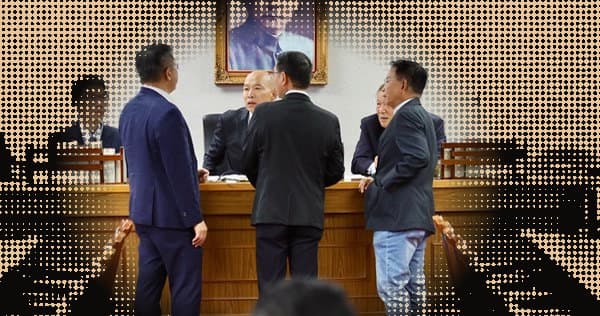
Cross-party talks convened by Taiwan's Legislative Speaker  Han Kuo-yu on Aug. 26 ended without agreement on a drone procurement act, sending the rival bills to a floor vote on Aug. 27. The Democratic Progressive Party caucus said a special act was more suitable, while the Kuomintang and Taiwan People's Party insisted on annual budgets, with the KMT seeking NT$240 billion evenly over six years. The Cabinet's version sets a NT$210 billion cap under a special budget.
What divides the parties? After a recess, Han narrowed the dispute to three questions: whether the economics or defense ministry should oversee the law, whether to use a special or annual budget, and how much to spend, CNA reported. Hsu Yu-chen, a senior KMT caucus official, said annual budgets would go to the legislature each year for oversight. TPP legislator Hung Yu-hsiang said his party would leave defense procurement to the defense ministry but write no amount into the law. Debating the bill's name alone took nearly an hour, PTS reported.
What does the government side say? President  Lai Ching-te, who also chairs the DPP, said the opposition versions exclude all three military drone types the armed forces need and move budget authority to the economics ministry. Lai urged the caucuses to back the Cabinet's version, saying annual budgets could crowd out spending on education and social welfare. Defense Minister Wellington Koo said NT$40 billion a year was insufficient for the KMT version's broad definition, which covers air, surface, underwater and ground vehicles, PTS reported. Vice President Hsiao Bi-khim told CNA that further delays or cuts would erode international partners' confidence in Taiwan.
What is at stake for procurement? Under an opposition version, the first funds for the defense ministry's littoral surveillance and attack drones and small suicide drone boats, planned for acquisition from August, may not come until January 2028, since the Cabinet finalized the 2027 central budget on Aug. 20, the Liberty Times reported. Aerospace executive Lu Yi-hsuan said at a DPP news conference on Aug. 25 that single-year budgets would leave firms unable to finance production.
What happens next? The caucuses agreed to bring the Aug. 28 plenary session forward a day because a typhoon was forecast to approach Taiwan that Friday, with discussion resuming at 9 a.m. and a vote set for 10 a.m. The KMT's Fu Kun-chi said the party hoped to handle the bill quickly and was still discussing whether to submit a joint version with the TPP.
Figures referenced: Han Kuo-yu, Lai Ching-te. — JudgeMarket.


